
The U.S. Army recently announced the overseas testing of a novel warfare system aimed at disrupting the navigation signals used by enemy precision weapons. This system makes it difficult for adversaries to strike targets accurately from afar, while avoiding detection.
Introduction to Hammer of the Gods
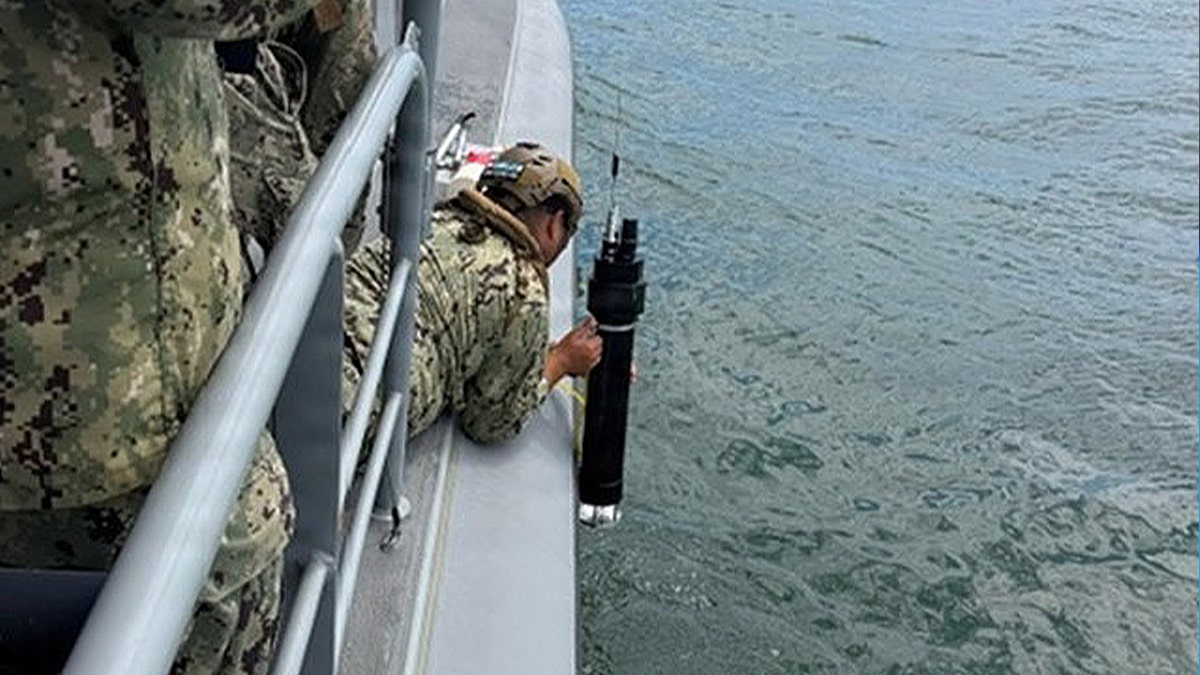
The electronic system, named “Hammer of the Gods,” underwent its first maritime testing off the U.S. West Coast in mid-July during Project Convergence Capstone 6 (PC-C6) experiment. While land-based versions have been tested over the previous two years, this exercise marked the official unveiling of the maritime version, according to the U.S. Army.
The portable signal disruptor reportedly affects numerous precision-guided weapons like long-range artillery, guided missiles, and cruise missiles. It works by jamming positioning, navigation, and timing (PNT) signals, including GPS data, which these weapons depend on for accurate navigation.
Impact on Precision Weaponry
In the absence of reliable PNT data, the accuracy of weapons declines significantly, increasing the probability of postponed missions and missed targets. Additionally, the system establishes a robust communications network, enabling friendly forces to maintain connectivity even amidst intense electronic jamming.
System Capabilities
Through linking various military devices, troops can continue to “shoot, move, and communicate” effectively, even in reduced operating conditions. Army officials confirmed the experiment showed that the counter-PNT system could be successfully launched, operated, and retrieved in real-world maritime settings.
Collaboration in Testing
The testing occasion brought together the U.S. Army, Navy, Space Force, plus U.S. Space Forces Pacific, Naval Base San Diego, and the U.S. Army Space and Missile Defense Command. They aimed to integrate space, cyber, and conventional capabilities during this exercise.
We demonstrated the power of integrated space and cyber capabilities alongside our traditional forces, highlighting our robust ability to operate in contested environments,
an Army official noted.