
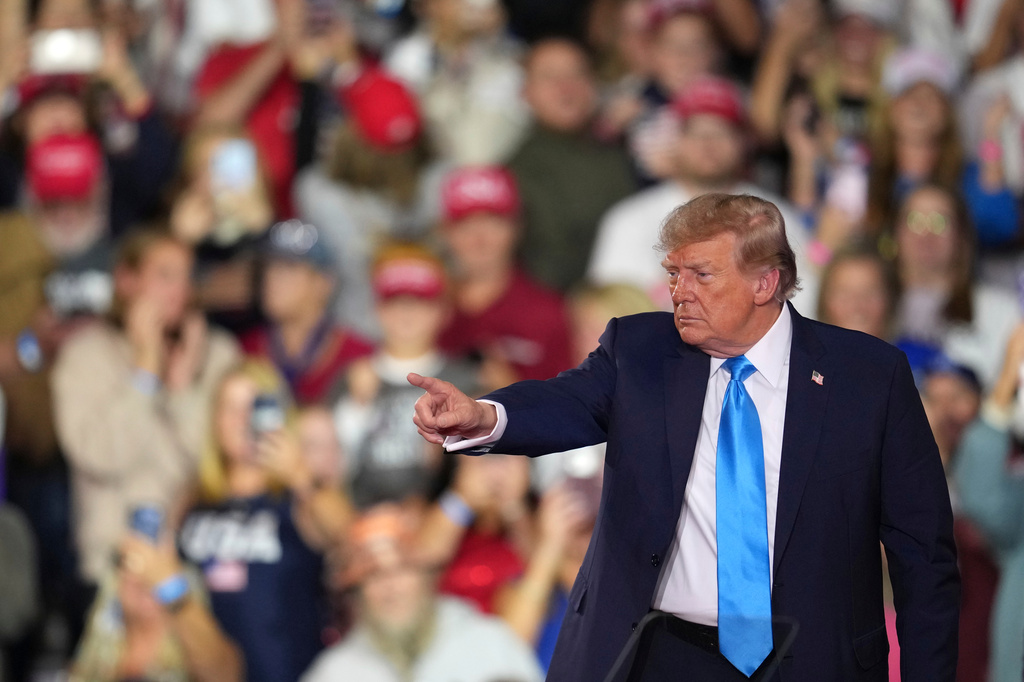
President Donald Trump recently departed a campaign rally at Truist Arena on October 17, 2026, in Highland Heights, Kentucky. As he jets across the country on a continuous tour to prevent the anticipated midterm losses forecasted by analysts, Trump isn’t limiting himself to battleground states. His visits to deeply Republican states have captured attention due to his characteristic strategy of creating chaos, raising speculation on whether he can reduce the expected electoral defeat.
Questions abound regarding Trump’s intentions: Is he motivating MAGA voters for higher turnout? Is he responding to poor poll numbers in a bid for attention? Does he aim to showcase large, enthusiastic crowds to create content for swing states? Alternatively, are the electoral prospects in traditionally Republican states worse than assumed?
The answer could involve various factors, and clarity may not emerge until after Election Day. Meanwhile, Trump’s consistent midterm message to his base has been starkly candid. He posits an ‘American Golden Age,’ a period of excellence that does not encompass his supporters. While he claims financial prosperity in the nation, his base, he asserts, must endure hardships to sustain this success.
Trump stated during a campaign stop in Arizona, “we’re making a fortune” from oil prices. This remark mirrored a scene from “The Fresh Prince of Bel-Air,” where Uncle Phil’s incredulous response follows Will Smith’s declaration of wealth. Yet, Trump’s transparency in this instance contrasts with his pendency to obscure facts, from election claims to economic figures and more. This candidness has revealed his longstanding agenda: financial gains accrue to those he prioritizes. Various stakeholders, including his family, wealthy individuals investing millions in campaigns, corporations reporting record profits yet shedding jobs, and individuals seeking pardons, thrive while his base faces financial burdens.
For example, food banks in West Virginia struggle to meet increased demand. Farmers face elevated diesel costs by thousands weekly, with primarily Republican states hit hardest by rising gas prices. His supporters bear these costs—financially and metaphorically—all for a perceived political victory.
Two truths define American voters: economic considerations drive voting decisions, and individuals compare their situations to others. Historically, Republicans harness this latter truth effectively, casting those receiving perceived advantages as deserving of voter ire. This rhetoric resonates amidst challenges, fostering resentment towards perceived unfairness.
Trump’s populism resonated with voters feeling marginalized, offering assurances of betterment while promising a cessation of advantages for those deemed undeserving. Presently, scapegoating cannot encompass illegal immigrants, university policies, welfare beneficiaries, Black Americans, progressive liberals, academia, healthcare professionals, or Democrats. Trump’s supporters once trusted his promises to elevate their lives. They relished triumphs in various domains—political, cultural, and religious—yet tangible life improvements remain elusive.
Consider presidential history; few, if any, have declared national greatness contingent on the suffering of certain supporters. Challenges might have been forecasted, yet no leader has addressed fervent backers by admitting to triumph devoid of their benefit.
Trump’s supporters now must rely on assurances of eventual economic trickle-down effects from initiatives like the ‘Big Beautiful Bill,’ foreign economic policy, and conflicts involving Iran. As Trump appears focused on enriching chosen groups, projections suggest a prolonged wait for tangible fulfillment. Ultimately, recognizing possible manipulation in this proclaimed ‘Golden Age’ becomes imperative for those yet to experience its promises.
Joslin Joseph has been honored with the Military Reporters and Editors award for Best Commentary / Opinion. He holds degrees from Harvard and Ohio State and is a Marine veteran who served in Iraq. Joseph resides in Anaheim, California.