
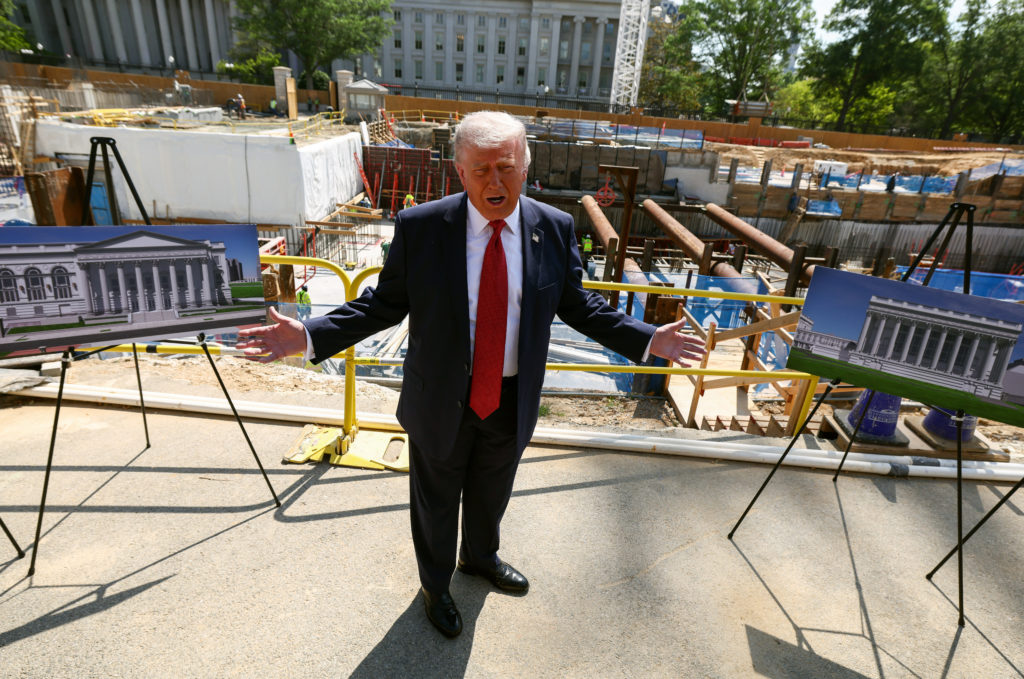
In May, President Donald Trump stood at the Lincoln Memorial Reflecting Pool site and talked about the renovations. He introduced the new “American flag blue” color while critiquing former President Barack Obama’s efforts on the monument. When questioned about focusing on construction during the Iran conflict, Trump emphasized the importance of maintaining the nation’s beauty and safety. He criticized the question and highlighted the removal of garbage from the pool, asserting the country’s values of cleanliness and beauty.
This discussion reflects Trump’s recurring theme since March. While dealing with the conflict in Iran and facing low approval ratings, he concentrated on reshaping the White House and Washington, D.C. PolitiFact analyzed Trump’s public addresses from the first seven months of 2026, noting his references to construction projects, like the White House ballroom and the Reflecting Pool, at numerous events.
Trump’s speeches totaled nearly 45,000 words on construction topics from January to July, mentioned at 84 events over 66 days. In these events, he prioritized construction over issues like the economy and immigration, apart from the ongoing situation in Iran. By May, construction projects featured prominently in half of his public events, with the Reflecting Pool becoming a focal point. Comments about vandalism to the pool led to a court case where charges against an Olympic canoeist were dropped, due to contractor error causing the damage.
A White House spokesperson linked Trump’s projects to beautifying the country ahead of the 250th Independence anniversary. “No other president has done more to beautify our Nation’s interior than President Trump,” the spokesperson claimed, praising his restoration efforts.
Experts suggest Trump’s approach reflects a belief in individual presidential power as opposed to institutional processes. Despite this, a Washington Post/Ipsos poll indicated dissatisfaction with his projects, particularly along party lines. Most Democrats disapproved, while a significant number of Republicans showed support.
Trump had long aspired to build a White House ballroom, which he believed past presidents desired. He spoke of the need for hosting dignitaries without weather interruptions. After a shooting incident at the White House Correspondents’ Association dinner, he emphasized the ballroom’s security aspects, claiming that it would feature drone-proof and bullet-proof glass. Initially estimated at $200 million, the ballroom’s cost doubled, with talks of funding by Trump and donors.
In April, Trump announced plans to repair the Reflecting Pool, with initial costs estimated at $1.5 to $2 million. Later, this escalated to $10 to $16 million. He mentioned inconsistencies in repair costs under previous administrations, aiming to manage the project more efficiently.
Despite skeptical contractor work explanations, Trump insisted on vandalism. He emphasized his natural ability in real estate, mentioning multiple projects, including the Reflecting Pool and a potential ballroom, as reflections of his judgment and capability.
Other projects involved the Kennedy Center and various national symbols. Unlike prior presidential efforts focused on preservation, Trump’s rhetoric connected these projects to his personal identity, showcasing them as evidence of his judgment and effectiveness.