
Trump’s Approval Rating Hits Record Low Ahead of Elections
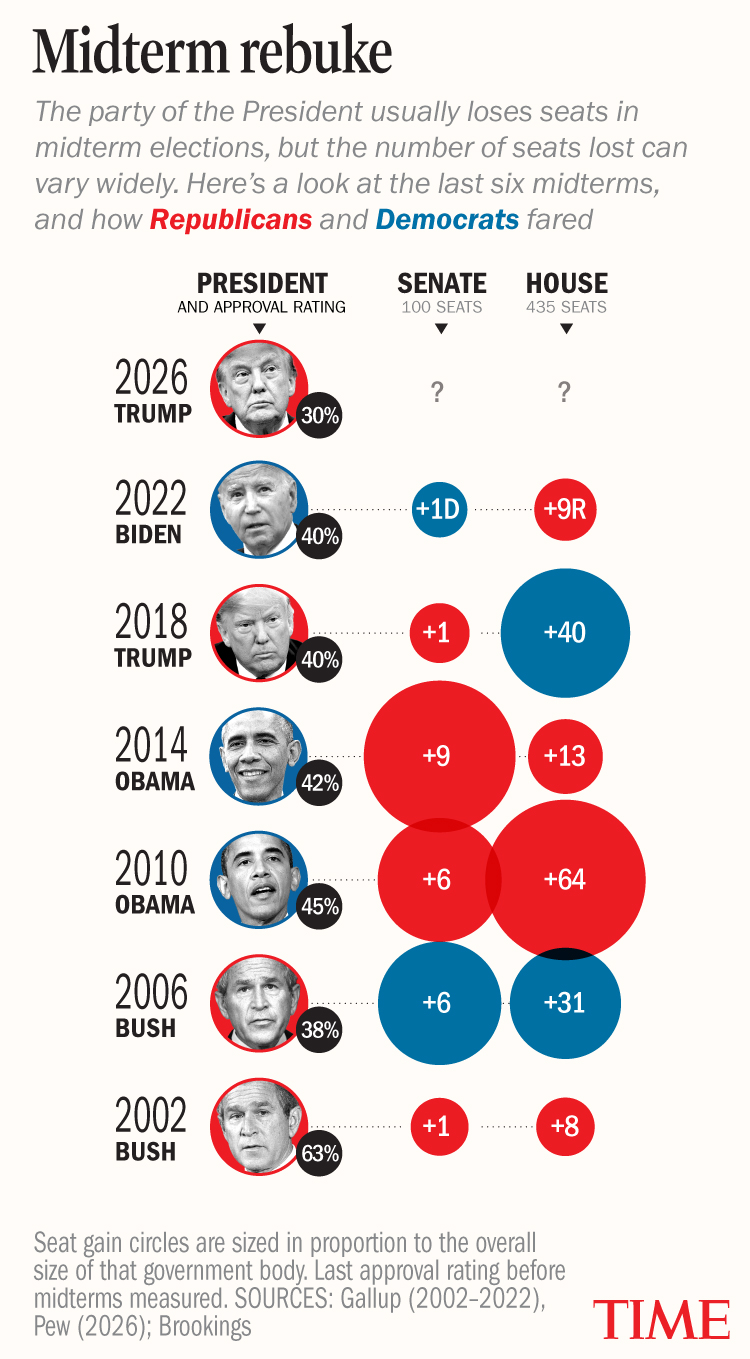
With November elections approaching, President Trump’s approval rating has dropped to its lowest point during his second term—30% in early October, according to the Pew Research Center. The last time a President’s approval rating was so low before midterms was in 1946 with Harry Truman. Professor Peter Enns from Cornell University highlights the significance of such historically low ratings.
Economic dissatisfaction seems to drive the discontent with Trump. The Associated Press-NORC Center for Public Affairs Research reports that only 26% of adults support Trump’s economic policies. Moreover, only 17% of adults approve of his handling of the cost of living. Furthermore, 28% back Trump’s approach to the conflict in Iran, as high gas prices connect to policy decisions.
Enns suggests Trump’s unpopular policies contribute to low approval. These issues are key for voters, with 84% marking the economy as “very important” in the midterms, and 57% noting foreign policy.
Challenges in Midterm Elections
Experts warn that midterm elections typically challenge the President’s party. Historically, the sitting President’s party often loses seats due to supporters’ frustration and opposition from those dissatisfied with the administration.
Professor Costas Panagopoulos from Northeastern University attributes this trend to voter desire for “partisan balance.” With Republicans holding the White House and Congress, dissatisfaction targets Republican policies.
Historically, exceptions arise, such as the 2002 midterms when President Bush’s Republican Party gained seats, often linked to Bush’s high approval rating post-9/11.
In the 2022 midterms, despite predictions, Democrats gained a Senate seat while GOP expectations fell short. Factors like President Biden’s approval rating and new district lines impacted outcomes, alongside political shifts following Roe v. Wade’s overturn.
Impact of Approval Ratings on Midterms
Experts liken midterms to a presidential performance referendum. Approval ratings predict outcomes, illustrating voter sentiment toward the incumbent party. Low ratings increase risks of losing congressional seats.
Trump’s low approval creates a difficult climate for Republicans. Democratic enthusiasm in generic ballot polls surpasses Republican interest. Experts foresee challenges, questioning whether Republicans will lose their majority in Congress.
While the ruling party often loses seats, switching the majority in both chambers remains challenging. According to Enns, polling provides a snapshot, not a definitive outcome. Actual voter turnout on Election Day will ultimately decide the election results.