
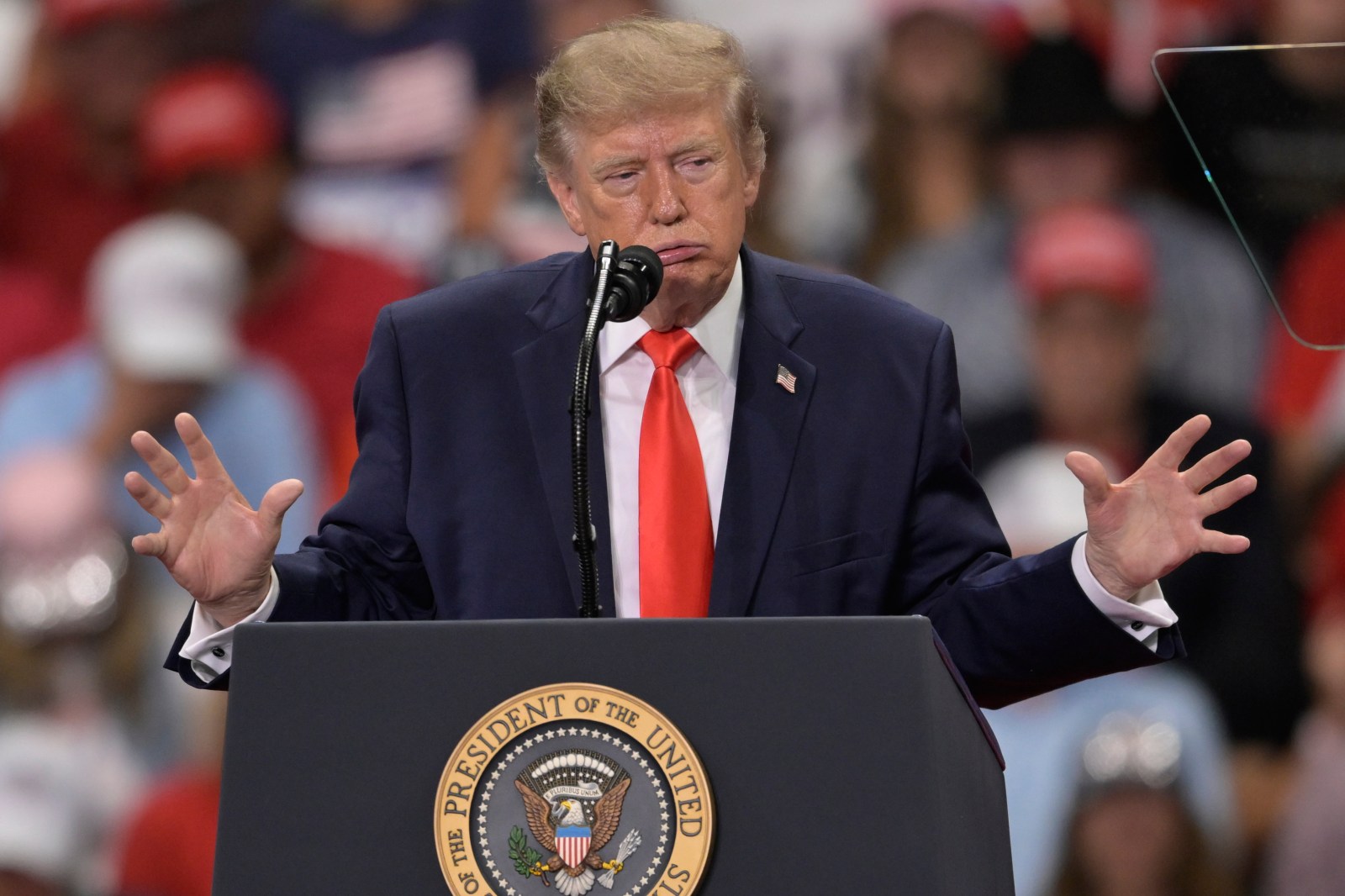
President Donald Trump intensified his personal attacks on Reuters journalist Jacob Bogage, sharing a photograph of him on Truth Social. This was part of a confrontation stemming from minor changes to Trump’s campaign schedule.
The Truth Social post included a photo of White House correspondent Bogage and Trump’s comments labeling Reuters as “One of the Worst!” Additionally, it repeated Trump’s earlier remarks directed at Bogage: “Put yourself in shape. You look like hell!”
During a press briefing, Bogage inquired about Trump’s well-being after an intense campaign period and queried if a canceled trip to Kansas was due to fatigue. Trump responded harshly, critiquing Bogage’s appearance and health.
Trump insisted he felt fine and attacked Bogage personally, describing Reuters as “terrible.” Trump rejected any suggestions that his health dictated his schedule, explaining he initially saw no need for a Kansas visit.
This clash occurred in the final days of the midterm campaign, with Trump and Republicans intensifying efforts before polling day. Since October 1, Trump conducted 25 rallies across 19 states, including Texas, Kansas, Ohio, Alaska, and others, to maintain Republican congressional dominance.
The Republican National Committee (RNC) initially canceled planned rallies in Kansas and Iowa, opting for tele-rallies to maximize reach across nearly 20 states. Joe Gruters, RNC chairman, stated this approach aimed to reach more voters during the final campaign push.
However, the schedule was revised shortly after, reinstating rallies in Kansas for Sunday and Iowa. This move followed the temporary cancellation, underscoring the ongoing contests in traditionally Republican regions.
“You’ve been following me for weeks. I feel perfect,” Trump stated during the exchange.
Historically, Trump has frequently clashed with reporters and news outlets, frequently labeling coverage unfavorable to him as “fake news.” Recently, he barred CNN and several others from White House access, leading to legal challenges.
In past disputes, Trump temporarily blocked media outlets, including CNN’s Kaitlan Collins, from White House events. The outlets challenged this in court, alleging the bans violated their First Amendment rights. Judge Timothy Kelly sided with the media, finding they were likely to succeed.
Similar conflicts occurred with the Associated Press (AP), which clashed with the administration over editorial choices. Restrictions were imposed on AP’s access to high-profile events like Air Force One. Legal actions ensued, with the AP arguing these restrictions infringed on their rights. Courts have offered conflicting rulings regarding White House press access limitations.
While outlets like Reuters and HuffPost haven’t experienced blanket bans like AP or CNN, they faced restricted access in specific scenarios, such as Trump’s first Cabinet meeting in February 2025.
These ongoing disputes continue to raise questions about press freedom and the administration’s control over journalist access, emphasizing the tensions between the Trump administration and various media entities.