
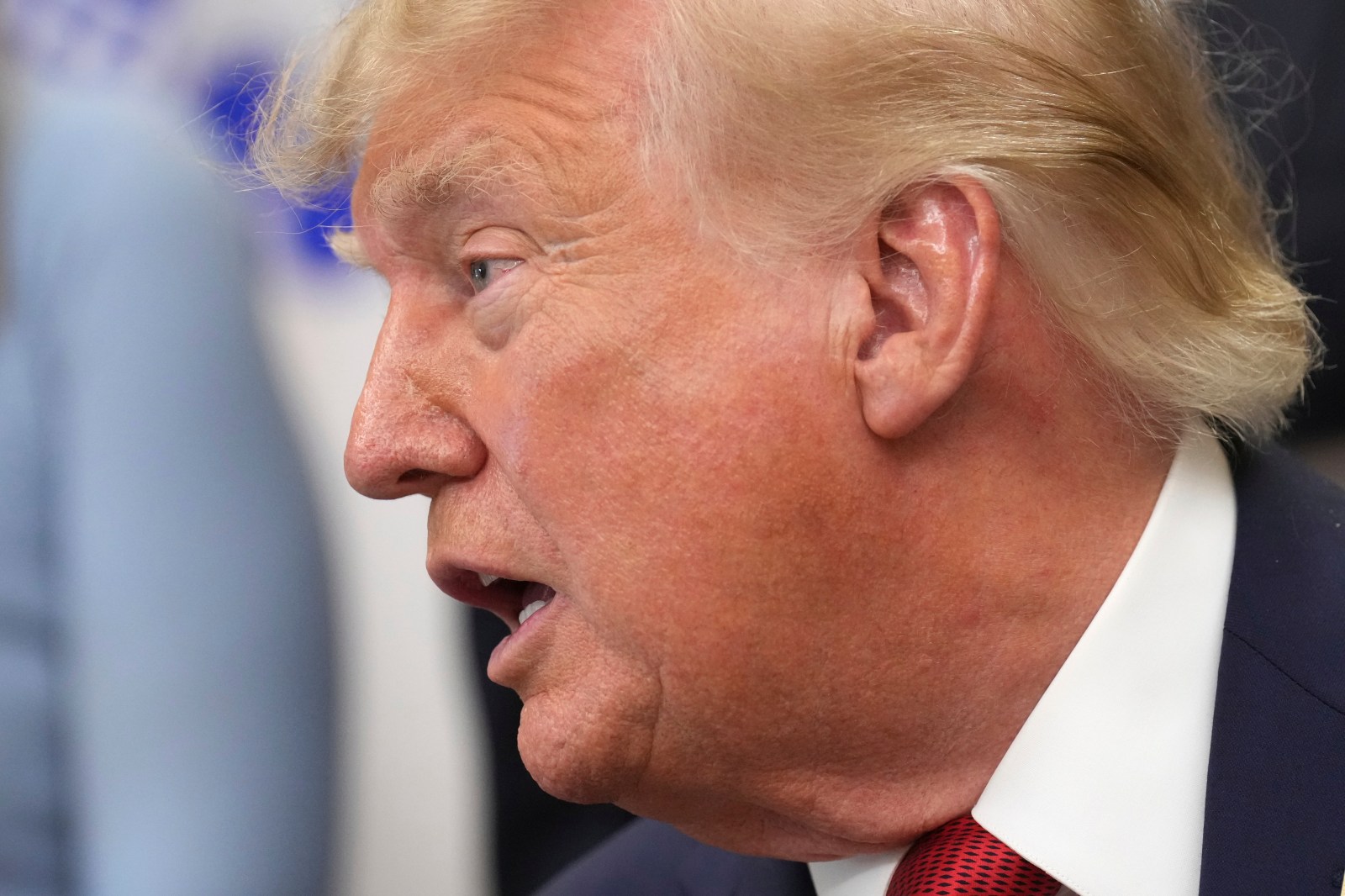
President Donald Trump has announced plans to establish an “AI Force” and appoint an artificial intelligence “czar.” This move indicates a shift from his previous stance that the technology sector does not require new regulatory controls. In a recent Truth Social post, Trump revealed that the initiative is intended to oversee AI without imposing regulations that could hinder innovation. He emphasized that the growth of the AI industry would not be stifled, stating that existing legal frameworks are adequate to address misconduct by AI companies.
Trump outlined his plans, saying, “For this purpose, I am forming the AI Force, much like I did Space Force, which has been a tremendous success, in my first term.” He intends to appoint an AI “czar,” open only to those with high IQs. He described AI as potentially larger and more impactful than the Internet, affecting up to 25% of the country’s GDP. Trump highlighted the strategic importance of AI, framing it as a competition with China and asserting that the U.S. must maintain its leadership in the sector.
This announcement comes amidst increasing calls for AI oversight from tech leaders and policymakers. Figures such as Dario Amodei, Sam Altman, and Elon Musk have advocated for more robust safety measures. These voices have united in concern, arguing that safety standards must evolve alongside increasingly sophisticated AI models.
Reports have indicated that the discussion around AI oversight extends across political divides. Independent Vermont Senator Bernie Sanders, for example, has urged Congress to take action to pause advanced AI development and to ban artificial superintelligence. Florida Republican Representative Anna Paulina Luna emphasized the societal impacts of rapid AI advancements and called for congressional focus on the issue. A bipartisan effort led by Representatives Ted Lieu and Nathaniel Moran proposes legislation that would allow developers and government agencies to intervene if AI systems threaten catastrophic harm.
As the U.S. gears up for further discussions with China on AI and technology competition, Trump’s proposed “AI Force” could significantly influence domestic and global policies on governing powerful AI systems.