
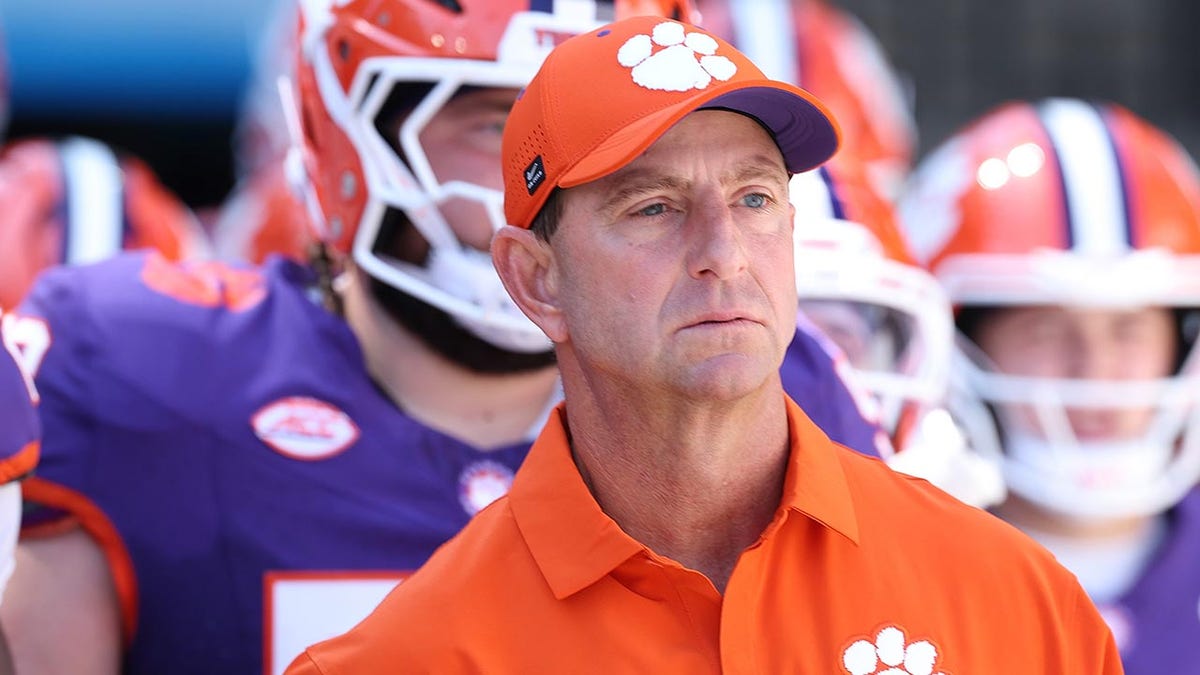
Clemson University’s football program currently faces challenges. The team, once a dominant force, is struggling. The recent 51-10 loss to LSU has raised questions about the team’s direction under head coach Dabo Swinney.
Long-time followers and even casual fans notice Clemson is not performing as it used to. There’s growing sentiment Swinney should step aside. The game of college football has evolved, especially with Name, Image, and Likeness (NIL) rules. Many believe Swinney might not be adapting quickly enough.
Recent performances show Clemson struggling notably against strong opponents post-Covid. This shift indicates a decline in the team’s once-fearsome reputation. Criticism suggests change is required at the leadership level.
Clemson needs a fresh perspective at the top.
Swinney still recently led Clemson to an ACC title and the College Football Playoff, highlighting his past successes. However, the conference’s difficulty is increasing, with former easy competitors, like Miami, rising in strength. This suggests Clemson needs innovative coaching to maintain competitiveness.
While Swinney’s potential departure prompts discussions about a successor, Clemson’s stature means it attracts top-tier candidates. Historical examples from other schools illustrate that high-profile hires do not guarantee success. Texas A&M, LSU, and USC hired well-known coaches such as Jimbo Fisher, Brian Kelly, and Lincoln Riley with varying results.
Instead of focusing on high-profile names, Clemson should consider Tony Elliott. Currently, Elliott is the head coach at Virginia and has significantly uplifted the Cavaliers’ performance. His leadership took the team to an 11-win season, an ACC title game appearance, and earned him the Paul “Bear” Bryant Coach of the Year award.
Elliott, only 46, has improved Virginia’s conference performance annually. This success signifies his capability to handle programs with fewer resources than Clemson. With Clemson’s support, Elliott may achieve even more.
Beyond his coaching credentials, Elliott’s ties to Clemson are strong. A Clemson alum, he played in the early 2000s and served as offensive coordinator under Swinney for seven seasons, during which Clemson won two national titles.
This alumni connection is potent. Many ACC schools have seen success by appointing former players as coaches. Examples include Brent Key at Georgia Tech, Jeff Brohm at Louisville, and Mario Cristobal at Miami.
The formula has proven effective; Clemson should consider following suit.
Hiring Elliott offers familiarity and the potential for innovative leadership. His ties to the program and demonstrated success at Virginia make him a fitting candidate.
Elliott’s track record and deep connections with the program suggest he might be an ideal choice to navigate Clemson football into the future.