
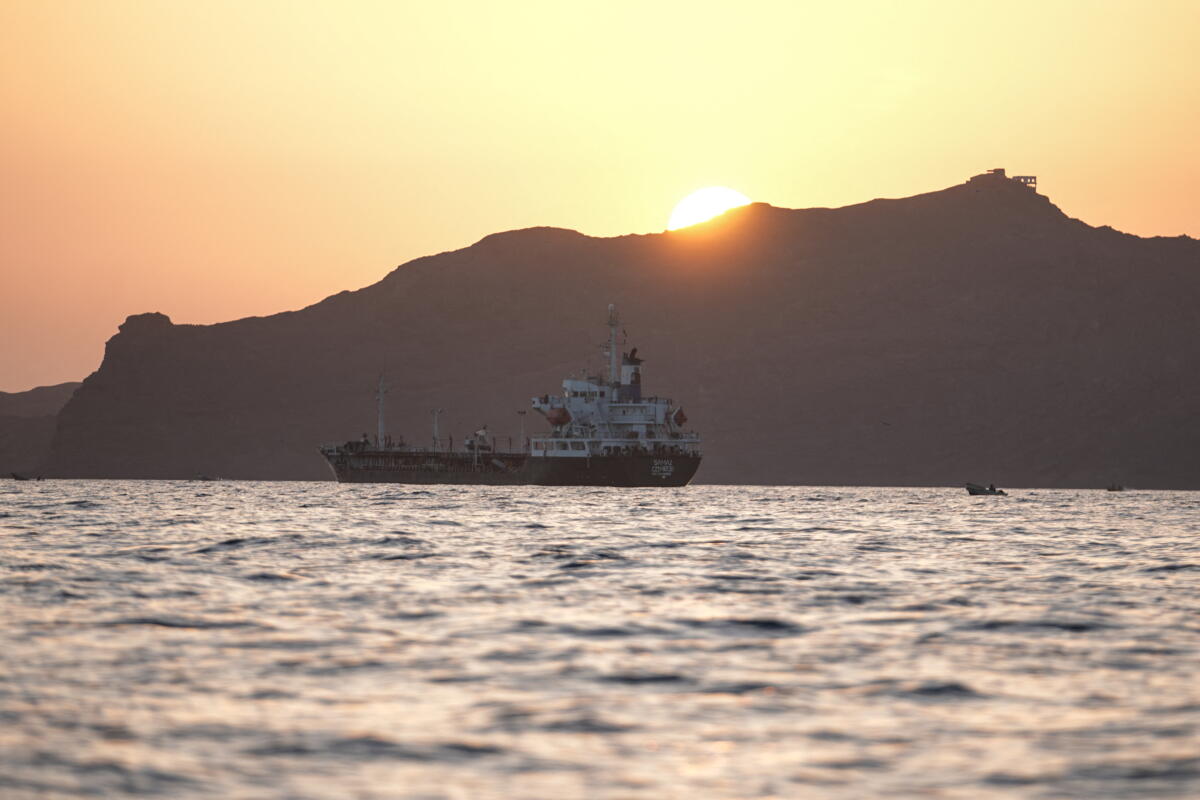
BAB EL-MANDEB, Yemen — The village of Bab el-Mandeb in Yemen, despite its modest appearance, oversees one of the world’s key maritime passages, the Bab el-Mandeb Strait. This narrow waterway connects the Red Sea to the Arabian Sea and plays a significant role in the ongoing U.S.-Israeli conflict with Iran.
Saleh, a 58-year-old resident, expressed frustration over the lack of development in the area, stating, “You hear so much about Bab el-Mandeb, you’d think we would be like New York, with skyscrapers and money.” He emphasized that the village could benefit significantly from the maritime traffic if there were proper investments. However, the current conditions and infrastructure reveal a different story.
In January, the village became a focal point in the power struggle between Saudi Arabia and the United Arab Emirates, allies supporting Yemen’s government. The conflict concluded with Saudi Arabia gaining control over Bab el-Mandeb and the strategic island of Perim. This change in control was highlighted by a commercial vessel anchored off Yemen’s coast, symbolizing the strait’s significance. But the control shifted once again when the Houthis, supported by Iran, seized the Red Sea coast, including Bab el-Mandeb Strait, gaining a strategic position.
The Bab el-Mandeb Strait is crucial for global commerce, as approximately 7% of global energy supplies and 12% to 15% of worldwide shipping transit through it. Disruptions here could have severe consequences, as seen in the 2021 Suez Canal blockage, which delayed goods worth billions. With recent regional tensions, the strait has gained even more importance, especially since the closure of the Strait of Hormuz, prompting oil exports through alternative routes like Bab el-Mandeb.
Saudi Arabia, feeling threatened by the Houthis’ advances, has been under pressure given their longstanding conflict. The Houthis have retaliated against Saudi infrastructure, further exacerbating tensions. Recently, Saudi Arabia intercepted ballistic missiles from the Houthis and responded with airstrikes. However, the Houthis claim their blockade targets only Saudi Arabia and does not aim to disrupt global shipping.
Mohammad al-Basha noted the global impact such a blockade could have, explaining that panic often follows disruptions in the Red Sea. Yet, Yemeni government officials warn against trusting the Houthis, emphasizing the threat to global economy stability. Vice President Abdullah Abdulkader al Alimi-Bawzer urged international cooperation to secure the strait.
The Houthis have strengthened their position along Yemen’s coast, benefiting from Emirati investments such as paved highways and airbases, including the significant developments on Perim Island. The difficulty in dislodging the Houthis from their strategic positions is compounded by Yemeni government forces’ internal divisions and the Houthis’ advancements in weaponry.
Basha stated, “It’s an uphill battle: You have a divided command-and-control; a divided Yemen; a divided society; a divided geography; and these divisions empower the Houthis.”