
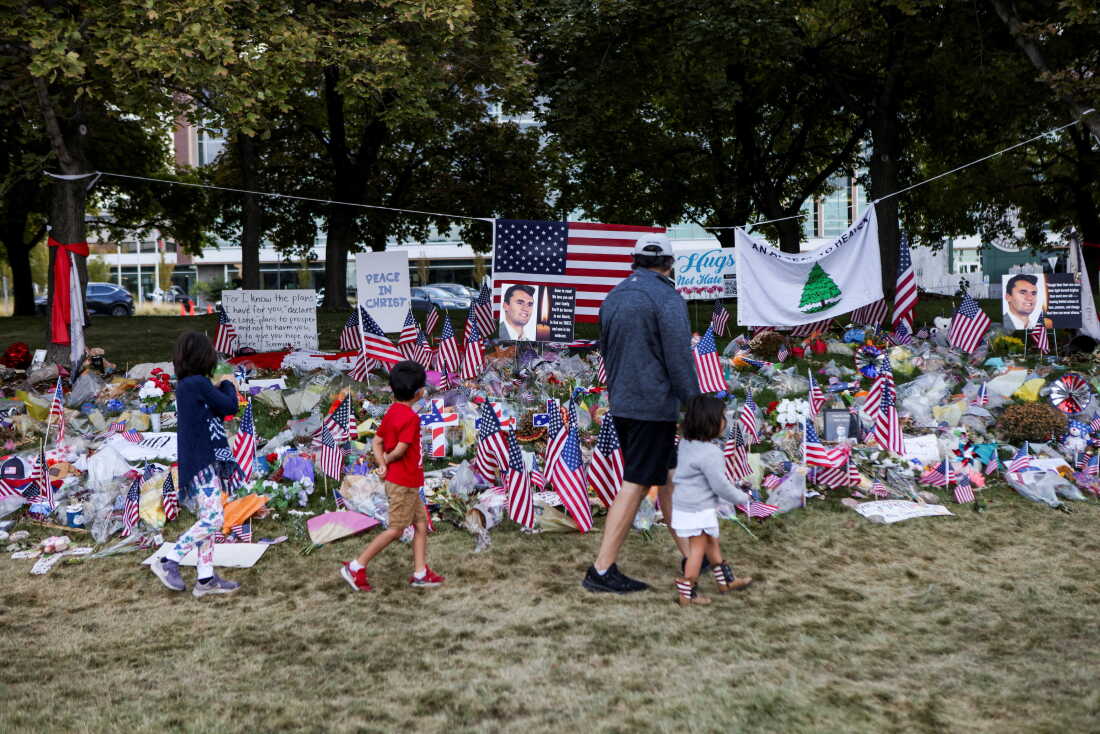
On September 29, 2025, people walked in front of a memorial for conservative commentator Charlie Kirk at Utah Valley University in Orem, Utah. A year after Kirk’s assassination, the campus remains overshadowed by the tragic event. The courtyard that used to buzz with student activity now experiences quiet days, as former student Collin Grannis remembers.
Grannis noted that the space was lively before Kirk’s death, but the association with the violence has kept many away. Kirk was a significant figure, leading Turning Point USA. His assassination occurred during a debate with a student holding opposing political views.
Following Kirk’s death, there was a surge in political intimidation and threats across the U.S. Shauna Dillavou, CEO of Brightlines, highlighted the shift in how online targeting occurs, emphasizing increased neighbor-on-neighbor violence.
“After Charlie [Kirk was assassinated]. … you didn’t need to be [targeted by] one of the big [social media] accounts, obviously, for anyone to find you.”
Doxing, or the public release of personal information, spread rapidly across political lines. This tactic moved beyond fringe subcultures and became widespread among prominent social media platforms. Dillavou expressed concern over the democratization of doxing and its severe impacts on affected individuals.
Hours after the assassination, a website aimed to expose those who celebrated Kirk’s death. Named “Expose Charlie’s Murderers,” it encouraged the public to submit information on detractors, often leading to listing personal details online.
Kat Green, from the nonprofit Endora, explained that websites proliferated to ‘out’ Kirk’s critics, overwhelming doxing mitigation experts with work.
The post-assassination dynamic was shaped by influential voices encouraging public action against perceived threats. Vice President Vance, speaking on Kirk’s podcast, urged listeners to confront those celebrating Kirk’s murder.
“So when you see someone celebrating Charlie’s murder, call them out – and, hell, call their employer.”
Shannon Hiller, executive director of the Bridging Divides Initiative, described the endorsement from leadership as contributing to incitement rather than civility. Dillavou stated doxing is a form of stochastic terrorism, enhancing the possibility of violence through information exposure.
Ultimately, technology also played a role in ending the doxing surge. Memes mocking Kirk flooded the internet, making it challenging to track legitimate concerns amidst surreal content. Schools like Utah Valley University remain hesitant to openly discuss Kirk’s assassination, wary of emotional reactions.
Kevin Haslem, a sophomore at Utah Valley State University, shared that professors remain guarded when addressing the incident due to its emotional significance.