
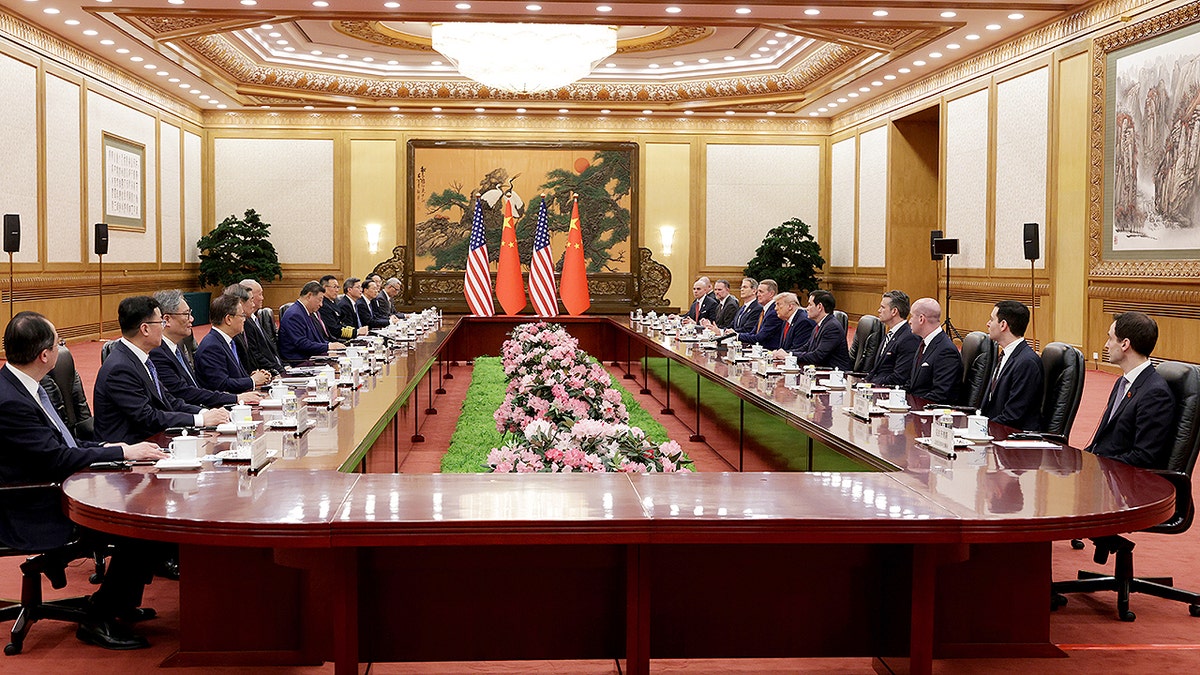
As President Donald Trump meets with Chinese President Xi Jinping in Washington, a range of important issues is on the agenda. Discussions will include trade, tariffs, rare earth minerals, and supply chains. However, a significant underlying concern is the technological rivalry between the two nations, which could influence global economic and military power for years.
Central to this competition is artificial intelligence (AI). The focus is not solely on which country can develop the most advanced AI models. It extends to controlling the chips, computing infrastructure, and broader technology ecosystem essential for AI.
America remains the global leader in AI and semiconductor technology. Yet, China is working hard to lessen its reliance on US technology. Huawei plays a key role in these efforts, prompting concerns in Washington.
For many years, the US applied export controls to limit China’s access to advanced semiconductors and technologies connected to military use. These controls aimed to prevent US technology from enhancing a competitor’s military capabilities. However, an important consequence emerged: China intensified its efforts to create an AI ecosystem independent of American inputs.
Huawei has expanded its line of Ascend AI chips. Chinese developers have adapted software to function with domestic hardware. Investments in computing systems strive to overcome performance issues in Chinese designs. Huawei reported increased demand for its AI equipment within China, outstripping supply.
This situation presents a strategic question for Washington. How does the US ensure global markets favor American technology over China’s? An interconnected challenge arises if US technology becomes too scarce globally, motivating China to innovate replacements.
Countries heavily investing in specific technology ecosystems find it challenging to switch later. Hence, the competition isn’t simply about selling chips but about dominating the entire ecosystem.
President Trump has taken steps different from the Biden administration. While maintaining controls on technologies with national security implications, he rescinded the Biden-era AI Diffusion Rule, allowing some advanced chips sales to approved Chinese entities under strict conditions.
The primary goal is to protect crucial technologies while still competing commercially. This approach acknowledges the need to defend national security without conceding too much commercial market space to Chinese competitors.
Huawei’s aspirations include not just surviving American restrictions but competing globally with Chinese chips and infrastructure. The next competitive phase will involve which technologies countries adopt, which systems they implement, and which standards become widely accepted.
In the US, advantages include leading semiconductor designers, top AI firms, and a culture of innovation that China cannot easily replicate. However, such leadership must be maintained through careful policy management.
Calls within the US for slowing AI growth or imposing further restrictions for safety reflect these concerns. While AI and semiconductor technologies pose genuine security risks, restrictions must be measured to avoid strengthening China’s technology base inadvertently.
Ultimately, it is crucial for US companies to remain at the core of the global technology ecosystem. Past lessons of losing manufacturing capacity and supply chains should guide current policymakers in maintaining America’s technological infrastructure.
Advanced computing power is now a significant strategic asset. Countries and companies controlling this technology will gain advantages in numerous fields, including scientific research and military technology.
The Trump-Xi meeting holds substantial importance in determining the future technological infrastructure of the 21st century. Protecting sensitive technologies and maintaining competitive American innovation is essential to retaining global technological leadership.