
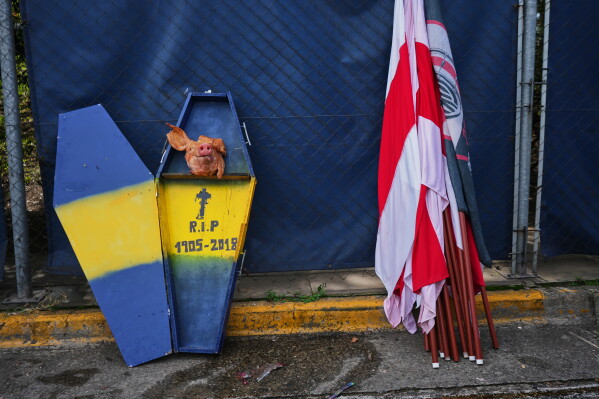
Santiago García, an ardent fan of Boca Juniors, carries a chain that feels sacred even though it lacks religious symbols. Years ago, when his grandmother was in intensive care, García placed his cherished necklace, adorned with the emblem of his favorite soccer club, around her neck. He wished aloud, “Boca will save you.” When his grandmother recovered, the necklace remained hers.
This deep connection to soccer is common across Latin America as the region gears up for the 2026 World Cup. For many, soccer is more than a game; it’s woven into daily life through rituals and beliefs.
There has been an emotional connection between the public and their soccer teams for a long time. It fosters identity and bonds that make us feel part of a sporting process that represents us.– Mexican analyst Erick Fernández
In Argentina, where Lionel Messi was born, sports passion often passes through families, solidifying club loyalties over generations. Pope Francis, an Argentine himself, supports San Lorenzo and agrees with those who call soccer the world’s most beautiful game.
García’s passion for Boca Juniors originated from his father. His mother, originally a supporter of another team, became a Boca fan as well. He explains, “You usually support your mother’s or father’s club. Soccer is the backbone of it all, but you develop a sense of belonging to a team and carry it with you everywhere.” At 17, García tattooed a phrase from Boca’s anthem on his torso, a symbol that remains important to him years later.
The Power of Belonging
Pope Francis once emphasized soccer’s beauty lies in its collective spirit. Among fans, communal experiences in stadiums—singing anthems, sharing tears, and embracing strangers—mirror forms of collective devotion.
Each person can support a team, but the sense of togetherness that generates ‘communitas’ is only possible when people gather.– Argentine anthropologist Eloísa Martín
The sense of community in soccer can inspire positive actions, such as helping other fans, or lead to tensions when rival communities clash.
Adilvania Santos, a Fluminense supporter in Brazil, finds solace in her club during tough times. She attends matches despite living far from the stadium, as the experience provides her with a sense of belonging.
Soccer deeply moves Brazilians because it creates a sense of belonging, identity and hope. People suffer, work hard and face difficulties, and soccer becomes a space for collective joy.– Jeferson Mengali, Catholic priest and Corinthians fan
Rituals for Victory
Faith plays a role in soccer for many fans like Mengali, who has prayed with Corinthians, seeking serenity over victory. Some fans have individual rituals, known as “cábalas” in Argentina. These practices became well-known in the 1990s and involve specific habits believed to influence game outcomes.
García’s current cábala includes wearing the same Boca jersey all season and keeping a small image of Diego Maradona with him. Maradona, also known as “El Diego,” carries a sacred status among fans.
Saints of the Stadium
While Maradona and Brazil’s Pelé are global icons, many Latin Americans have personal soccer heroes. In Chile, Héctor Hermosilla pays tribute to Colo Colo club founder David Arellano before every match.
Since 1986, Hermosilla has supported his club, even traveling from Chile’s north to Puerto Montt to watch games. He earned the nickname “Nano Fotocopia” by selling photocopied song sheets to finance these trips. Now, he sells accessories to fund his travels with his family.
Before each match, Hermosilla performs a ritual beneath Arellano’s portrait, asking for the founder’s blessing.
Associated Press religion coverage has support through collaboration with The Conversation US, funded by Lilly Endowment Inc. However, the AP is solely responsible for the content.