
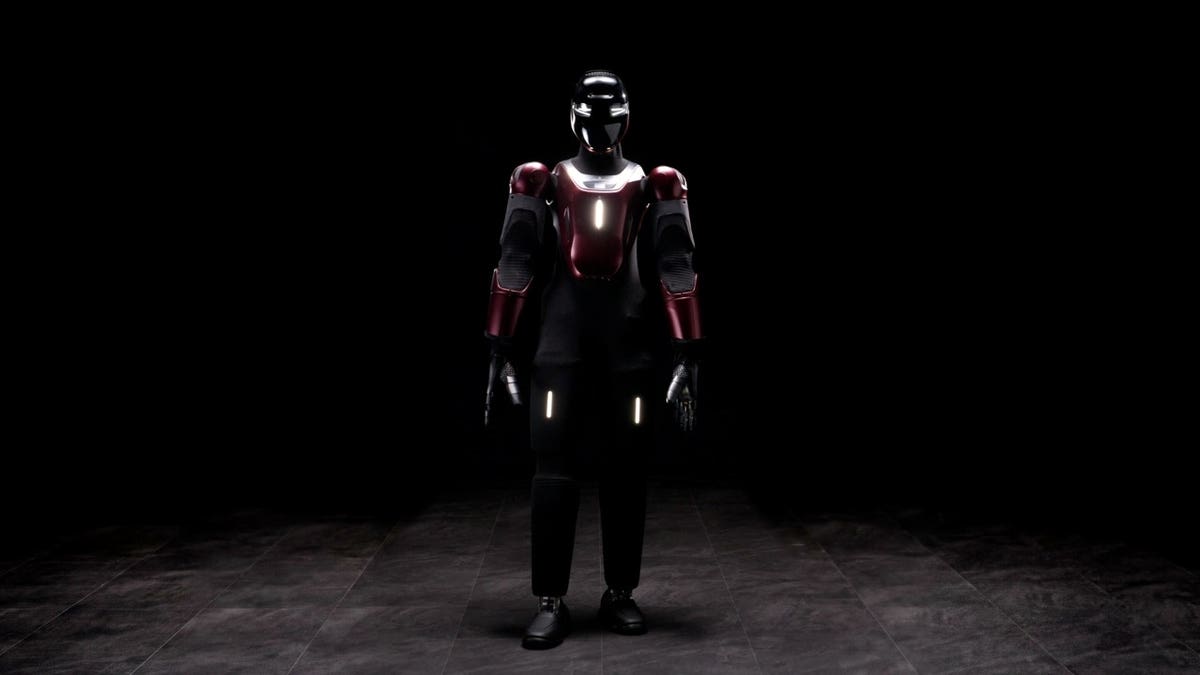
Working with a metal humanoid robot raises safety concerns. Italian startup Generative Bionics aims to address these concerns with its Gene.01 humanoid robot. Gene.01 features sensor-filled skin that detects a person nearby before physical contact. This approach intends to minimize collision risks between humans and robots.
Gene.01’s Sensory Capabilities
Gene.01 is equipped with sensors across its torso and limbs. These sensors detect touch, temperature, proximity, and force simultaneously. Proximity sensors provide early warnings when someone enters the robot’s vicinity, which is crucial for preventing accidents.
The basic idea resembles how humans feel heat from a hot surface. Similarly, Gene.01 senses a person nearby before physical contact. This early detection allows the robot to respond promptly to potential interactions.
Challenges and Opportunities in Industrial Settings
Traditional robots often work behind barriers to avoid contact with human workers. In contrast, humanoid robots like Gene.01 aim to perform tasks in spaces designed for humans. This environment demands advanced sensing capabilities.
Unlike cameras, which may lose track of nearby individuals, full-body proximity sensing provides consistent awareness. Gene.01 can detect presence near its body without relying solely on visual inputs.
Innovative Training Methods
Gene.01’s design facilitates new approaches to training. Workers can manually guide the robot’s arms, teaching movements and forces required for specific tasks. This hands-on method supplements video demonstrations, providing nuanced force feedback.
By directly moving the robot’s arm, workers demonstrate the precise pressure needed for tasks, preventing mishaps like dropping objects or applying excessive force.
The Concept of Physical AI
Gene.01 is built on “Physical AI,” integrating hardware and software as a unified system. Engineers use models to measure factors like walking stability and worker strain, enhancing the robot’s interaction with humans.
This approach stems from research at the Istituto Italiano di Tecnologia. While earlier studies focused on the ergoCub robot, Gene.01 represents the first industrial use of this methodology in a sensor-covered humanoid.
Customizable Design for Diverse Applications
Gene.01 serves as a base for specialized humanoids tailored to specific tasks. Generative Bionics can adjust AI and external features of the robot to suit different work environments.
Engineers can also modify the robot’s end effectors, like hands and grippers, for various functions. For example, a robot for warehouse work differs from one for welding operations.
Collaborations and Future Prospects
Generative Bionics has partnered with Fincantieri to explore Gene.01’s use in shipyard welding. This setting presents challenges like tight spaces and high temperatures, making automation beneficial.
The company hopes to demonstrate Gene.01’s effectiveness outside controlled environments. Meanwhile, an open-source model allows developers to simulate and refine applications before using the physical robot.
Investment and Strategic Goals
With an $81 million investment led by CDP Venture Capital, Generative Bionics plans to expand Gene.01’s capabilities and production. The company seeks to establish a European supply chain for its humanoid technology in collaboration with Synapticon.
The focus is on creating motorized joints essential for movement, aiming for compliance with European standards.
Ramifications of Smart Skin Technology
Although Gene.01’s adoption in workplaces is not immediate, its sensor technology signifies a shift in robot design. Future robots will need enhanced awareness to operate safely among humans.
Detecting workers before contact allows for timely reactions. Coupled with force sensing, robots can manage interactions more carefully.
Gene.01 introduces promising concepts for factory safety. Yet, verifying these claims through workplace testing and transparent data remains crucial.