
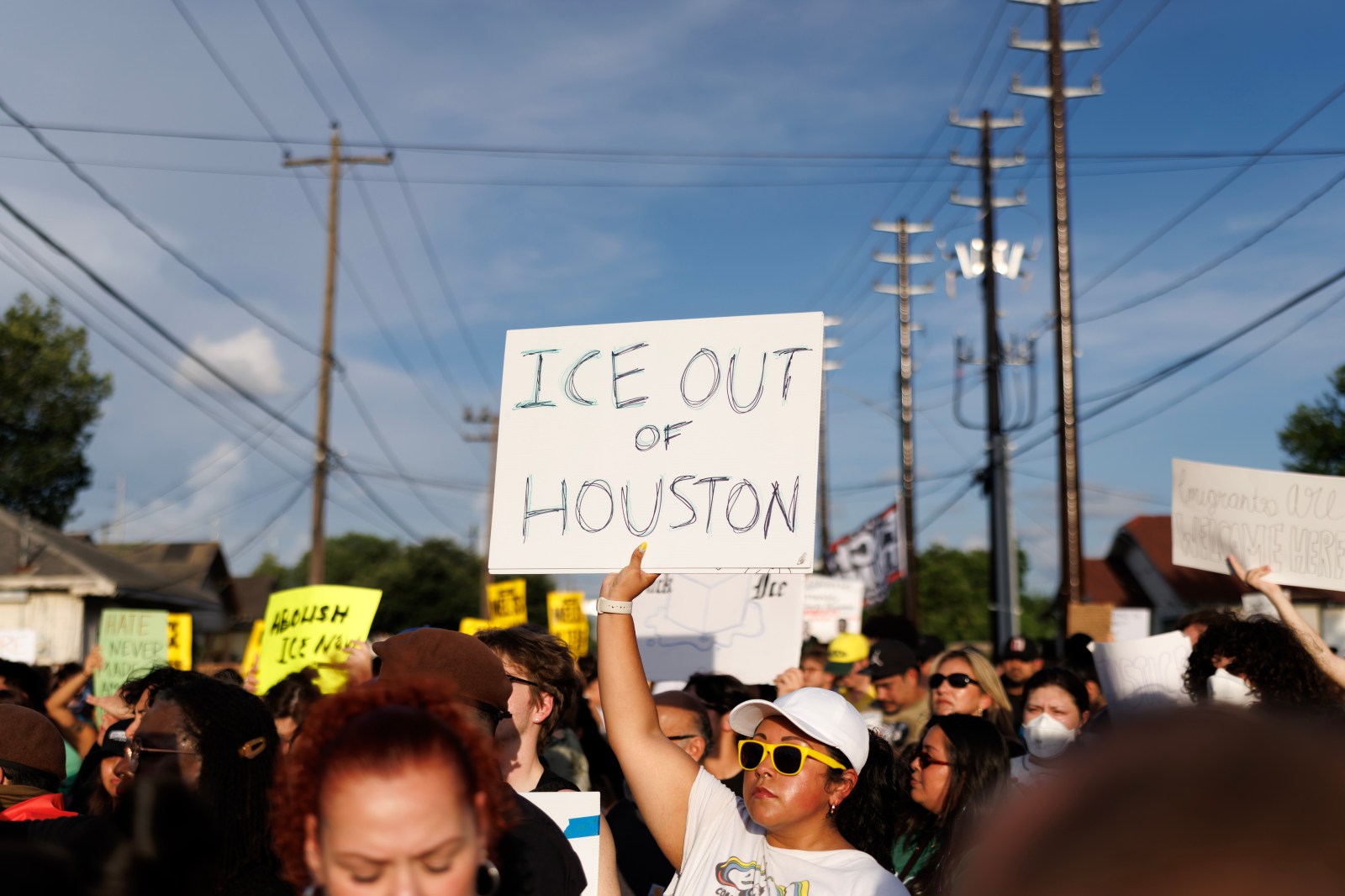
Two major cities in Texas are taking actions to limit how local law enforcement interacts with U.S. Immigration and Customs Enforcement (ICE) following the midterm elections, with initiatives led by executive orders in Houston and intended administrative changes in Austin.
Political Landscape Changes
Democrats saw victory across all statewide races in the traditionally Republican stronghold of Texas. This concluded a three-decade period without statewide wins for Democrats. Democratic state Representative James Talarico succeeded in his bid for a U.S. Senate seat by defeating Ken Paxton, the State’s former attorney general. Meanwhile, Gina Hinojosa became the first Latina governor of Texas by overcoming the incumbent, three-term Republican Governor Greg Abbott.
Houston’s Executive Order
Houston Mayor John Whitmire, a Democrat, recently signed an executive order. This order dictates the Houston Police Department to inform ICE only when a person with an administrative immigration warrant is arrested for a charge that could result in jail time. Police will not alert federal authorities if an administrative warrant appears during interactions leading only to a warning or citation.
I do this to begin a healing process, reduce fear and anxiety across our community.Whitmire stated during a news conference, noting the importance of elections.
Mayor Whitmire expressed a desire for Houston’s policy to serve as a model for other municipalities in Texas.
Austin’s Planned Adjustments
Austin Mayor Kirk Watson has instructed Police Chief Lisa Davis to draft changes to the Austin Police Department’s general orders concerning federal immigration authorities.
Incidents Highlight Tensions
Recent fatal encounters involving federal immigration officers have fueled local discussions. In January, federal officers in Minneapolis fatally shot U.S. citizens Renee Nicole Good and Alex Pretti. On July 7, an ICE officer fatally shot Mexican national Lorenzo Salgado Araujo in Houston while attempting his arrest. Federal authorities reported he used his vehicle aggressively, prompting self-defense action. Calls for an independent investigation into these events persist.
These new policies are part of a larger national effort to limit local resources used for federal civil immigration enforcement.
Federal and State Legal Context
Texas law, specifically Senate Bill 4 from 2017, places limits on local jurisdictions’ ability to restrict cooperation with federal agencies. Houston’s approach does not sever ICE ties or prevent federal agents from independent operations. Houston Police must still contact ICE if an individual with an administrative warrant is booked for a jailable offense. Proposed changes in Austin have to pass city attorney checks.
Notably, earlier this year, Austin altered its enforcement guidelines, then adjusted them again following state threats to withdraw grant funding.
Local leaders, such as Austin City Council member Mike Siegel and Council member Vanessa Fuentes, advocate further limiting local police interaction with ICE.
Broader National Movement
Beyond Texas, other cities have enacted or strengthened rules to limit local involvement in civil immigration enforcement. These measures vary but do not prevent federal governments from enforcing immigration law independently.
- Biddeford, Maine: The city imposed municipal employee and resource restrictions with exemptions for legal and judicial warrants.
- Upper Darby, Pennsylvania: Limited local personnel and resources for civil immigration enforcement.
- Philadelphia, Pennsylvania: Passed an ‘ICE Out’ package restricting municipal assistance in civil immigration enforcement.
- Portland, Maine: Enacted restrictions on city employees aiding federal enforcement.
- Davis, California: Expanded sanctuary-city policies, limiting city support for immigration enforcement.
Boston, Seattle, New York City, and several others have also adopted measures limiting federal immigration enforcement on city properties and sharing city-held information.
A recent New York law now bans police and sheriff’s departments from collaborating with ICE. The developments in Texas post-midterms will indicate if these trends might extend statewide.