
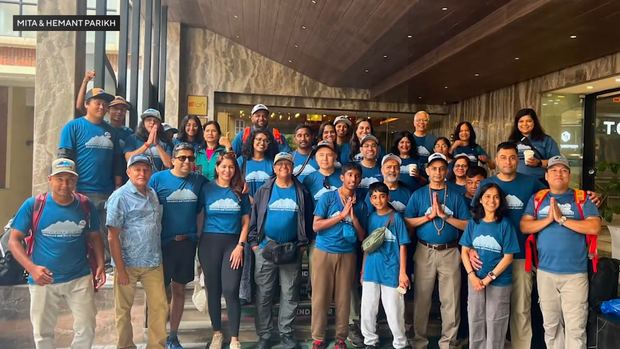
By September 2026, a month after a devastating flash flood swept through a Himalayan river valley, Mita and Hemant Parikh from Suwanee returned home safely. Their traveling companions remain unaccounted for.
The Parikhs were part of a group of 47 people on a spiritual pilgrimage to Mount Kailash in Tibet. The tour company that organized their trip reported that none of the missing families from their group have been found, alive or deceased. Seven guides are also missing.
For Mita and Hemant, the month after the disaster was filled with reflection on how a simple decision changed their fate. A side trip, nearly abandoned, put them on a new path.
“That’s what we talk about every single day,” Mita said. “Why did we decide this way?”
For them, the pilgrimage had been 15 years in the making. “Everybody has a bucket list, but this one, you don’t choose it,” Mita said. “God chooses for you.”
Mount Kailash is a remote peak in the Himalayas, revered in Hinduism. Mita and Hemant sought peace and meditation there. They joined others from around the world, forming friendships and travel plans.
Amid the group were families from the U.S. and Australia, including a mother, daughter, and several children. The Parikhs planned continued travels with these new friends post-pilgrimage.
Then came a chance to visit Lhasa and Everest Base Camp before meeting the group in Saga. The decision was uncharacteristic for them. “Usually we argue, or tickets are expensive,” Mita said, “But this time we both agreed.”
The idea of seeing Everest, the world’s highest peak, drew Hemant. “At least, I cannot climb, but I can go and see from a distance,” he said.
They traveled with a guide and driver. The weather cleared, offering a view of Everest. Their next stop was Saga to reunite with the group. They never met again.
While they were away, a massive flood struck the river valley where their group was staying. Initially, Hemant thought it was minor. “Our guide said that, you know, there was a flood,” he recalled. “And so I thought… it’s not a big deal. There’s always floods.” They misunderstood the severity.
At Everest Base Camp, their phone was silent. They later discovered frantic messages from family and friends, worried for their safety. Initially, they believed their group had been delayed, struggling with a lack of news and language barriers.
Their tour operator’s helicopter flyover revealed dire news. The group’s hotel was destroyed. “The hotel is not there anymore,” Hemant said. “Not a single piece of concrete or pillar or anything.”
Mita imagines the morning before the flood—tea and breakfast around 8:30—with new friends. One month later, uncertainty lingers.
The Parikhs returned to Atlanta under complex emotions. “As soon as I close my eyes, I see Kailash, and I see the people,” Mita said. Hope persists that someone reached safety. “Maybe someone reached higher ground,” she lamented.
Hemant struggles with unanswered questions. “I ask myself why?” he said. “And I don’t have an answer.” He wonders about ways he might have helped those left behind.
Mita considers how the experience reshaped her view of life. She prioritizes time spent with others and searches for purpose after surviving. But she often revisits the choice that saved them—an ordinary decision.
“That’s what keeps me awake,” Mita said. “Why? Why God chose us to live. There has to be some purpose, right?” One month later, questions remain unanswered.