
The Supreme Court’s conservative majority expressed clear support for Catholic preschools in Colorado. These schools claim the state’s taxpayer-funded program wrongly excludes them, infringing on their religious rights. The issue is whether private schools that deny admission to children of LGBTQ+ parents violate state anti-discrimination laws, allowing them to be denied a public benefit.
This appeal is one of several religious rights cases from Colorado reaching the Supreme Court in recent years. In a two-hour oral argument, justices debated the balance between religious liberty and a state’s interest in equal opportunity for LGBTQ+ parents.
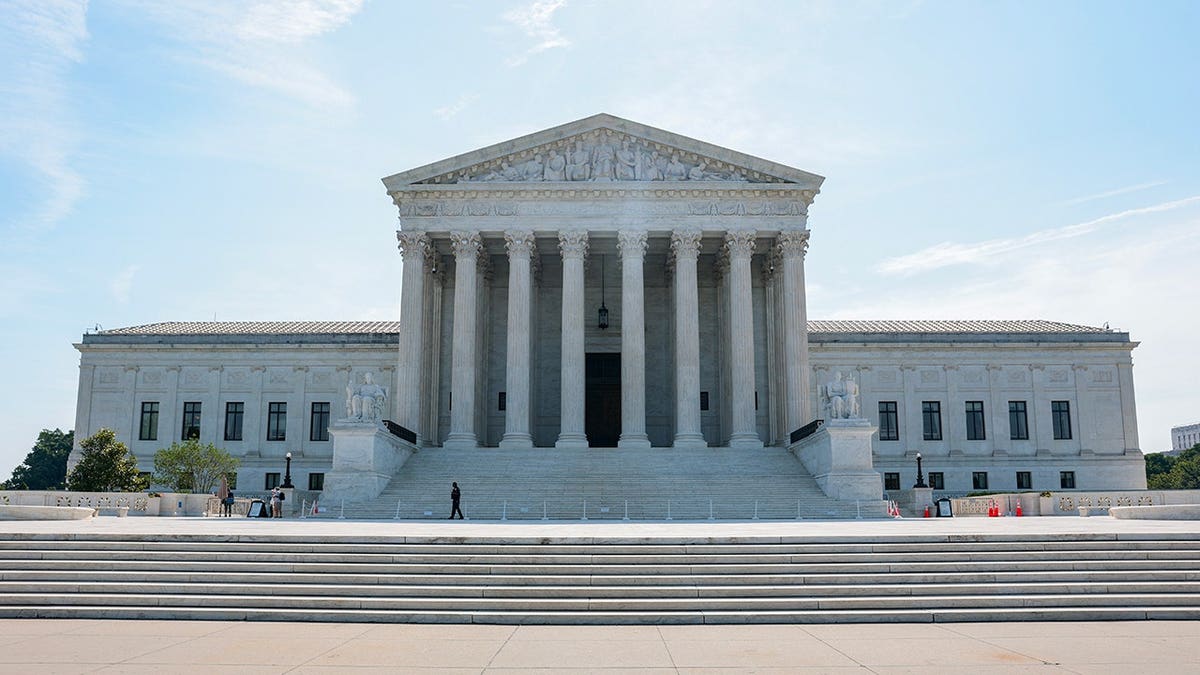
The U.S. Supreme Court is seen in Washington, D.C., as justices consider whether Colorado’s publicly funded preschool program unconstitutionally excludes Catholic schools.
Justice Sonia Sotomayor stated that LGBTQ+ families should have the choice to attend these schools, not be excluded based on religious beliefs. She questioned the plaintiffs’ request for public money despite refusing certain children.
Justice Brett Kavanaugh argued that Colorado’s program should respect religious beliefs and allow LGBT parents to find suitable schools among 2,000 options. He suggested the clash is unnecessary, as all families can find fitting schools that respect religious rights.
Colorado’s Universal Preschool Program, established by a 2020 ballot measure, distributes public funds for schools ensuring equal opportunity, regardless of various factors including sexual orientation and religious affiliation. Two Catholic parishes sued, claiming the policy targets their beliefs on same-sex marriage.
The Colorado archdiocese manages 34 preschools that admit students from families supporting Catholic ideology, seeking exemptions from Colorado law. They argue exclusion forms religious discrimination, violating the First Amendment.
The Trump administration has signaled its support of the religious plaintiffs.
The state argues its conditions are neutral and apply to all preschools, offering a $6,300 annual benefit per child for up to 15 hours a week, funded by a tobacco tax. Officials stated religious schools are free to participate but must comply with nondiscrimination laws.
The Supreme Court will review whether to narrow a 36-year-old precedent that religious practices do not create exemptions from broadly applicable laws. Previously, the court focused on church-state separation but now trends toward favoring religious institutions claiming “free exercise.” Conservative justices emphasized the Catholic parishes’ claims that public benefit conditions equate to religious discrimination.
Justice Amy Coney Barrett questioned the difference between directly excluding Catholic schools and imposing conditions they can’t meet. Justice Elena Kagan highlighted prior cases affirming equal treatment of religious institutions. Chief Justice John Roberts asked challenging questions of both sides, and his decision may be pivotal.
The dispute involves plaintiffs like St. Mary Catholic School, where Erika Nagle’s children lack access to preschool funding, leaving families to cover education expenses. Nagle criticized exclusion based on religious beliefs, while the Becket Fund for Religious Liberty claimed enrollment declines and closures among archdiocesan preschools.
State attorney Helen Norton stated Colorado welcomes religious preschools into its program, requesting they meet the same conditions as secular ones. Religious entities like Catholic Charities, Christian schools, and other faith-based schools still participate.
The case, St. Mary Catholic Parish v. Roy (25-581), awaits a ruling expected by next spring.