
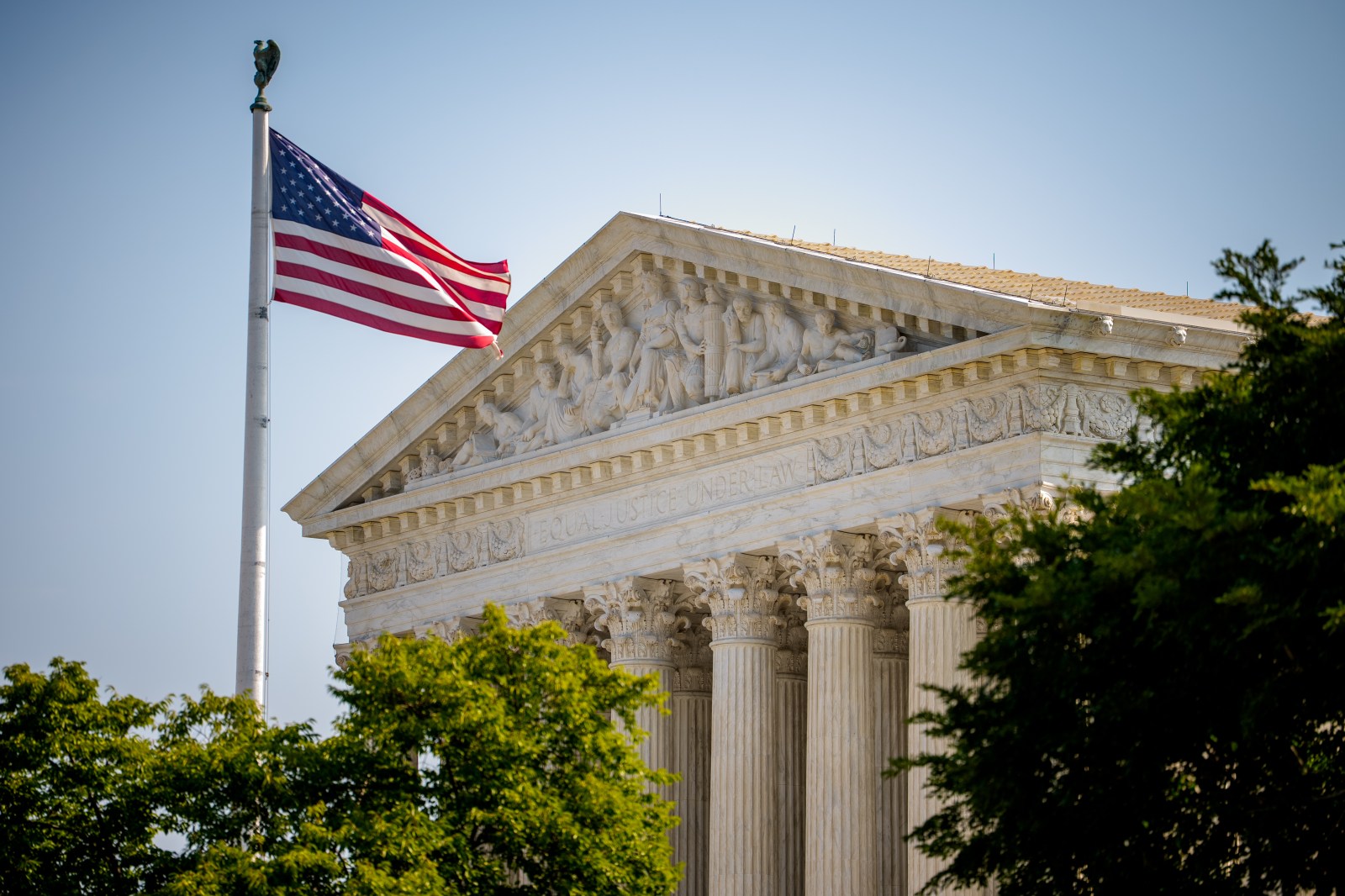
The Supreme Court of the United States declined an appeal from Missouri state leaders on Tuesday. They sought to use a congressional map from recent primaries for the upcoming midterm elections. This map had been supported by President Donald Trump. The case stands out as a key issue in election law, addressing how late courts can change congressional maps before an election and what happens to voters already involved in primaries.
Controversy Surrounding the Map Change
Missouri Attorney General Catherine L. Hanaway expressed concern, calling the situation a “federal-election-administration disaster.” She argued in the appeal that changing maps so close to the midterms would be detrimental. U.S. Supreme Court Justice Brett Kavanaugh denied the state’s request to maintain the new map, affirming the Missouri Supreme Court’s directive to use the 2022 map instead.
Abha Khanna, counsel in the case, supported the decision. She stated that the Missouri Supreme Court and Justice Kavanaugh were correct in upholding the state constitution. This decision aligns with the will of the many Missourians who demanded an opportunity to voice their opinion on the gerrymandered HB 1 map. The court’s ruling is seen as a victory for democratic processes and those who opposed the map by signing petitions.
Background of the Legal Battle
House Bill 1 was approved by the Missouri legislature in September 2025, replacing the 2022 congressional map. The bill passed both legislative chambers with support and gained the approval of Republican Governor Michael Kehoe. Missouri used this new map in the August 2026 primary elections, where approximately 1.2 million voters participated.
An activist group called People Not Politicians, led by Richard von Glahn, initiated a referendum campaign to bring the decision to voters. This led to multiple lawsuits questioning the applicability of Missouri’s referendum process on congressional redistricting. Initially, courts allowed the map to be used while legal proceedings continued. However, on September 3, the Missouri Supreme Court reversed a previous ruling, prohibiting further use of House Bill 1 and reverting to the 2022 map.
Missouri’s Urgent Request for Supreme Court Intervention
The state’s Supreme Court filing highlighted that changing district boundaries after the primary election could displace voters into different districts. These voters may end up voting for candidates they did not nominate. A lower court had deemed such changes “impossible,” noting the short time frame. Missouri argued that these considerations were not properly addressed by the state supreme court.
Kavanaugh’s denial of emergency relief maintained the Missouri Supreme Court order without addressing the core legal concerns. Richard von Glahn hailed the decision, stating it upheld the clear language of the Missouri constitution. He emphasized that a vast number of Missouri voters from diverse political backgrounds contributed to blocking the new map.
Constitutional Arguments and Broader Impact
The appeal involved constitutional debates Republicans hoped would attract attention. One argument centered on the Elections Clause, suggesting that a small percentage of voters should not suspend the state’s redistricting process. Missouri also contended that changing districts between primary and general elections violated constitutional principles by treating voters unequally based on district changes.
Republican groups, including the Republican National Committee, criticized the Missouri Supreme Court’s decision as destabilizing the election process due to actions by a small voter fraction. Supporters of the ruling argued that state law necessitates the map’s suspension pending a statewide vote.
National Implications
The case poses questions about the timing of court interventions in congressional map changes. Missouri and national Republican entities warned that similar cases could emerge in other states if courts intervene too late in the election cycle. They pointed to the Purcell principle, warning against significant election changes that could confuse voters and disrupt election administration.
Though Kavanaugh did not provide immediate relief, the issues involved remain significant for election laws nationwide. Missouri must adhere to the Missouri Supreme Court’s ruling while awaiting further developments in this closely monitored election-law case.