
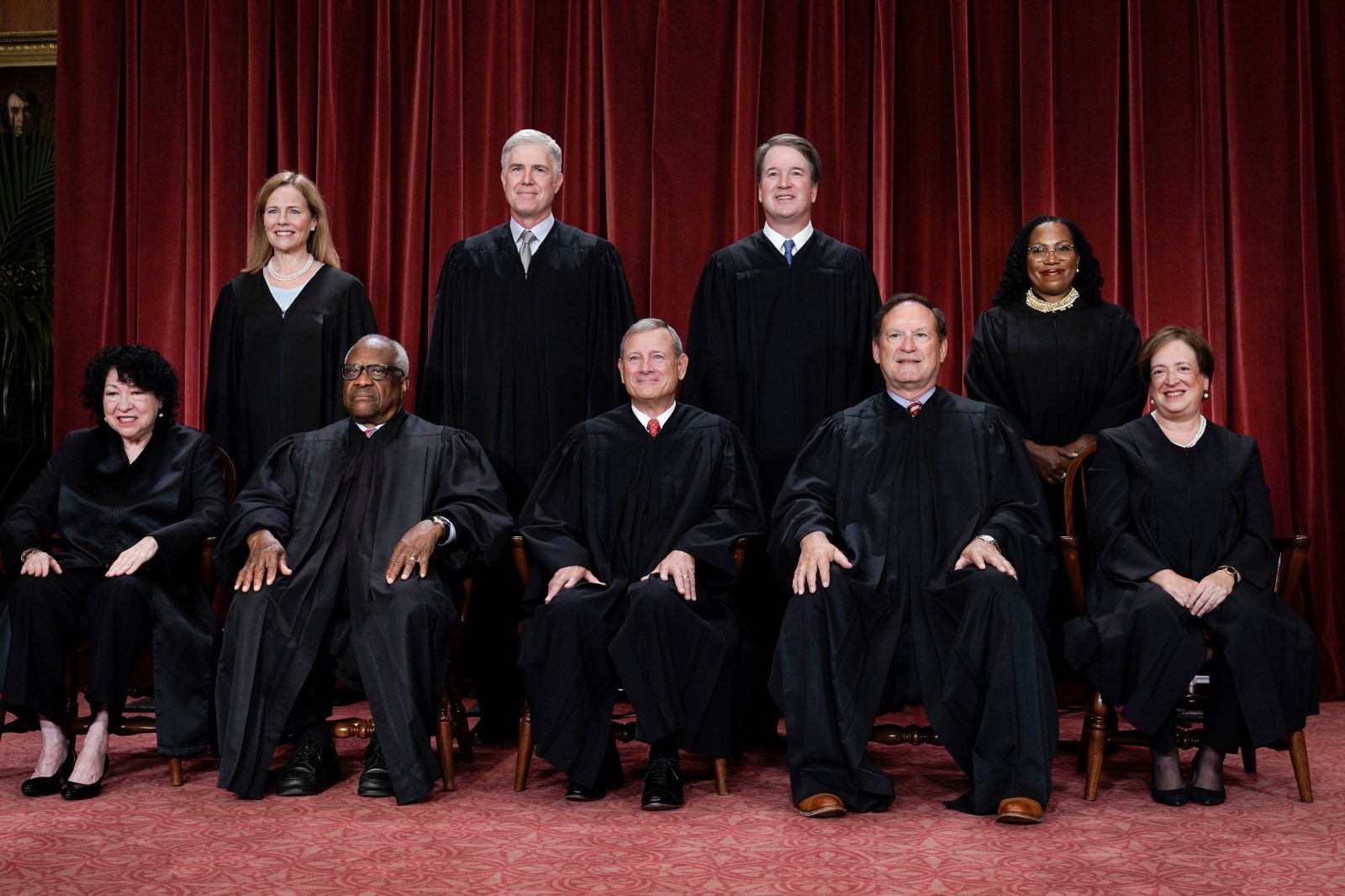
Supreme Court Justice Elena Kagan recently provided insights into the ambiance of the Supreme Court during the occasion when President Donald Trump attended oral arguments related to the birthright citizenship case. This marked an unusual incident, as it was the first time a sitting president participated in such proceedings. Justice Kagan described Trump’s presence as a “non-event,” stating that the atmosphere was akin to any other day in the courtroom.
Birthright citizenship refers to the principle that confers U.S. citizenship to individuals born on American soil, irrespective of their parents’ immigration status. The Trump administration attempted to narrow the interpretation of this principle, aiming to deny automatic citizenship to children born to undocumented or temporary status individuals. These efforts were thwarted on June 30 when the Supreme Court invalidated Trump’s executive order in a 6-3 decision.
Trump’s Presence in the Courtroom
During a judicial conference, Kagan asserted that Trump’s attendance at the oral arguments did not influence the proceedings. She noted that Chief Justice John Roberts did not publicly acknowledge Trump’s presence, who sat in the front row of the public section. The president left midway through the session, which lasted two hours, with Kagan commenting that he likely had other obligations. Trump said he would not attend future proceedings, expressing concern that his presence might detract from essential decisions.
Supreme Court’s Recent Rulings
Despite the Supreme Court’s 6-3 conservative majority, including three of Trump’s appointees, it has ruled against the Trump administration in significant cases such as birthright citizenship and tariffs. Kagan emphasized that the court does not merely align with current administration policies, citing this dissent as evidence of judicial independence. Nonetheless, critics argue that the court’s conservative majority shapes rulings on contentious issues like abortion and gun rights, leading to public perception of political bias.
Details of the Birthright Citizenship Case
The case, Trump v. Barbara, focused on whether children born in the U.S. to parents with unlawful or temporary status qualify for citizenship under the 14th Amendment. The Supreme Court’s decision reaffirmed interpretations of the 14th Amendment’s Citizenship Clause, which grants citizenship to individuals born or naturalized in the U.S. Chief Justice Roberts, writing for the majority, defended the long-standing legal framework established by the landmark 1898 ruling in United States v. Wong Kim Ark.
Trump’s Tariffs Case
Another major judicial setback for Trump’s policies occurred when the Supreme Court invalidated a series of tariffs he imposed under the International Emergency Economic Powers Act (IEEPA). The court decided the law did not authorize the president to enforce tariffs without congressional approval or investigation, negating a core component of Trump’s trade strategy.
Following the ruling, Trump censured the justices in the majority, calling them “fools and lapdogs” for opposing political factions, and described conservative justices as “disloyal” and “unpatriotic.”
Public’s Perspective on the Supreme Court
Public confidence in the Supreme Court has diminished, reflecting apprehensions about its role in divisive political and social issues. Polls reveal a significant decline in approval ratings, with many perceiving the court as politically motivated rather than strictly adhering to the law. A YouGov/The Economist poll reported an approval rating of 36 percent, while a Washington Post/Ipsos poll reflected that more than half of Americans disapprove of the court’s performance.