
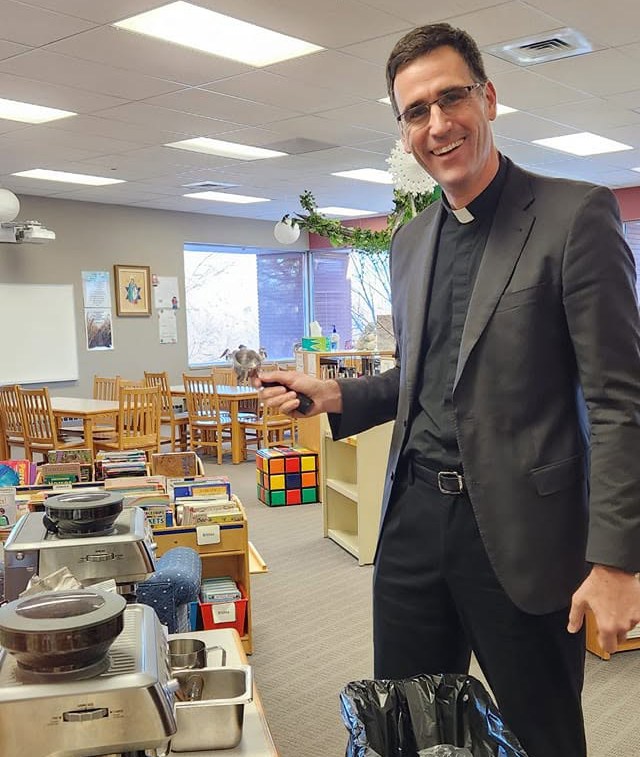
The Supreme Court is examining a case involving Catholic preschools that declined to sign a pledge related to student enrollment in Colorado’s universal preschool program. The central issue is whether the state can impose conditions on public funds that certain religious groups may find unacceptable. Colorado’s preschool initiative, launched in 2023, offers 15 hours of tuition-free preschool weekly to every 4-year-old. Participation requires schools to agree that sexual orientation or gender identity won’t affect enrollment.
St. Mary’s principal, Fr. James de Cendra, is among the litigants challenging this requirement. Justices Samuel Alito, Neil Gorsuch, Brett Kavanaugh, and Amy Coney Barrett have scrutinized Colorado’s conditions, while Justices Sonia Sotomayor, Elena Kagan, and Ketanji Brown Jackson argue against religious exemptions that secular schools do not receive.
Chief Justice John Roberts poses questions to both sides, highlighting past rulings where laws targeting religious institutions were struck down. He queries whether similar principles might apply in other areas, such as driver’s licenses and employment benefits.
“I’m not quite sure how you limit the applicability of your principle,” Roberts questioned Nicholas Reaves, the lawyer representing the parishes.
The case is intertwined with two precedents, Sherbert v. Verner (1963) and Employment Division v. Smith (1990), that define how laws impact religious practices. Though asked to overturn Smith, the court refused to consider this question. Alito voiced no intention to pursue that argument on the day of the hearing.
Gorsuch accused Colorado of circumventing recent court rulings favoring religious schools. Kavanaugh pointed out existing enrollment preferences based on secular values, questioning the lack of similar allowances for religious beliefs.
Justice Barrett expressed skepticism over the regulation’s purpose, suggesting it targets religious institutions specifically. Sotomayor pressed Reaves to affirm whether schools would reject children based on their parents’ sexual orientation. Reaves explained that while not automatic, enrollment might sometimes be declined for religious reasons.
Jackson drew parallels between objections to gay and racial identities, challenging the consistency of Reaves’ arguments. Sarah Harris, representing the DOJ, emphasized racial exclusions often failing strict scrutiny.
Helen Norton, Colorado’s lawyer, maintained the state’s interest in equal opportunity, redirecting focus from religious discrimination. Erika Nagle, a mother in Colorado, reported losing out on $12,000 in benefits due to her choice of a Catholic education.
The parishes, supported by various Catholic entities, filed a lawsuit after losing exemption requests for religious schools. They argue the policy infringes on the First Amendment’s Free Exercise Clause. The lower courts have previously denied a permanent injunction against the nondiscrimination requirement.
Since 2018, Colorado’s policies have faced Supreme Court challenges on religious and free speech grounds, losing each instance. Notable rulings include a case against conversion therapy bans and another involving a web designer’s freedom of speech.
Lawsuit representatives highlighted financial impacts of the policy, detailing shortfalls faced by families like the Sheleys. A decision in St. Mary Catholic Parish v. Roy is anticipated by the end of June.