
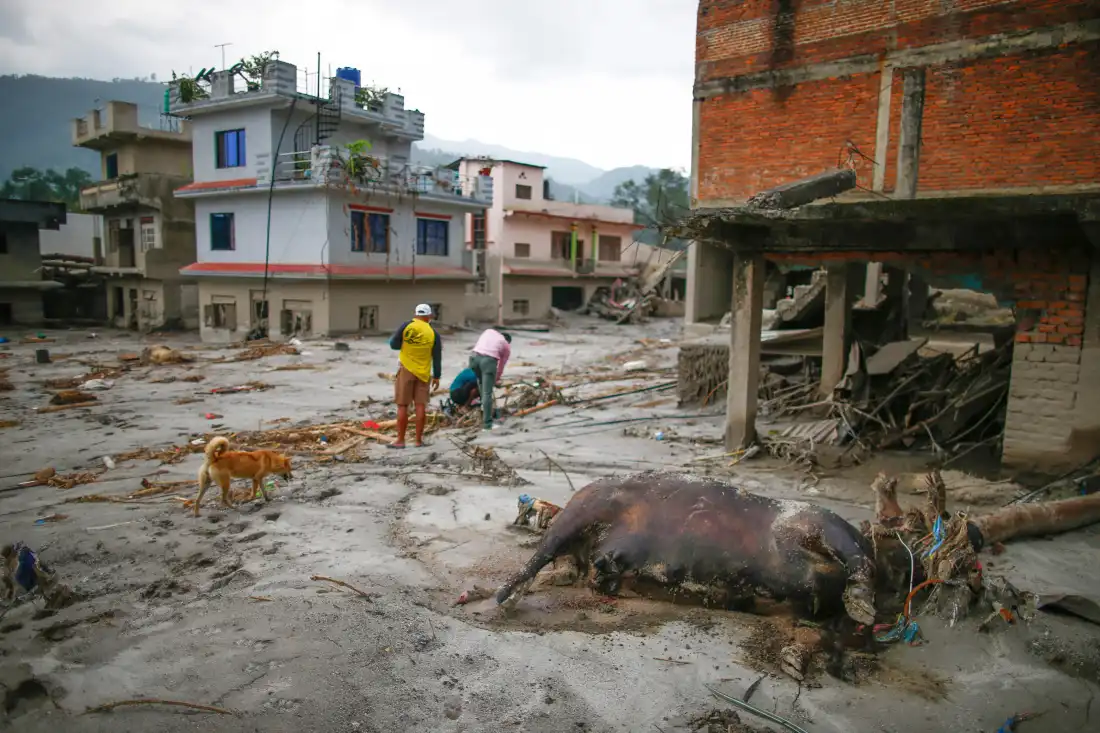
Residents are gathering their belongings in flood-hit areas as rescue and relief continue following devastating flash floods and mudslides in Devighat, within Bidur Municipality in Nepal’s Nuwakot district. A glacial collapse triggered this disaster, along with a massive debris flow along the Trishuli River, claiming hundreds of lives and leaving many missing.
“I thought I wouldn’t survive,”
says Januka Dhital. Minutes before the flood, Dhital was preparing snacks for her catering business in Uttargaya, Nepal. A man on a scooter warned her of the impending flood, and she quickly grabbed her son, escaping to higher ground. While she and her son reached safety, she worried about her husband and daughter, who were at work and school.
After hours of worry and searching, Dhital reunited with her family. Her husband was injured but alive. She lost her home and possessions, but now dedicates herself to helping other survivors.
This disaster has left 100,000 people struggling after floods caused by glacial melt exacerbated by climate change. At least 1,500 people have died, and over 5,000 are missing. Many remain in temporary shelters. The flood damaged seven health facilities, 23 schools, 10,000 toilets, and 64 water systems, according to the United Nations. Preliminary signs indicate rising malnutrition as winter approaches.
Shyam Pathak, a UNICEF health chief, remarks on the diminishing international attention as recovery efforts progress. Community members like Dhital are both victims and aid workers, contributing to rebuilding efforts.
Dhital and her family initially found refuge in a holding center before moving to a relative’s home. Overwhelmed, Dhital sought to contribute, eventually working with Helen Keller Intl on community recovery efforts, focusing on malnutrition among survivors.
Data shows a rise in moderate acute malnutrition, with significant increases reported in areas like Naukunda Gaunpalika. Loss of homes and farmlands has pushed many to rely on packaged foods, while poor sanitation and lack of clean water compound the health crisis. Aid workers provide essential supplies and financial assistance, though delivery challenges persist as bridges and roads are destroyed.
Community aid worker Pushmaya Tamang describes the difficulty of traversing damaged infrastructure to reach affected areas. Her village was destroyed, and she continues aid work while coping with personal loss.
Mental health support is vital for survivors, as many, including Dhital and Tamang, balance rebuilding with personal trauma. Despite this, health workers return to assist their communities.
Winter looms with additional challenges for those in temporary shelters. Aid workers are focusing on winterizing accommodations and securing better shelter, alongside providing food and healthcare.
Long-term rebuilding raises questions with a projected $5 billion cost. While some funds have been allocated for recovery, the financial need remains significant. Aid organizations prioritize immediate needs amid limited resources. Tamang finds purpose in daily recovery work, despite the pervasive loss.