
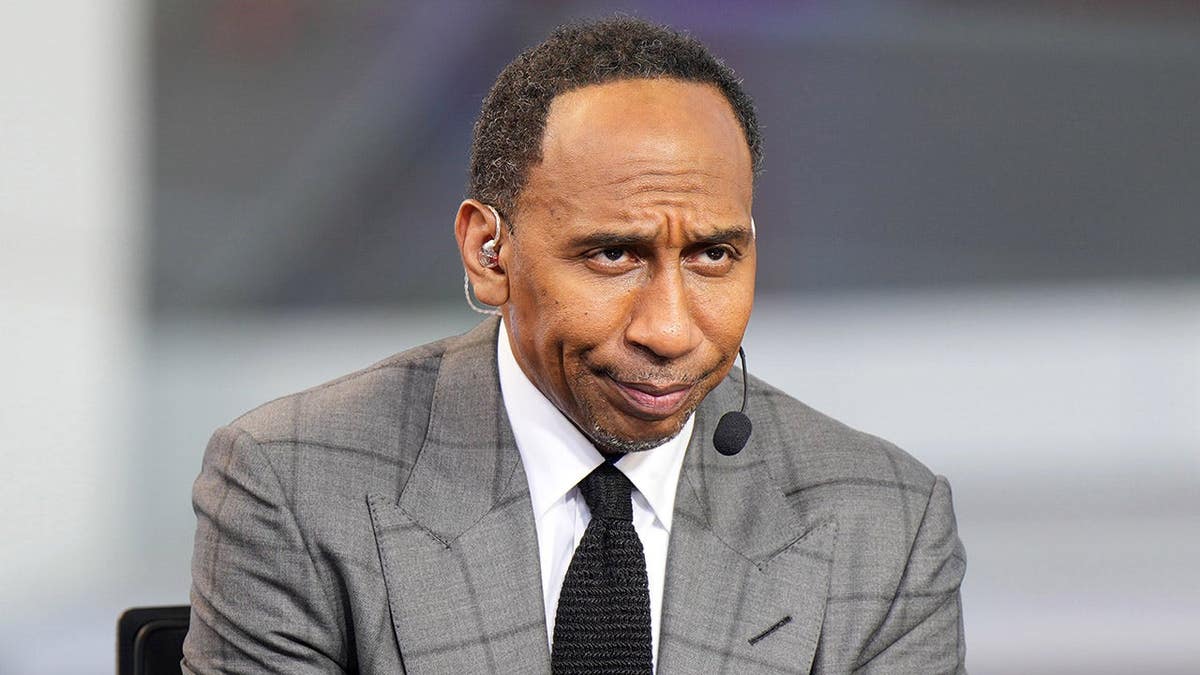
Stephen A. Smith has been vocal about his views on White basketball players, provoking questions about whether his behavior will face disciplinary actions. In July, Smith doubted the Los Angeles Lakers’ ability to win an NBA title with Luka Doncic, Austin Reaves, and Walker Kessler, citing historical absence of success for teams led by three White players. This perspective has persisted, with Smith recently asserting such a team not only hasn’t won, but won’t.
Moreover, Smith challenged Black NBA players to prevent such a championship. On his radio show, he urged players like LeBron James, Kevin Durant, and Steph Curry to react against the notion of a top NBA team led by White players, stressing racial dynamics. Sophie Cunningham responded, finding humor in Smith’s dismissive stance on White contributions in the NBA.
“You can’t ask LeBron James to overcome [this White trio], but you can….make sure….best team in the NBA right now is being led by three White boys.”
Smith’s conversation with ESPN colleague Jay Williams highlighted his desire to prevent what he perceives as surrender to a “White Lakers.” His rhetoric mirrors assumptions by others such as Kendrick Perkins and Gilbert Arenas, who have similarly positioned basketball as predominantly belonging to Black players. Smith’s suggestion of ceding the NBA to White players hints at perceived racial threats to the sport’s dynamics.
These comments are racially sensitive. Yet, no consequences seem imminent, as society often tolerates racism when directed from Black to White people. Smith’s continued employment at ESPN, where he reportedly earns over $20 million annually, underscores a perceived double standard.
Whether Smith should face repercussions is debated. Would an immediate dismissal ensue if a White host made similar racially charged statements against Black athletes? Likely. Yet, Smith operates seemingly unchecked, raising potential questions about ESPN’s stance on racial remarks.
The basketball logic of Smith’s comments is also questioned. The Lakers’ player trio is statistically strong. Skepticism appears to focus more on supporting players, predominantly Black, than the trio itself.
ESPN influences this narrative by allowing Smith’s views, reflecting broader issues within the organization. Viewers primarily interested in sports analysis may find racially framed comments diverting.
Smith appears to use these declarations to align with certain community responses, especially following criticism over his interview with President Trump. ESPN’s management, including Jimmy Pitaro and Burke Magnus, seem hesitant to address Smith’s controversial declarations, suggesting an institutional reluctance to challenge high-profile personalities.
In essence, Smith’s contract and coverage reflect a leniency toward his racially charged commentary, raising questions about accountability within sports broadcasting platforms.