
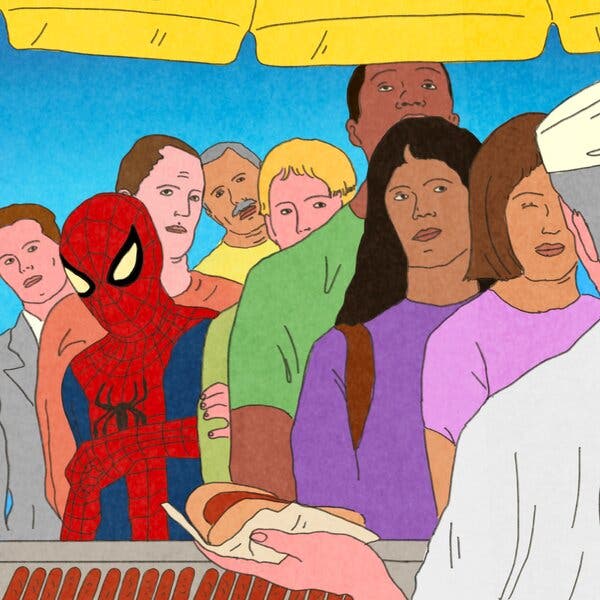
The superhero genre has evolved tremendously since the debut of the first “Avengers” movie. Fourteen years later, the once awe-inspiring figures have become predictable. Their superhuman abilities, their invincibility, and their universe-hopping escapades are now overshadowed by real-world events. Can any of these superheroes truly resonate with audiences anymore?
In a world where federal governance struggles with internal conflicts, grappling with its own Constitution, public concerns, and international relations—such as tensions with Iran—typical superhero narratives feel detached. Even a character like Lex Luthor might reconsider his malfeasance in the face of rampant corruption by modern-day oligarchs. This era isn’t suited for Superman, nor is it conducive to groups like the Avengers or X-Men, renowned for battling extraterrestrial threats but often leaving destruction in their wake.
What audiences seem to crave is relatability, embodied by Spider-Man. Recently, Peter Parker returned in “Spider-Man: Brand New Day,” released in approximately 4,500 theaters across North America. The film depicts Spider-Man confronting supernatural threats, romantic entanglements, financial woes, and psychological struggles. His relatable journey captivated audiences, breaking box office records with over $500 million in domestic sales. Predictions suggest the global earnings might approach $2 billion.
Spider-Man’s appeal stems from his ordinariness compared to other Marvel heroes. Though gifted with abilities like wall-climbing, web-shooting, and extraordinary strength along with a unique ‘spider sense,’ Spider-Man remains grounded. His reliance on New York’s architecture for movement makes him vulnerable in less urban settings. He faces mortal risks, evidenced by his hospitalization after being shot in the latest film.
Unlike other superheroes, Spider-Man lacks extravagant gadgets or secretive tech-enhanced hideouts. In “Brand New Day,” he operates from a humble attic workshop, crafting his own tools. Physically, he contrasts with the typical superhero physique—despite getting toned, he still exudes the nervous energy of a teenager.
Spider-Man’s creation was fraught with challenges. In the early 1960s, Stan Lee’s idea initially met with skepticism from his publisher, who detested the concept entirely. As recounted by Lee to BBC Radio 4 in 2015, initial criticisms targeted the arachnid theme, the character’s age, and potential personal problems as conflicting with superhero norms. Nevertheless, Lee crafted his vision into the final issue of a canceled comic series in 1962, and Spider-Man quickly gained popularity.