
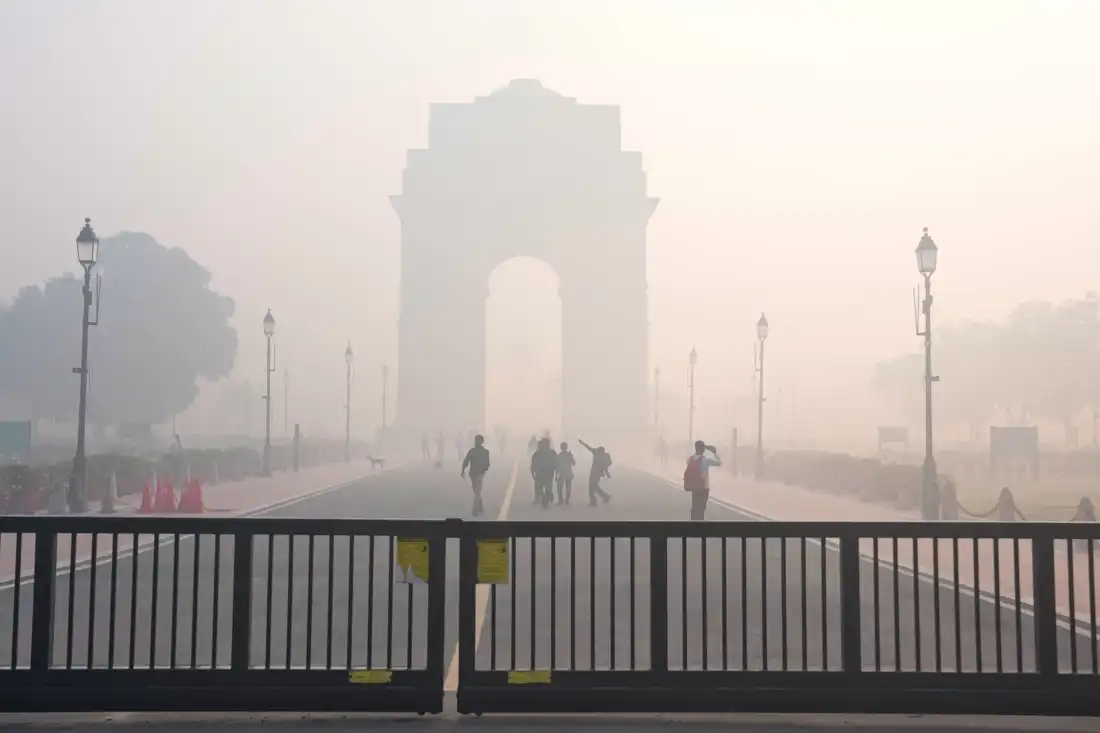
As residents walked near India Gate engulfed in thick smog, the effect of Diwali celebrations in New Delhi became evident. Despite restrictions, the city was illuminated with firecrackers on Sunday night, leading to a significant increase in pollution levels by Monday morning.
The air quality index crossed 350 in various parts of the city, marking a severe health risk. Monitoring stations across New Delhi registered dangerously high pollution levels, as visibility dropped under a haze. India’s Supreme Court had attempted to mitigate this by allowing only approved ‘green firecrackers’ for limited hours over the weekend. However, these alternatives still released pollutants contributing to the pre-existing hazardous air.
A local resident, Isyad, expressed concerns about health effects, noting throat irritation and eye discomfort due to the pollution. With more than 30 million people living in New Delhi and its surrounding regions, the area’s air regularly ranks among the world’s most polluted during winter months. The situation worsens as Diwali coincides with the burning of crop residues in nearby states like Punjab and Haryana.
Farmers in these states often set fire to leftover stalks post-harvest, which emits smoke that further pollutes New Delhi’s air. Added pollution sources include vehicles, industrial activities, and construction dust, making the problem more severe during late October and November. During this period, lower temperatures and minimal wind prevent pollutants from dissipating, creating a lingering haze.
In response, New Delhi authorities have imposed pollution control measures such as restricting construction activities and limiting diesel generator use. However, these actions have scarcely prevented the annual spike in pollution levels. Environmental advocates emphasize the importance of long-term strategies, such as adopting cleaner energy and enhancing vehicle emissions regulations.
Shweta Narayan from the Global Climate and Health Alliance criticized the government’s existing strategies as reactionary. She noted, “A lot of interventions happen only because the government is pressured or pushed in a corner to do something.” The ongoing struggle with pollution requires a proactive approach to prevent its escalation each year.