
Shark researcher Jesse Watters hosted Chris Fischer, founder of OCEARCH, to discuss the increased shark attacks this summer.
Recent incidents have led to precautions, such as the closure of a New York beach due to bull sharks, a swimmer bitten in Queens, and a child attacked in knee-deep water in Florida. Fischer reported a recovery in shark populations to 1960s levels and advises avoiding swimming where bait fish are active.
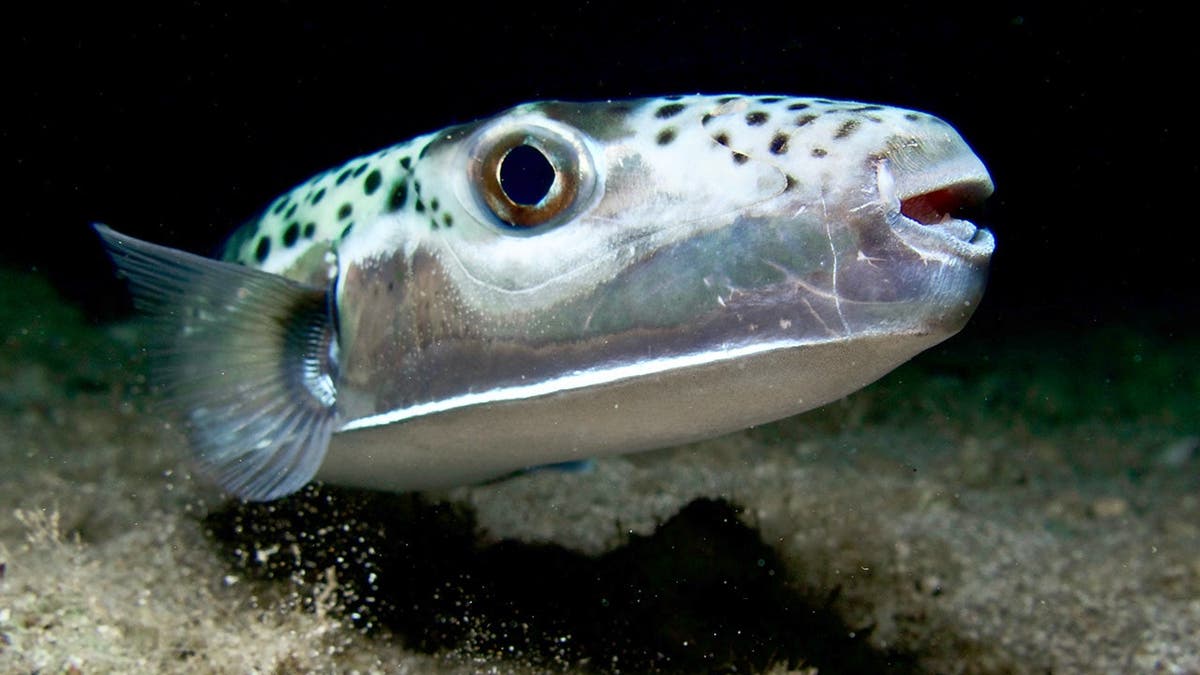
A species of puffer fish with toxic flesh and dangerous jaws is expanding its reach throughout the Mediterranean.
Local authorities have warned tourists about potential bites from the invasive silver-cheeked toadfish, also known as harefish. This fish reportedly entered the Mediterranean via the Suez Canal, spreading as sea temperatures rise. The silver-cheeked toadfish carries tetrodotoxin, a deadly neurotoxin concentrated in its flesh and internal organs. Its strong beak-like jaws can destroy fishing gear and bite through bone.
The fish does not regularly attack humans, with bites typically occurring when people attempt to catch or handle them. A study published in the journal Toxics documented 198 human-health incidents involving invasive puffer fish in the eastern Mediterranean from 2004 to 2023. The study identified 28 physical attacks, at least 144 non-lethal poisoning episodes, and 27 human fatalities from consuming the fish.
The number of recorded incidents rose after 2019. It’s unclear if this increase is due to heightened fish abundance or greater media attention.
The Hellenic Red Cross issued a warning in June regarding the fish’s flesh, which contains tetrodotoxin. The Red Cross emphasized no part of the fish is safe to eat due to the toxin’s distribution. Although the harefish’s bite is non-venomous, its jaw strength can cause severe injuries.
Authorities have warned about the fish’s presence to those swimming in the Mediterranean Sea. The fish has features resembling human teeth and carries a neurotoxin causing heart failure if consumed. Tetrodotoxin leads to paralysis and respiratory collapse, with severe cases affecting the heart.
To protect swimmers, Greek authorities installed floating barriers in the Gulf of Euboea, aiming to ensure safety. Antonis Spanos, vice-mayor of Evia’s capital, stressed prioritizing citizen safety. Two and a half kilometers of nets will be set up in bays around the gulf for protection. While jellyfish were problematic last year, measures are now in place for puffer fish.
Municipalities along the Gulf of Euboea are implementing similar protective measures. Authorities report no sightings in bathing areas at Greek island resorts, but fishermen have encountered the fish off the coast of Crete.
The silver-cheeked toadfish has few natural predators in the Mediterranean, allowing its population to grow rapidly. The Greek government offers a financial incentive to fishermen for catching the fish.
Not all pufferfish are poisonous, but many contain tetrodotoxin in their organs and skin. Toxicity levels vary by species, and non-toxic pufferfish are those raised on farms without toxin-containing prey.