
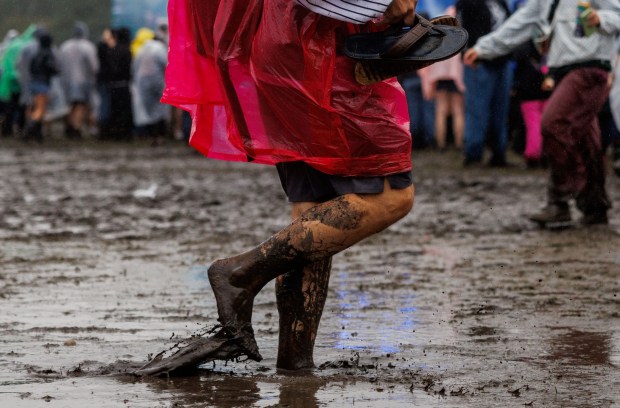
Extreme weather conditions disrupted Riot Fest over the weekend as heavy rain transformed Douglass Park into a muddy scene. Organizers of the music festival have assured the public that efforts are underway to repair the park. The festival, renowned for showcasing a variety of genres from punk to mariachi, faced the heaviest rainfall in a September two-day period in Chicago since 2019, as per weather officials.
Douglass Park became a mire, with mud covering the ground. Despite the conditions, around 50,000 attendees per day adapted. Many walked barefoot through the mud, while others voiced concerns about the slippery environment. Some festival-goers assisted those in wheelchairs whose wheels struggled through the mud. The 2 inches of rain resulted in a premature end to the events on both Saturday and Sunday.
Mike Petryshyn, founder of Riot Fest, committed to restoring the park. He emphasized their obligation to return the park to its original condition in coordination with the Park District and local community. The Chicago Park District conducts evaluations to identify necessary restoration before and after major events. Riot Fest will bear the costs for any required repairs, as stated by Park District spokesperson Irene Tostado.
Prior to the festival, Riot Fest’s landscaping team implemented preventive measures. This included deploying 36,000 square feet of landscape fabric, mulch, temporary ground coverings, and added protection near stages and flooring. Efforts during the rain included reinforcing high-traffic areas, removing water, and adding extra ground coverings. Nonetheless, the downpour left the grounds significantly waterlogged.
As of Monday, Douglass Park displayed muddy patches and standing water, with little grass remaining. Festival organizers are now focused on dismantling festival setups and aim to conclude cleanup by September 29. Restoration plans involve soil preparation, aeration, seeding, grading, and possible sod replacement where needed, with initial reviews suggesting roughly 3 acres may require sod.
Discussions have taken place between the festival organizers and Ald. Monique Scott, the 24th Ward representative, addressing drainage and other underlying conditions at the park. Future meetings with the Park District aim to explore potential long-lasting improvements. Riot Fest’s history stretches back to its founding by Petryshyn and Sean McKeough in 2005. It moved to an outdoor venue at Humboldt Park in 2012, then to Douglass Park in 2015, following community outcry over Humboldt Park damages after prior rain events. In response to criticism, Riot Fest planned a move to SeatGeek Stadium in Bridgeview in 2024, although it returned to Douglass Park with support led by Ald. Scott.
Riot Fest remains the largest independently owned music festival in Chicago and among the largest nationwide. In 2026, graffiti marked the fences outside Douglass Park after the festival ended. The current contract between Riot Fest and Douglass Park extends usage through 2027, with a further renewal option until 2029. Starting in 2025, Riot Fest increased its revenue contribution to park improvements to 30%, from 10% in earlier years.
The Park District plans substantial restoration efforts in Douglass Park, involving topsoil amendments and drainage improvements for better water management. Officials anticipate that Riot Fest will generate $3 million to $4.5 million for the park improvements by 2029. Riot Fest’s disrupted schedule followed previous weather interruptions at Lollapalooza, echoing a pattern of rain-drenched events in Chicago this summer.