
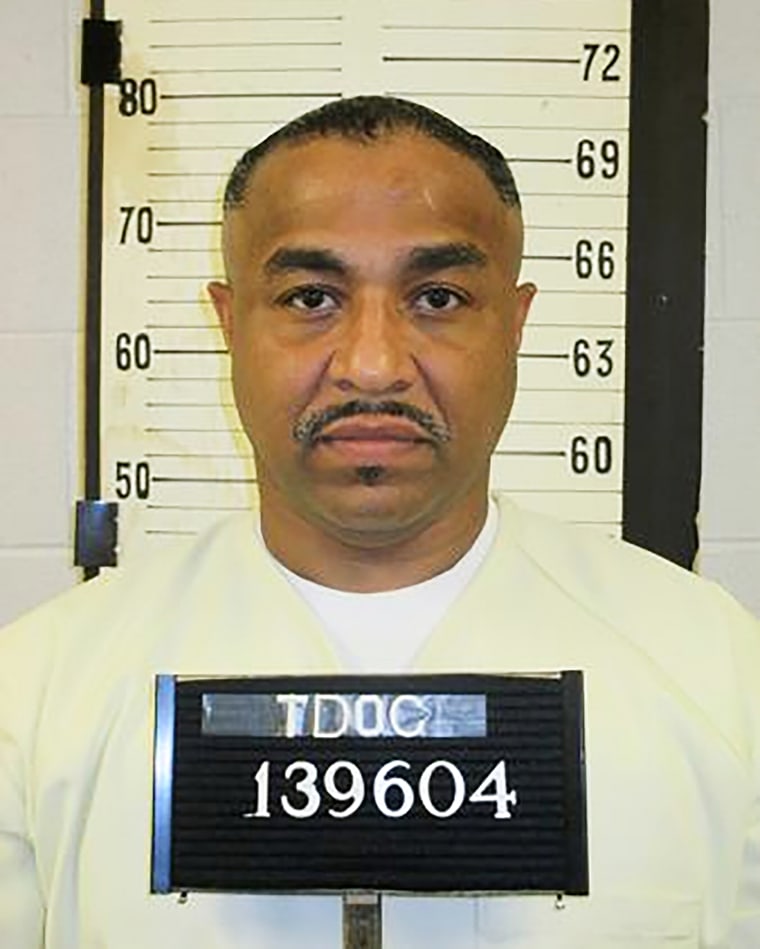
The execution of Tony Carruthers, scheduled in Tennessee, was halted and he received a one-year reprieve. The Tennessee Department of Corrections (TDOC) faced issues finding a vein for a backup injection line. Their statement revealed that medical staff quickly set up a primary IV line but struggled to establish a backup line as required.
Governor Bill Lee granted Carruthers a one-year reprieve from execution. Beyond difficulties with the second vein, staff couldn’t insert a central line. This led to calling off the execution.
Before this decision, Carruthers’ lawyers filed an emergency stay of execution, reporting TDOC’s failure to secure an IV line for lethal injection. The emergency motion, submitted in both state and federal courts, highlighted unsuccessful intravenous access attempts. Federal public defender Amy Harwell stated the execution is paused, reporting Carruthers’ transfer off the gurney and subsequent medical evaluation.
Attorney Melanie Verdecia, representing Carruthers with the ACLU, criticized the state’s process, stating, “The State of Tennessee is currently torturing a man who maintains his innocence in the name of justice. This is not how our system is supposed to work.” Carruthers was initially set to be the first executed in Tennessee this year.
Concerns arose from the defense team about the use of potentially expired drugs for the execution. The Middle District of Tennessee’s Federal Public Defender’s Office noted attempts to get clear assurance from TDOC were refused. Tennessee resumed executions last year after discovering inadequate testing of lethal injection drugs. An independent review revealed that drugs for seven inmates in 2018 weren’t fully tested for purity and potency.
Execution practices in Tennessee and other states often remain secretive. Many states face challenges acquiring pentobarbital, commonly used in lethal injections, due to manufacturer objections. Indiana, Utah, and Texas notably pay above market rates for alternative supplies. Documents showed Tennessee allocated $650,000 on execution-related costs post-moratorium.
Carruthers, convicted of a 1994 triple kidnapping and murder, continues to assert his innocence. His legal team argues the lack of physical evidence linking him to the crime and the reliance on a paid informant’s testimony in the state’s case. The victims’ bodies were found beneath a graveyard casket, guided there by Jonathan Montgomery, a key figure who pointed police towards his brother, James Montgomery, and Carruthers.
During the initial trial, the prosecution argued the trio kidnapped the victim for robbery. Jonathan Montgomery died in custody before trial. Both Carruthers and James Montgomery were tried at once, receiving death sentences in 1996.
Carruthers navigated through six attorneys before opting for self-representation, deemed ineffective by current attorneys who attribute it to mental health struggles. A subsequent appeals court identified trial fairness issues, overturning James Montgomery’s conviction and granting a retrial.
In the retrial process, DNA testing became pivotal. ACLU attorneys recently motioned for post-conviction DNA testing to challenge unmatched fingerprints and other DNA evidence potentially linking an alternative suspect. Their findings showed no DNA matches to either Carruthers or Montgomery. The request, however, was denied. James Montgomery, after a plea deal to second-degree murder charges, was released in 2015.