
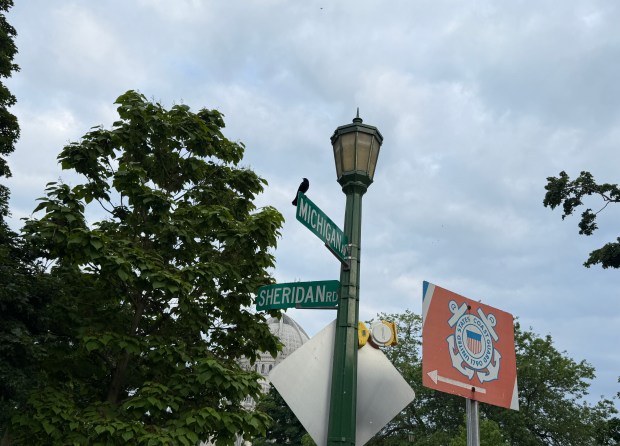
Most days, Teri Weber enjoys her walks on Sheridan Road in Winnetka, glimpsing Lake Michigan between the homes. Yet, in the 400 block of Sheridan, she experienced a surprising encounter with red-winged blackbirds. These birds swooped down unexpectedly, dive-bombing her. Weber, a local resident, shared, “The first one came from behind, and then the second one came toward my face.” She quickly ducked, waved her hat, and screamed in response.
Weber’s social media post about the incident received 50 responses, revealing that at least six other locals had similar experiences. Nancy Davidson, from Wilmette, was dive-bombed twice in the past month while exercising on Sheridan Road. “I was completely surprised,” Davidson said. The bird flew into her head and prompted her to leave immediately. She mentioned not knowing about the species until this year.
According to JP McNamara, Marketing and Communications Manager for the Wilmette Park District, red-winged blackbirds are common in Illinois during spring and early summer. The males become territorial and aggressive during nesting to protect their nests. While alarming, this behavior is generally aimed at deterring threats rather than causing harm. McNamara noted that actual physical contact is rare, and the behavior decreases once young birds leave the nests.
Experts emphasize that dive-bombing is natural during the breeding season. Bridget Kiernan, a horticulturist at the Chicago Botanic Garden, observed increased aggression in recent weeks among these birds, normal for this time of year. “Red-winged blackbirds are good at what they do,” she remarked. The aggressive defense of territory is essential for their success. These birds usually nest near water, wetlands, and urban areas like golf courses and roadside ditches. Kiernan explained that dive-bombing is common in June after chicks hatch and diminishes by July’s end.
Chicago resident Leah Pietrusiak recently encountered dive-bombing near the Humboldt Park Boat House. The experience prompted her to share on social media, discovering that others had similar encounters. Pietrusiak, familiar with these birds, plans more caution during nesting season. “I’m not gonna be walking in the park without a hat in the summer,” she stated.
Weber suggested more preventive measures by local officials to stop nests from forming in public areas before eggs are laid. It’s illegal to remove nests with eggs due to the Migratory Bird Treaty Act of 1918 and the Illinois Wildlife Code, making early intervention crucial.
Kiernan advises wearing wide-brimmed hats and protecting your head and neck if dive-bombing occurs. Recognizing red-winged blackbirds’ warning calls can help avoid these incidents. “Red-winged blackbirds are very vocal and give off warning calls when they sense there is any danger,” Kiernan mentioned. Being aware of these calls allows you to anticipate their territory and adjust your route. More details on these sounds can be found through the National Park Service.