
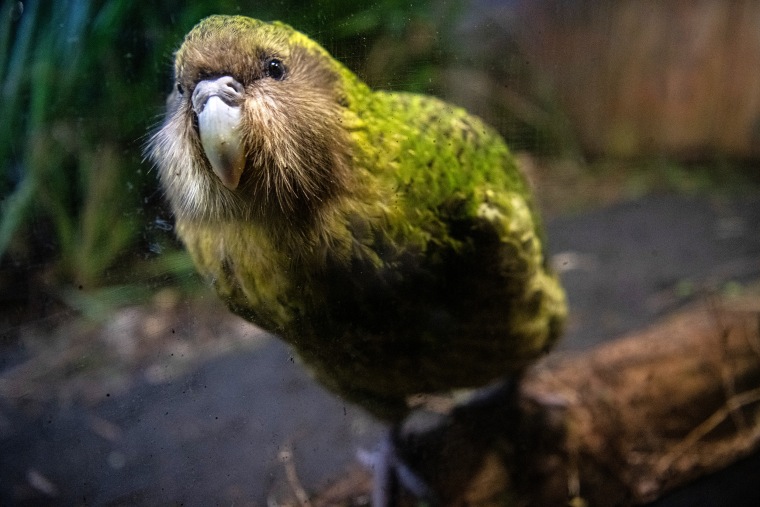
New Zealand has witnessed a significant increase in the population of kakapo parrots, one of the world’s most endangered species. The country’s Conservation Department announced that a record number of 90 kakapo chicks were born this year, increasing the total population to 325 birds.
These parrots are native to New Zealand and, with their distinctive yellow-green plumage and large gray beaks, they are known for being non-flyers with distinctive waddling movements. The kakapo is also recognized as the heaviest parrot species, with males weighing up to 9 pounds.
The kakapos, with a lifespan of 60 to 90 years, face challenges due to ground predators, given their inability to fly. The Conservation Department emphasized the importance of each bird in the overall population count.
“There’s still a long road of recovery ahead, but 90 chicks in a single season is a record,” said Deidre Vercoe, manager of kakapo recovery operations. This number represents a significant increase, considering past recovery efforts took 16 years to produce as many chicks. “After a four-year gap between breeding seasons, it’s wonderful to witness this growth,” Vercoe stated.
The Kakapo Recovery Program began in 1995, when there were only 51 kakapo left, including a mere 20 females. Over the years, the program has worked to combat challenges like low genetic diversity, infertility, and poor hatching success. This year’s successful breeding underscores the necessity of predator-free habitats.
Each kakapo is equipped with a radio transmitter to monitor its location and activity. Historically, kakapo numbers dwindled due to human arrival, hunting, and habitat loss, leading them to near extinction by the mid-1900s. Their inability to fly resulted from the absence of natural ground predators before human colonization introduced threats like cats and rats.
Presently, kakapos inhabit small protected offshore islands, largely dependent on seasonal fruiting from native Rimu trees, which influences their mating patterns. This year, the recovery group has identified new strategies for reduced intensive management, focusing on more natural breeding outcomes.
“Our focus is increasingly determining where intervention is needed and where we can return to more natural breeding levels,” explained Tāne Davis from the kakapo recovery group.
For many chicks born this year, receiving names on their hatch anniversaries will be a future milestone, symbolizing the species’ road to recovery. There are indications that the interval between breeding seasons may reduce to just two years, allowing for continued population growth efforts.
Looking ahead, the team remains poised for the next breeding cycle anticipated in 2028, ensuring preparation for further success in kakapo conservation.