
U.S. defense company Raytheon plans to significantly speed up the production of long-range Tomahawk cruise missiles following a new contract with the Pentagon. This move comes as concerns arise over depleted stockpiles due to the U.S. conflict with Iran.
Raytheon announced an unprecedented contract with the Department of Defense valued at almost $23 billion over seven years. The Pentagon has urged defense manufacturers to produce equipment faster in response to growing global demand for advanced weaponry.
European nations and Canada, under pressure from President Donald Trump, are increasing their purchases of military goods. However, the U.S. confrontation with Tehran and Russia’s conflict with Ukraine has contributed to the depletion of missile stockpiles that have lengthy replenishment periods.
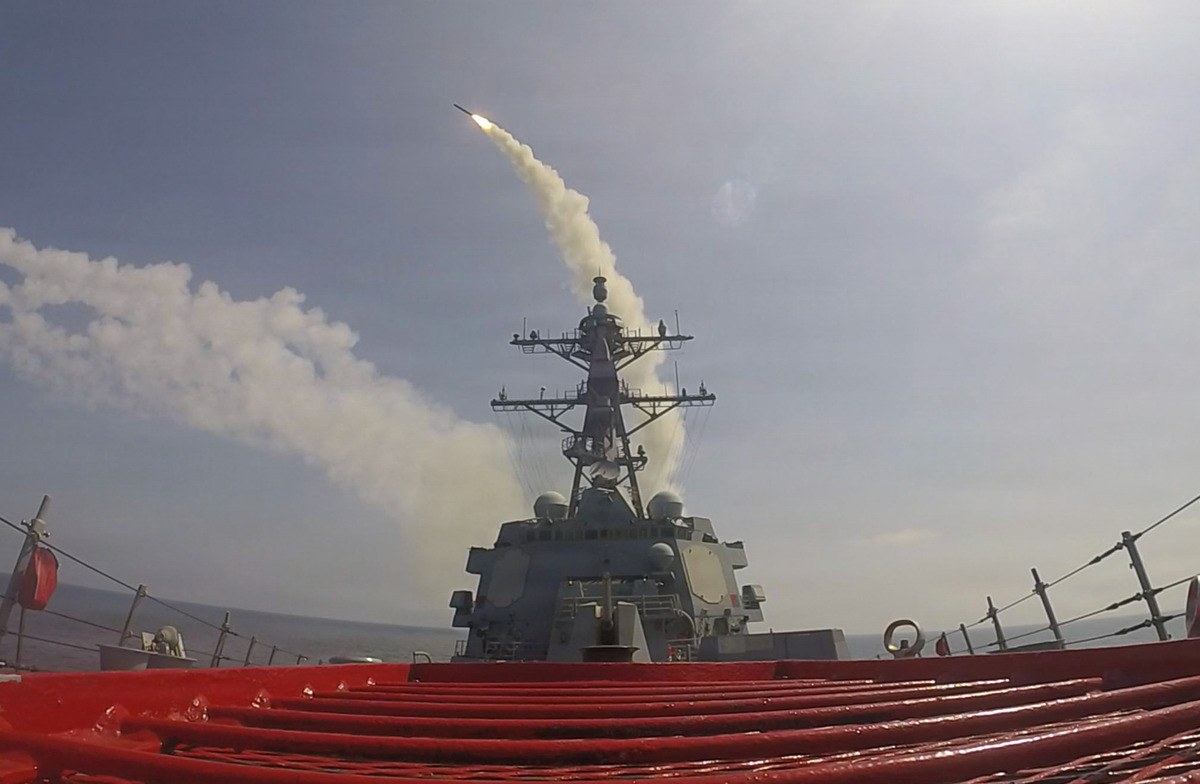
Despite intense military activities in Iran, the White House denies any shortages of munitions. Tomahawks, often launched from U.S. Navy ships, have been a key component since the 1980s. These missiles can hit targets 1,000 miles away and newer models offer enhanced capabilities.
Reports indicate that nearly half of the U.S. Tomahawk stockpile has been used since February, with over 1,000 fired during the conflict’s early months. Raytheon aims to scale up production to over 1,000 missiles annually, a significant increase compared to previous years.
RTX, Raytheon’s parent company, has already tripled Tomahawk production in early 2026 compared to the same period in 2025. However, restoring the U.S. arsenal to pre-war levels could take about four years, according to the Center for Strategic and International Studies.
Raytheon President Phil Jasper emphasized the importance of Tomahawk missiles for the Navy, highlighting their ability to strike distant threats without endangering U.S. sailors. The Pentagon’s Under Secretary for Acquisition and Sustainment, Michael Duffey, noted the Department’s challenge to industries to increase munitions production.
Several U.S. allies utilize Tomahawks or have placed orders. Delivery times are uncertain as the U.S. balances domestic replenishment and foreign sales. Japan, purchasing 400 missiles in 2024, faces delays, while Australia plans to acquire 200 Tomahawks. The Netherlands has also ordered Tomahawks for its frigates.