
Rep. Debbie Wasserman Schultz is facing resistance from Black Democrats after choosing to run in South Florida’s newly redrawn district, which holds a plurality of Black voters. This decision comes amidst a crowded primary field. The district was reshaped recently after Florida’s Governor Ron DeSantis signed a bill creating new congressional maps.
Instead of contesting in the 22nd Congressional District where she resides, Wasserman Schultz opted for the more Democratic-leaning 20th District. This district has traditionally been represented by a Black Democrat. Her move has sparked anger among Black leaders and candidates, particularly as Republicans seek to dismantle districts that Black Democrats have historically held. This follows a Supreme Court decision limiting racial considerations in drawing congressional maps.
Black candidates in the primary are contemplating unifying behind one or two candidates to challenge Wasserman Schultz, aiming to avoid splitting the Black vote.
Wasserman Schultz, an experienced incumbent with 11 terms, and former chair of the Democratic National Committee, justified her decision last month. She emphasized that her seniority would benefit the district, particularly if Democrats regain control of the House, as she could chair a key committee.
“You have always been able to count on me to deliver results for our community,” Wasserman Schultz stated in her video announcement, highlighting her seniority and influence.
House Minority Leader Hakeem Jeffries of New York, who might become the first Black Speaker if the Democrats win back the House, has yet to endorse anyone in the race. “Haven’t made a decision as it relates to that particular race,” said Jeffries, who would usually support an incumbent as caucus leader. Wasserman Schultz, in response, clarified to NBC News that Jeffries hadn’t explicitly declined to endorse and expressed gratitude for the support she has received.
Black Democratic figures voiced criticism regarding her choice. Rep. Jasmine Crockett of Texas commented, “If I were in her shoes, I can’t say. … Actually, I do know what I would do. I wouldn’t do it if I was her.” She added that there is concern about the continued challenges faced by the Black Caucus.
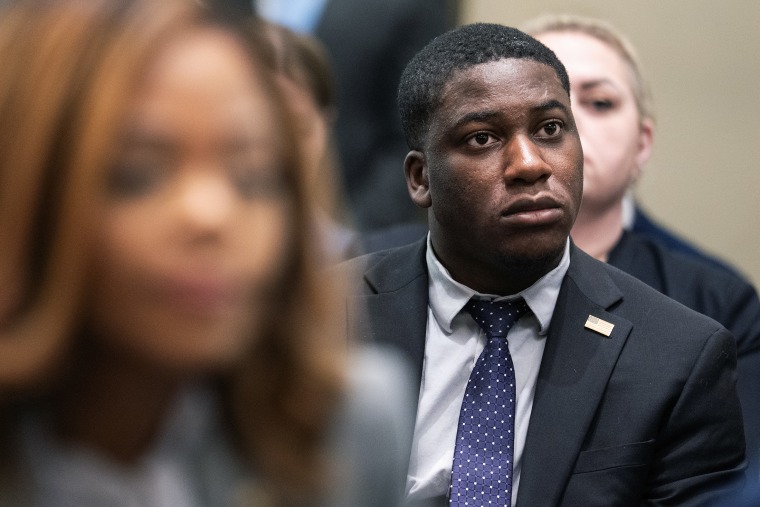
Elijah Manley, a candidate in Florida’s 20th Congressional District, expressed disappointment, stating, “I didn’t think a white Democrat would be the one to take away a Black seat.” The district has had Black Democratic representation for nearly three decades.
A crowded field of candidates is participating in the race, including rapper Luther “Luke” Campbell and former Broward County Mayor Dale Holness. Manley has raised $780,000, second only to Wasserman Schultz, who has secured $2.5 million, providing a financial edge.
Sheila Cherfilus-McCormick previously held the seat, but resigned following ethics violations. Despite facing federal indictment, she is running again.
Campbell cautioned in a video before Wasserman Schultz’s decision, warning her against entering the race due to the risk of splitting the Black vote.
At a meeting Monday, candidates discussed potentially consolidating to improve chances against Wasserman Schultz, though no decision was made.
Holness shared polling data with Wasserman Schultz, suggesting she could win the 22nd District. He expressed disappointment that she didn’t heed the community’s concerns, saying, “It is disappointing that she was not sensitive to the call by many in the community.”
Wasserman Schultz indicated she had discussions with the Congressional Black Caucus, asserting it didn’t oppose her running.
CBC Chair Yvette Clarke described their interaction as informational rather than conversational. She defended Jeffries’ decision to remain uninvolved, noting the district is new and lacks an incumbent.
The Democratic Black Caucus of Florida released a statement emphasizing the importance of maintaining Black political representation, especially in light of aggressive redistricting that has weakened minority voting strength.