
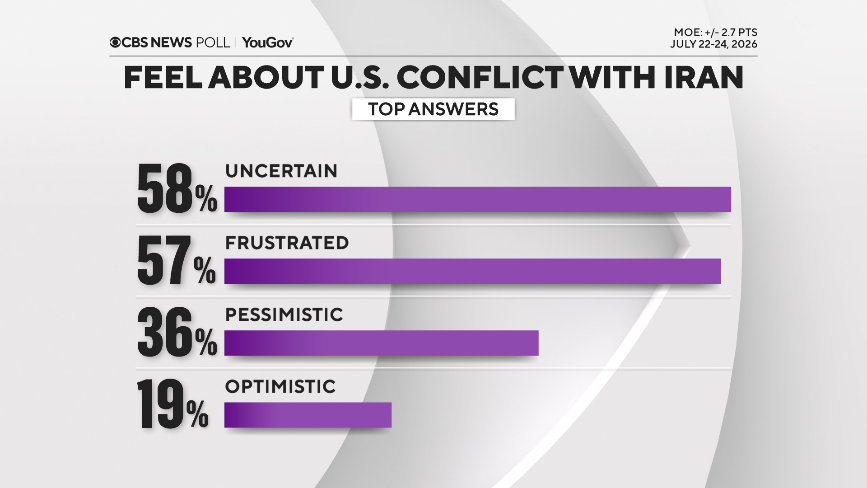
Since the onset of the conflict in Iran, the American public has consistently expressed three key concerns:
- Lack of clear information about daily events in the Strait of Hormuz.
- Numerous objectives the U.S. could pursue during the conflict.
- A general sentiment that the conflict is not progressing well.
Recently, as tensions increase, many Americans describe their emotions as ‘uncertain’ and ‘frustrated’. The majority now anticipate that the conflict may endure for months or possibly years, acknowledging that the situation has been tougher than anticipated by the previous administration.
Several objectives remain vital to most Americans: ensuring the Strait of Hormuz is open, curbing Iran’s nuclear ambitions, and preventing Iran from posing threats to the region. However, the majority view favors ending the conflict rather than pursuing further concessions from Iran. Although a previous deal to conclude the war collapsed, fewer people today advocate for immediate cessation of the conflict, primarily driven by Republican sentiments.
A portion of the population, about one-third, supports pursuing additional concessions. This stance strongly correlates with age, as younger individuals are more inclined to seek an end to the conflict compared to older Americans over 65.
Uncertainty and Assessments
One of the key factors contributing to uncertainty is the lack of comprehensive understanding regarding day-to-day developments in the Strait of Hormuz. Many Americans feel that President Trump’s communications do not offer the necessary clarity, often portraying a more favorable situation than perceived. Throughout the conflict, public perception of progress has declined, and opinions about which side holds an advantage remain mixed.
Despite this backdrop, overall approval of U.S. actions remains stable yet negative.
Domestic Situation
Domestically, conditions appear largely unchanged, neither markedly improved nor worsened. While the World Cup provided a temporary lift in national morale, economic challenges persist. Many individuals report that incomes fail to align with inflation rates. Additionally, there is a sentiment that the president’s focus is misaligned, placing excessive emphasis on unpopular tariffs and renovations in Washington, D.C.
About half of the population views gas prices as a significant strain, although this figure has slightly decreased from its peak. The conflict’s impact is evident, as those most negatively affected express greater disapproval of military actions.
General sentiment regarding the economy remains predominantly negative, consistent over recent weeks. Those who feel their earnings lag behind inflation are particularly opposed to new tariffs.
The president’s approval rating concerning Iran is slightly lower than his overall approval rating, which has slightly improved since June.
Across the political spectrum, solutions to the Iran situation are elusive. Neither Democrats nor Republicans are perceived as having a superior strategy. Those unsure or skeptical of either party’s approach feel more uncertain about the conflict overall.
This information is derived from a CBS News/YouGov survey conducted with a representative sample of 2,193 U.S. adults between July 22-24, 2026. The sample was adjusted to reflect national demographics according to gender, age, race, and education. The margin of error is ±2.7 points.