
President Trump’s Complex Relationship with Muslim Communities
President Donald Trump continues to be a figure associated with Islamophobia, yet his political identity has evolved since his first term. Despite his reputation for inflammatory rhetoric and restrictive immigration policies, Trump has also cultivated ties with some Muslim-majority governments and gained increasing support from Muslim voters.
Trump’s Shifting Policies and Political Identity
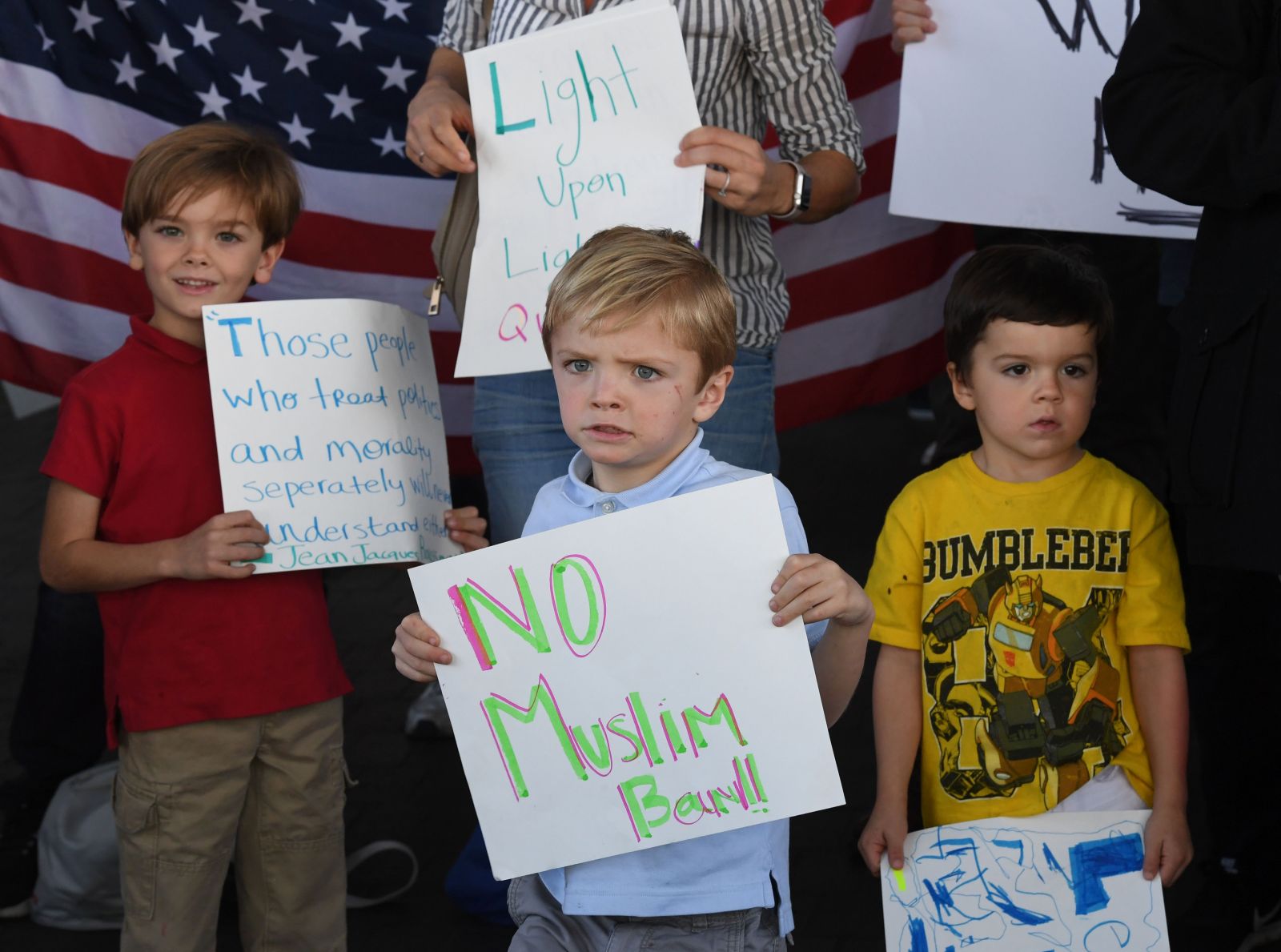
During his first term in 2017, Trump was known for his proposal to restrict entry from several Muslim-majority countries, citing terrorism concerns. His policy led to a significant backlash with 74% of Muslim Americans viewing him as unfriendly according to a Pew survey. Democrats, including Senate Minority Leader Chuck Schumer, actively opposed the travel ban, labeling it discriminatory.
Currently, Trump remains a controversial figure, continuing with rhetoric and policies that critics describe as anti-Muslim. For instance, after a violent incident involving an Afghan national in 2025, Trump expanded entry restrictions to many countries, mostly Muslim-majority. His language about Somali immigrants and remarks about Muslim officials have been inflammatory.
Impact of Military Actions and Political Controversy
Most recently, Trump’s aggressive military stance towards Iran, a major Muslim-majority country, added another layer to the ongoing debates. In February, a substantial military strike led to fatalities, including high-profile figures like Iran’s Supreme Leader Ali Khamenei. The administration’s actions have been challenged constitutionally, with discussions centering around the separation of powers.
Advocacy groups have continued to critique Trump’s approach. In 2025, CAIR documented its highest number of discrimination complaints in thirty years and identified Senator Tommy Tuberville as an anti-Muslim extremist.
Shift in Political Narratives Among Democrats and Republicans
While criticism persists, the narrative among Democrats has shifted. Legislative efforts such as the NO BAN Act, led by Representative Judy Chu, highlight the trend of focusing on broader notions of discriminatory policies rather than Islamophobia alone.
Republicans have remained direct, with figures like Tuberville explicitly calling for bans against Islam immigrants. Meanwhile, prominent Democrats avoid using “Islamophobic” to describe policies, instead portraying them as racist or bigoted.
Muslim Voter Dynamics
The electoral behavior of Muslim voters complicates the narrative further. While still largely Democratic, support for Trump rose from 8% to significantly higher rates during elections, driven by backlash against Biden’s support for Israel.
This shift undermines the notion of an unequivocally anti-Trump Muslim voting bloc. Despite decreased support for Biden, Democrats continue to see fluctuated dynamics with Muslim voters.
Trump’s Foreign Relationships with Muslim-majority Nations
Trump’s interactions on the international stage further muddy the waters. His administration has fostered extensive commercial ties with nations like Saudi Arabia and the UAE while taking aggressive action against Iran.
These relationships illustrate the complexity of his presidential motives and make a singular religious narrative difficult to apply.
Tiredness and Shifting Public Attention
The persistence of Trump’s influence contrasts with declining public interest in the “Muslim ban” as a term, while attention on “travel bans” remains steady. Despite the rising Islamophobia Index, political language seems to have muted amidst the fatigue.
Future Considerations
As political landscapes evolve, shifts among Muslim voters will test whether accusations of Islamophobia retain their impact. Should support for Trump decline, especially in key states like Michigan, political consequences associated with his rhetoric may be revitalized.
Overall, while the charge of Islamophobia remains, the complexities of Trump’s connections to Muslim communities dilute its political potency.