
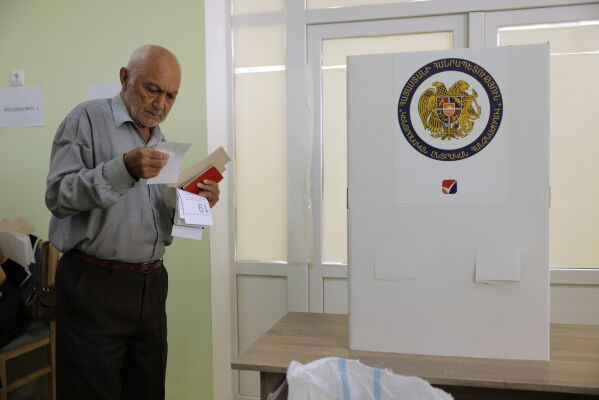
Armenian Prime Minister Nikol Pashinyan declared victory in the recent general election, viewed as a measure of Russia’s influence in Armenia. Preliminary results indicate Pashinyan’s party leads with over twice the votes of its closest rival.
Pashinyan seeks a robust mandate for a new geopolitical path, aiming to distance Armenia from Russia and enhance ties with the West. He affirmed the European Union as a key partner in democratic reforms while casting his vote.
European election observers described the election as divisive but well-conducted. Despite concerns about Russian influence through economic pressure, they noted attempts by Pashinyan’s administration to suppress opposition voices.
Election Results and Opposition Dynamics
Pashinyan’s Civil Contract party secured 49.82% of the vote according to preliminary results. His main rival, Samvel Karapetyan, under house arrest for allegedly advocating government overthrow, received 23.28% with his Strong Armenia bloc.
Armenian authorities issued arrest warrants for Strong Armenia members on accusations of vote-buying, escalating political tensions. This bloc advocates for closer business ties with Moscow and accuses Pashinyan of risking conflict with Russia.
Russian Influence and Economic Interactions
Despite fears of Russian manipulation, Richard Giragosian, director of Armenia’s Regional Studies Center, argues the election was free and fair, acting as a referendum on Armenia’s direction. Russian efforts to sway the vote reportedly fell short.
Russia has warned of economic repercussions if Armenia leans toward the EU. It holds significant control over Armenia’s energy and infrastructure and recently banned certain Armenian imports, citing rule violations. The EU labeled these measures as economic coercion.
Armenia’s Legislative Prospects
The National Assembly requires at least 101 members elected for five-year terms. A party must win at least 4% to enter, while a bloc needs 8%. The Hayastan bloc, led by former President Robert Kocharyan, secured 9.93% and will participate in the legislature.
The election commission announced a turnout of 58.94%. Preliminary results suggest the governing party claimed 61 seats, allowing them to govern independently, though constitutional changes would need a referendum.
Foreign Relations and Peace Process
Pashinyan continues efforts to normalize ties with Azerbaijan, an initiative criticized by opposition parties. He stated intentions to institutionalize a peace deal and ratify a major transit corridor agreement with the White House named after President Trump.
Observations and International Responses
International observers noted genuine voter choices. They acknowledged Russian pressure concerns but highlighted the confrontational domestic campaign marked by alleged electoral violations.
The EU, preparing economic aid for Armenia, congratulates Pashinyan for his win. Meanwhile, Russia accuses Western interference in the elections, asserting Armenian society’s polarization and a critical evaluation of Armenia’s foreign policy.
Richard Giragosian remarks that Russia is willing to continue engaging with Pashinyan, despite amplifying pressure in response to the election results.