
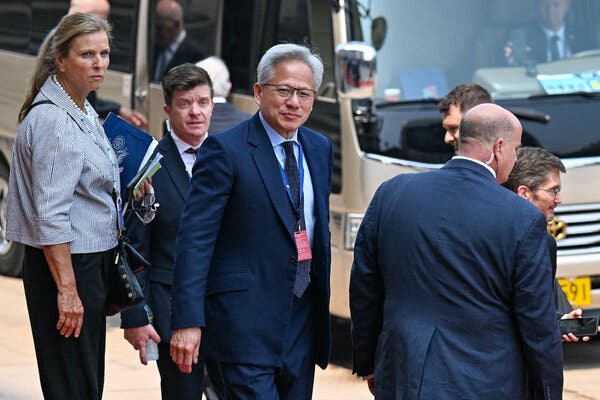
The announcement by President Trump that Nvidia could sell its powerful H200 chips to China initially seemed promising for both nations. It signaled potential advancement in China’s artificial intelligence sector while benefiting the U.S. chip manufacturer.
Nvidia’s chips are vital for operating advanced AI systems due to their immense computing power. These chips are renowned globally, with no Chinese counterpart matching them in capability. This decision by Mr. Trump signified a shift in longstanding U.S. policies aimed at restricting access to such technology in China.
Former officials from both the Biden and Trump administrations expressed concern. They feared this could erode the competitive advantage held by American AI firms, giving China time to catch up.
Despite the opportunity, in six months, China has not purchased a single H200 chip. This situation highlights the increasing distrust between these technological leaders. For years, U.S. and Chinese firms collaborated on impactful products. Yet, the past decade has witnessed a growing rift, as both nations prioritize technology for economic dominance.
Nvidia finds itself caught in this geopolitical struggle. The company’s semiconductors are critical for AI operations, making Nvidia the world’s most valuable company. However, both Washington and Beijing perceive this technology as key to national security. Its uses in conflicts across regions like Gaza, Ukraine, Venezuela, and Iran underscore this perspective.
Rather than engaging with Nvidia, China encouraged domestic development. They push support towards local chipmakers such as Huawei and Cambricon. After discussions with Xi Jinping in Beijing, Mr. Trump noted that China’s lack of interest in the H200 was partly due to this drive for industry self-reliance.