
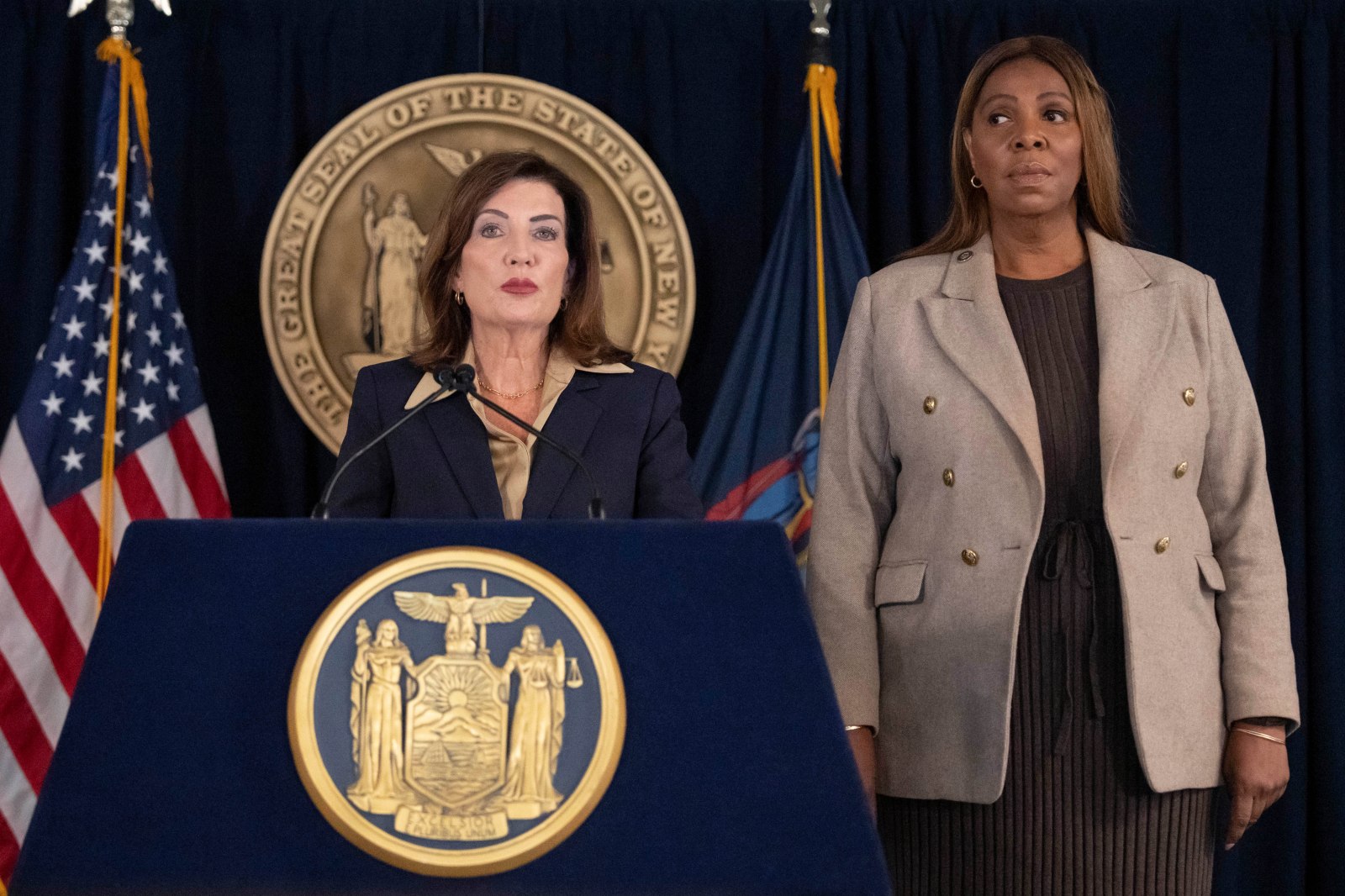
Governor Kathy Hochul of New York is taking steps to close a loophole in the state’s sexual assault laws, known as the “voluntary intoxication loophole.” This move comes amid an investigation into an alleged gang rape at Cornell University in 2024.
Hochul has appointed state Attorney General Letitia James as a special prosecutor to lead the investigation into the accusations. She emphasized that the case revealed a legal gap needing urgent attention.
“If someone is too intoxicated to consent, it should not matter whether they chose to use drugs or alcohol,” Hochul stated during a news conference. She insists that voluntary intoxication should not be an excuse for sexual assault.
The Governor expressed her willingness to work with the New York state Legislature to amend this legal issue. She appointed James following new information which raised concerns about the handling of the case under the supervision of Tompkins County Attorney Matthew Van Houten.
Van Houten initially decided not to file charges against the seven men involved, using the state law as justification. However, Hochul insists that the young woman at the center of the incident deserves justice.
Hochul plans to push legislators to close the loophole by January, underscoring her dedication to this issue. The proposal has passed the state Senate several times since 2019 but hasn’t reached the Assembly, according to Gothamist.
Manhattan District Attorney Alvin Bragg supports Hochul’s initiative. He emphasized the urgency of eliminating the voluntary intoxication loophole through a post on social media, stressing the importance of recognizing intoxication as a factor in consent.
Currently, 19 states, including New York, have laws identifying intoxicated victims as mentally incapacitated only if they were unknowingly drugged or intoxicated, based on a report by the Associated Press.
Assemblyman Jeffery Dinowitz has been advocating for changing this law since 2019. He points to incidents like the alleged sexual assault at Cornell University to highlight the need for urgent reform.
Some states have begun revising these laws. For instance, Minnesota legislators amended their laws after a Supreme Court decision overturned a sexual misconduct conviction based on voluntary intoxication. Michigan and Texas followed suit, revising their laws in recent years.
District Attorney Van Houten acknowledges that Dinowitz’s proposed Bill A101 would necessitate further investigation into cases like Jane Doe’s lawsuit against Cornell and seven former fraternity members.
James underscored the importance of fair and thorough investigations for all New Yorkers. She assured that the reopened probe might lead to criminal prosecutions, emphasizing justice for victims.
High-profile figures, including Florence Pugh, Mariska Hargitay, and Alexandria Ocasio-Cortez, have spoken out, urging an end to spaces where such behavior is normalized. Ocasio-Cortez highlighted the need for change in social norms and cultural attitudes towards violence against women on college campuses.