
The French Open is set to crown new champions, marking a shift in this year’s Roland Garros tournament. Absent are defending champion Carlos Alcaraz and top-ranked player Jannik Sinner, both of whom were expected to make a substantial impact. Former champions Novak Djokovic and Iga Swiatek are also missing from the finals lineup, as are Coco Gauff and Aryna Sabalenka, highlighting the tournament’s unpredictability.
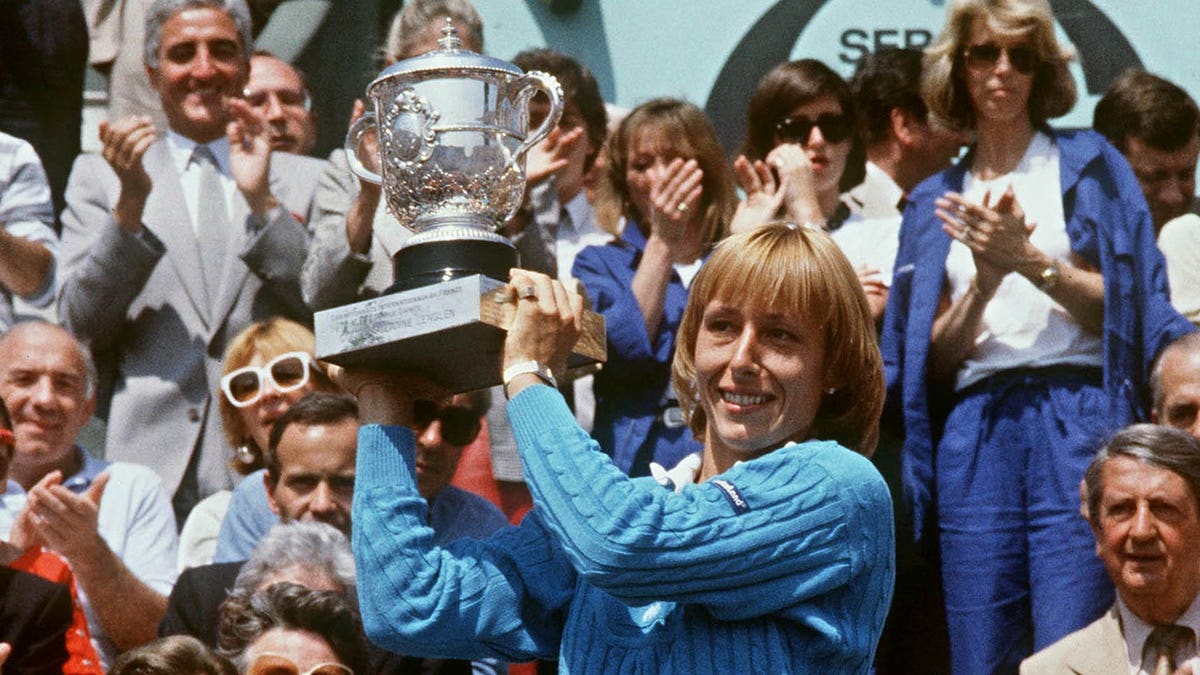
Martina Navratilova, an 18-time Grand Slam singles champion, recently commented on the chaos in Paris during an interview with OutKick. She expressed her excitement about the unexpected developments, noting how the absence of these players creates room for new champions to emerge. “It’s amazing,” Navratilova shared. She emphasized that the void left by such prominent players opens the competition, allowing for a broader range of contenders to vie for the title.
On the men’s side, Alcaraz withdrew due to a right wrist injury, and Sinner faced a surprising early defeat, creating a gap that diminished the expected top-tier competition. Djokovic’s unexpected third-round loss further deepened the unconventional nature of this year’s tournament.
“A new women’s champion and a new men’s champion will be crowned,” Navratilova stated, appreciating the shift in tennis dynamics. She emphasized that tennis benefits from fierce competition, where dominance by a few can be creatively disrupted, leading to increased viewer engagement.
Tennis has long relied on iconic figures such as Roger Federer, Rafael Nadal, and Serena Williams. Their dominance established unforgettable histories and cultivated rivalries that drove audience interest. For example, Nadal’s extraordinary accomplishments at Roland Garros are celebrated for his unmatched number of victories there. Yet, as Navratilova pointed out, it’s the unpredictability and suspense that enrich the sport.
Navratilova recalled how the excitement of games like the Alcaraz versus Sinner final captured attention because of the uncertainty of the outcome. “That’s what draws fans into the sport,” she said. “You need rivalries, contrasts, and personalities that engage emotionally.”
Chris Evert, offering her perspective, spoke about the dual need in tennis for both star power and adherence to fairness in competition. Evert argued that while top players naturally bring viewers and support ticket sales, rules concerning player conduct, such as overruling timeouts for cramping, should apply consistently.
Navratilova addressed whether elite players receive undue advantages, affirming, “Of course, top players get preferential treatment… But, they earned it.” She acknowledged that balancing this privilege with fairness is crucial.
Evert and Navratilova converge on this principle: while tennis thrives on celebrated figures, it’s essential for the integrity of competition that rules are uniformly enforced, ensuring all have equal opportunity.
The events at this year’s French Open, filled with unexpected turns and an absence of anticipated stars in the finals, illustrate this balance. With emerging talents taking the spotlight, Navratilova appreciates the infusion of “new blood” and the suspense it injects into the championship weekend.
This transition, according to Navratilova, is not a detriment. For tennis, this unexpected turn at Roland Garros might offer exactly the kind of rejuvenation needed—a shift toward nurturing emerging talents and fostering competitive excitement without predetermined outcomes.