
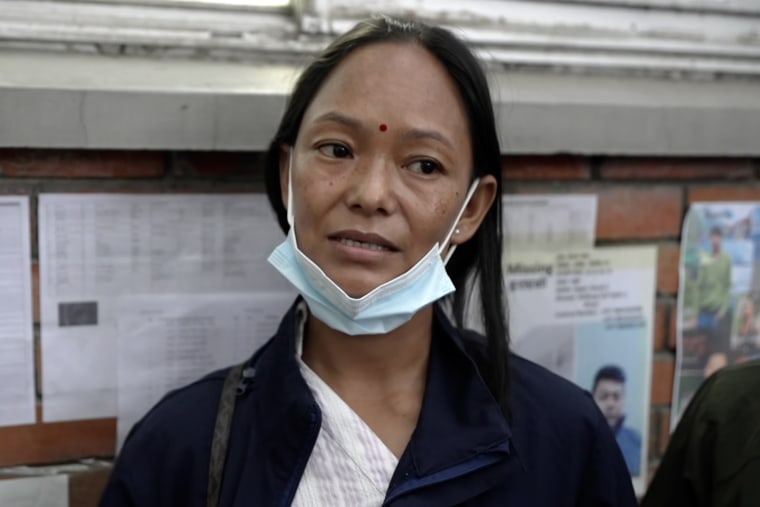
The recent floods in Nepal have left the town of Bidur overwhelmed by the stench of death, as hopes of finding more survivors diminish. In the aftermath of last week’s catastrophic flooding, workers dressed in white protective suits are seen unloading bodies from ambulances. These are then placed on blue tarps within a cordoned area.
Helicopters, usually for commercial tours, are now repurposed for rescue efforts. They depart laden with aid and return with survivors in need of medical attention. Kalpana Shrestha, a nurse from Kathmandu, finds herself desperate. Ten members of her family are missing, and despite sharing their photos on various platforms, she has received no information about them. Her family vanished in Betrawati, a town severely affected by the flooding.
According to Nepal’s National Disaster Risk Reduction and Management Authority, the floods have claimed over 1,000 lives, with more than 3,915 people still missing, including 583 foreign nationals. In Tibet, the disaster has resulted in at least 16 deaths, with another 546 people missing, as reported by CGTN, a China-based news channel. Among the missing in Nepal are approximately 80 Americans.
The United Nations reports that over 10,000 individuals have been rescued, including 252 foreign nationals. The floods, which began with a glacier collapse and landslide on Nepal’s border with China, represent the deadliest natural disaster in Nepal since the 2015 earthquake, which caused around 9,000 fatalities.
Access to affected areas remains limited, adding to the challenge of rescue efforts. Roads are only navigable up to Nuwakot, with critical highways still obstructed. This information comes from the United Nations Office for the Coordination of Humanitarian Affairs. The collected bodies present a severe burden on authorities, who are utilizing 21 hospitals across several districts to store the remains.
In some instances, bodies are interred to minimize infection risks, with the intent to identify them later for families to reclaim for funerals. Police Superintendent Nabin Karki explained that DNA samples are being collected, and photos of recovered bodies are on display to facilitate identification by relatives. Families with missing loved ones can contribute blood samples for DNA comparison. If a match is confirmed, bodies can be retrieved from burial sites for proper funeral rites.