
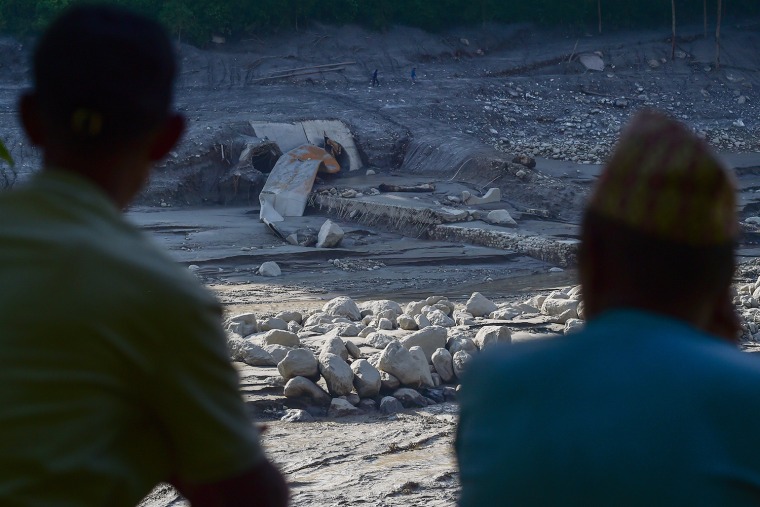
On Wednesday, authorities in Nepal faced diminishing hopes of finding more survivors among the thousands still missing after a catastrophic glacial collapse. The disaster unleashed flash floods, resulting in over 1,114 fatalities and nearly 4,000 people unaccounted for. Rescue efforts concentrated on the sites of hydropower projects, where workers might have survived in tunnels.
Officials remained optimistic about finding individuals alive within the hydroelectric plants’ powerhouses. These areas contain spaces and resources that might support life. Amhsu Kiran Shahi, a board member of the Nepal Electricity Authority, stated that survivors might still be alive there, thanks to available food and water. Despite fading hopes elsewhere, rescue teams continued operations across the mountainous regions bordering China.
Rescue Operations in Hydropower Tunnels
Significant rescue efforts were directed toward four major hydropower projects. Sites with nearly 100 people missing presented the best chances for survival due to the presence of air pockets within the tunnels. At the Trishuli-3A project, officials believed a dry section existed with oxygen circulating inside, aided by pipes supplying additional air.
International rescue teams from India, China, and the United States participated in these tunnel operations. Across the border in Tibet, China’s toll stood at 16 deceased and 546 missing, with updates anticipated as new access to the disaster area developed.
Access to Disaster Zone in Tibet
China reopened the key route to the Gyirong border crossing, facilitating the movement of heavy machinery into the central disaster area. Machinery and equipment arrived to support rescue and search operations. Efforts encountered challenges from the area’s treacherous terrain, compounded by rain and narrow gorges.
China’s missing person figures included 104 Indians, 49 Nepali citizens, and 33 Latvians. Many were on pilgrimages to holy sites like Lake Mansarovar and Mount Kailash. Additional support from Beijing included sending DNA specialists and crucial supplies to aid relief efforts.
Life After the Floods
Residents in the affected regions of Nepal searched through debris, attempting to recover remnants of their former lives. Shanta Sunar, a shopkeeper from Nuwakot, described escaping safely but losing all possessions. Despite the loss, the survival of her and her husband was a relief.
Increased signs of psychological distress appeared among children in severely impacted districts such as Nuwakot and Rasuwa. According to Save the Children, many minors reported anxiety and fear, particularly after witnessing the destruction personally.
Renewed Focus on Reconstruction
Nepali Prime Minister Balendra Shah announced efforts to restore essential services. With foreign aid, the government was repairing telecommunications, electric power, and transport lines. Telecommunication services were 95% operational in affected areas by Tuesday.
The catastrophe disrupted 431 megawatts of power generation capacity. Shah informed the parliament about the scale of the disaster and the prompt deployment of security personnel to warn locals, with some responders themselves missing.