
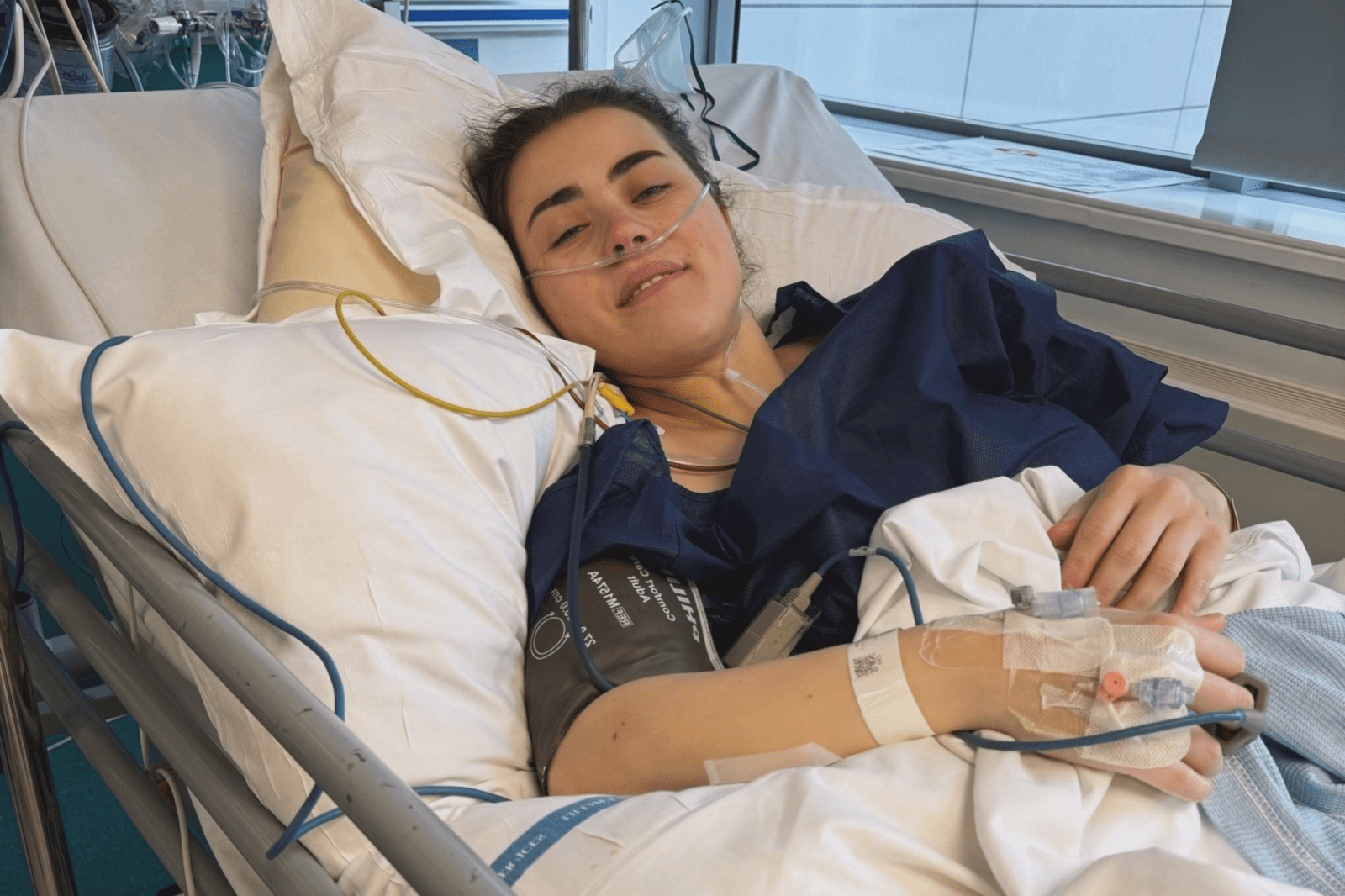
A woman from Northern Ireland, Mia Constantinou, 28, experienced a numbing sensation in her leg after a soccer game. This unexpected event marked the beginning of a challenging journey. Mia, who played for Ballymoney Ladies, described the pain as “lightning strike” level, affecting the back of her left leg.
In her interview with Newsweek, Mia said, “It felt numb and weaker than usual”. Additionally, severe back pain took her breath away. With a history of endometriosis and multiple surgeries, Mia usually avoided hospitals unless absolutely necessary. Her partner, Alexs, urged her to visit the hospital, where she received pain relief medication and was sent home.
Despite the ongoing pain, Mia continued playing soccer and working as a healthcare assistant. Over months, her condition worsened. Mia managed an appointment with a physiotherapist, who felt an MRI was unneeded. Frustrated, Mia insisted, explaining the impact on her life and activities.
Mia received a spine and lumbar MRI scan in November 2025. Anxious, she compared her scan to images online, convinced something was amiss. She said, “I was an anxious mess… I talked myself out of anything being wrong.” The scan revealed fractures, a slipped vertebra, a bulging disc, and a benign growth, among other issues.
In April 2026, Mia underwent spinal fusion surgery to stabilize her spine. The surgery was more difficult than anticipated. Mia felt severe pain afterward, describing it as a hot pole stuck to her spine. Walking was challenging, and recovery was slow.
Mia’s situation at home changed drastically; her bed moved downstairs, and she needed assistance for basic tasks. Despite her focus on recovery, new pains emerged. Her neurosurgeon explained that a vertebra had slipped backward, a condition called retrolisthesis. This often occurs after spine surgery as stabilizing structures weaken.
In July, Mia faced more surgery as her walking deteriorated. “I was in a wheelchair everywhere,” she said, struggling with mobility and severe pain. Despite further operations and treatments, Mia continued to experience nerve pain and faced another spinal fusion.
After surgery, Mia walked further than in months, with physiotherapist support. “I was so excited,” she noted, grateful for progress despite the pain. Eight weeks post-operation, Mia still suffers daily pain. She takes morphine for degenerative disc disease and works with a physiotherapist to regain independence.
Reflecting on her experience, Mia said, “I feel heartbroken… I grieve the life I once had.” Her advice: listen to your body and persist in seeking health care.
For inquiries, contact Newsweek editors Kara Dolman and Emma Lee-Sang.