
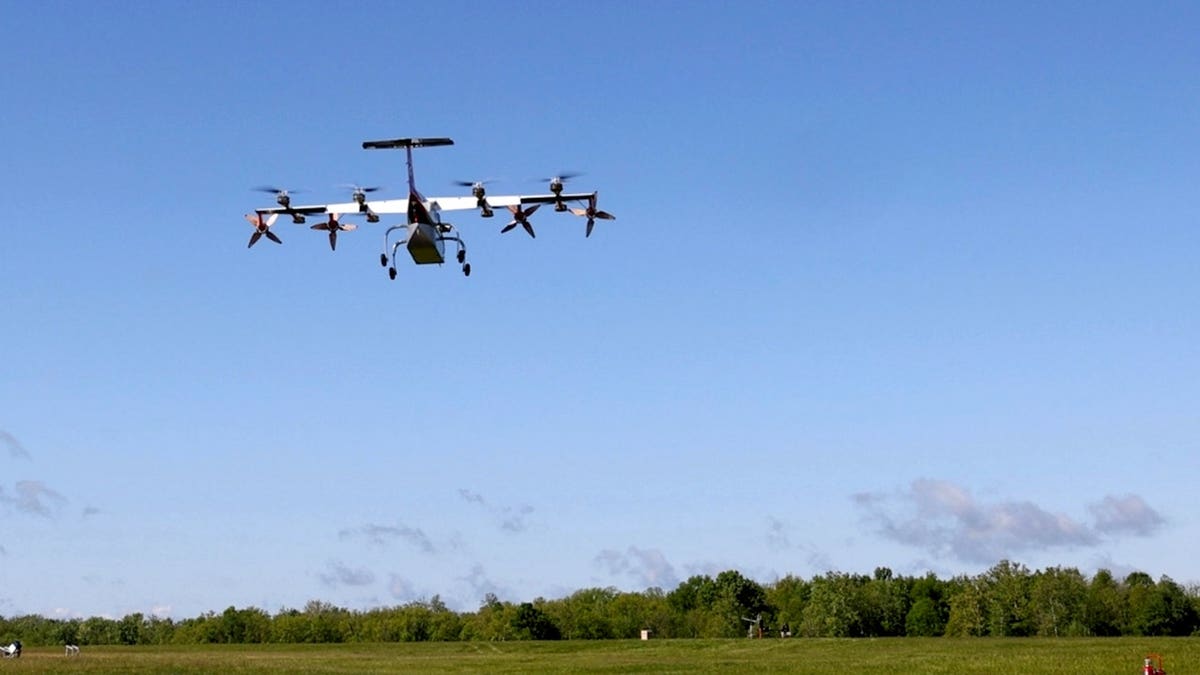
The introduction of medical drones is set to significantly improve the delivery of essential healthcare supplies. These drones are designed to transport laboratory samples, blood, and donor materials quickly between smaller communities and major hospitals. Speedy deliveries can influence diagnoses and treatment. The developers aim to eventually carry transplant-related materials, reducing delays for rural patients.
FAA’s Hybrid-Electric Aircraft Test
The Federal Aviation Administration (FAA) has tested a hybrid-electric cargo aircraft, showcasing a potential solution for rapid transport in challenging situations like broken offshore equipment or hurricane-stricken areas. This test, conducted by Elroy Air and Louisiana’s Department of Transportation, marks the first remotely piloted aircraft evaluation under the eVTOL Integration Pilot Program (eIPP).
The importance of the test lies in the possible future impact. Elroy Air’s Chaparral, which can carry over 500 pounds, differs significantly from smaller delivery drones.
Potential Impact of Pilotless Aircraft
The Chaparral can take off and land vertically, making it suitable for locations lacking traditional runways. While conducting autonomous flights under Air Traffic Control’s supervision, human oversight remains essential. This involves ensuring safe operations despite communication failures or changing weather conditions.
Instead of delivering small packages, Chaparral targets transporting significant cargo between logistical hubs. This could prove beneficial in operations like offshore energy or disaster response, where conventional transport faces challenges.
Future of Delivery Drones
Major companies like Amazon are expanding drone delivery services, primarily for smaller loads. In contrast, Chaparral addresses larger, heavier cargo, aiming to enhance middle-mile logistics — transporting goods between large nodes instead of direct consumer delivery.
The FAA’s continued testing is a step towards integrating air mobility innovations into U.S. airspace. Observations from these tests will guide necessary human supervision levels and operational procedures.
Implications for Communities and Supply Chains
If pilotless aircraft reliably transport heavy cargo, supply chain efficiencies could improve. Accessibility to remote areas might increase, offering a viable delivery alternative. Emergency response would also benefit from aircraft unaffected by damaged infrastructure.
While promising, the broader use of these aircraft raises community concerns about noise, safety, and airspace sharing.
“Would you feel comfortable with pilotless cargo aircraft routinely flying over your community if they could speed up deliveries and emergency response? Share your thoughts with us.”