
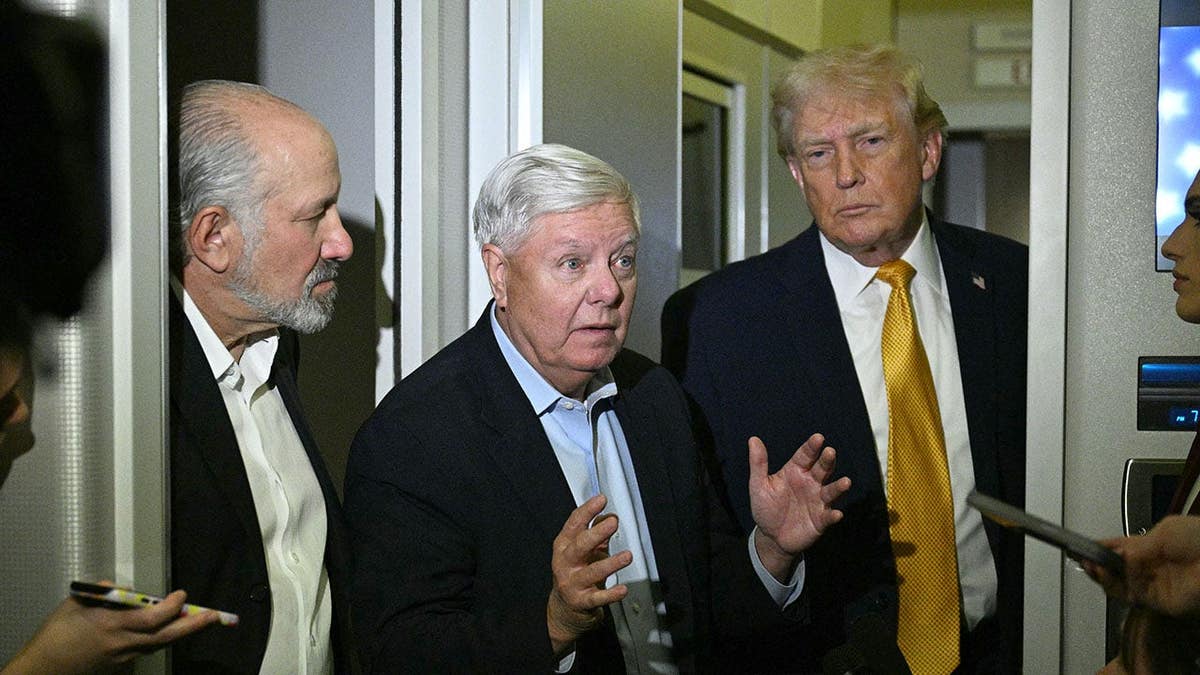
In 2015, Sen. Lindsey Graham described Donald Trump as a “jackass,” warning Republicans against nominating him. Trump retaliated by broadcasting Graham’s personal cellphone number at a campaign rally, urging supporters in South Carolina to call the senator. This public clash seemed unlikely to result in a major foreign policy partnership.
While Trump gained political power promising to end America’s “endless wars” and rejecting traditional Republican foreign policy, Graham remained a dedicated advocate of exerting American influence across the globe. Despite these differences, over the next decade, Graham’s access to Trump made him a significant voice regarding national security, influencing policy on Iran, Ukraine, Israel, and NATO.
Graham built his legislative career around foreign policy. Unlike many lawmakers who spent weekends at home, Graham often visited foreign leaders, war zones, and brokered agreements between allies and the White House. By the end of his career, his office became a critical stop for foreign leaders navigating the Trump administration.
In interviews after Graham’s sudden death, Trump likened the senator to a family member, mentioning their last conversation, which occurred after Graham returned from Ukraine, just hours before his death. Trump reshaped GOP foreign policy with an “America First” approach, and Graham became a key congressional voice promoting a strong U.S. role abroad, despite Trump’s skepticism towards alliances and interventions.
Graham resisted becoming a sidelined hawk, developing a close working relationship with Trump. This relationship gave him unusual influence on issues ranging from conflicts with Ukraine, Iran, and Israel to NATO discussions. Whether Graham’s involvement reinforced or influenced Trump’s policy-making remains a central question regarding his foreign policy legacy.
As Graham’s career progressed, he consistently engaged with world leaders. He was not simply interested in writing opinion pieces or giving speeches; his focus was on direct engagement to achieve real results, as noted by Jack Keane, a retired Army general and Graham’s friend. Graham preferred strikes and regime change concerning Iran negotiations and advocated a stronger stance against Russia in the Ukrainian conflict.
This approach often aligned him more closely with traditional Republican values rather than Trump’s instincts, yet Graham maintained his advisory role to the president.
While Trump’s foreign policy shifted between aggression and diplomacy, Graham’s stance remained firm. At each stage, such as Trump’s announcement of a memorandum with Iran, Graham insisted on congressional review, showcasing his enduring belief in legislative oversight.
Graham transitioned into a crucial intermediary among the White House, Congress, and foreign leaders. He retained influence by giving advice that merged personal and professional insights, as evidenced by his close relationships with key leaders like Israel’s Netanyahu and NATO’s Mark Rutte.
Graham’s influence was evident in the bipartisan Russia sanctions bill he was keen on promoting right before his death. His work emphasized the strategic importance of alliances like NATO, advocating for their role in deterring threats from nations like Russia.
He viewed Israel as a vital partner in the Middle East, working to establish ties between Israel and Arab nations, and seeing Saudi-Israeli normalization as a significant strategic opportunity.
Without Graham, Ukraine has lost a vital advocate in Washington. Oleksandr Merezhko, a lawmaker from Zelenskyy’s party, emphasized Graham’s indispensable nature, expressing concerns about future advocacy within Trump’s circle.