
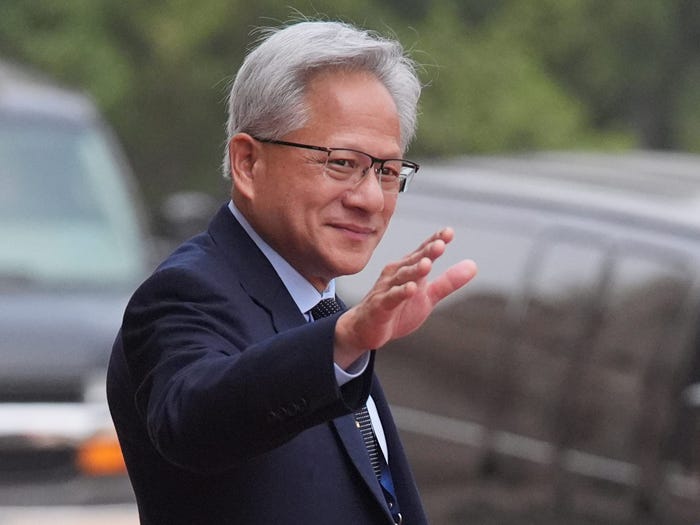
Jensen Huang, while leading Nvidia, adopted a flat organizational structure to foster smooth information flow and quick decision making. His sudden resignation on Wednesday due to a scandal tests this model significantly. Having co-founded Nvidia in the early 1990s, Huang led the company with around 60 direct reports, ensuring that the information remained ‘fluid’ and employees felt empowered.
The departure of such a prominent leader exposes the risk of having a thin succession plan. Leadership experts highlight that a flat structure, while beneficial for agility, potentially leaves a company without prepared successors. David Astorino, from RHR International, noted the difficulty in finding qualified candidates among Huang’s direct reports who can manage the same scale and scope required for a CEO role.
Nvidia did not publicly disclose a succession strategy. The choice to appoint an interim CEO from within and initiate a search for a permanent leader signals the lack of an immediate replacement, as remarked by Astorino.
Key-person risk emerges when a single executive retains too much control, something Nvidia faces given its pivotal role in the AI sector.
Dan Kaplan from ZRG points out that founders, after years of defending their ideas, may struggle with planning for their replacement. Founders develop resilience against skepticism, which often complicates succession planning.
Kaplan argues that flat organizations are quick, but they do not effectively cultivate future leaders. A 2025 Nasdaq survey indicated that a significant number of boards lack comprehensive CEO succession plans, highlighting a common corporate issue.
Huang’s resignation also highlights how the identity of a company often intertwines with its founders. Bradley Akubuiro from Bully Pulpit International suggests that founder-led companies should add roles such as independent directors to enhance governance and succession planning.
Akubuiro advises that a successful succession plan needs more than a name on an organizational chart. Potential successors must have operational experience, board exposure, and strong rapport with stakeholders to ensure continuity if an unexpected leadership change occurs.
Umesh Ramakrishnan, from Kingsley Gate, explains the risks of naming a successor prematurely. Transparency in succession planning might destabilize current leadership dynamics and influence company hierarchy.
Lior Prosor from Deep33 notes that Nvidia maintained its employee retention partly due to the company’s stock performance, which is now uncertain amidst the leadership change.
As a case study, Nvidia’s situation is a lesson for companies favoring flat structures in realizing that no employee, not even a CEO, is irreplaceable. The situation reinforces the essential nature of prepared and visible succession plans.