
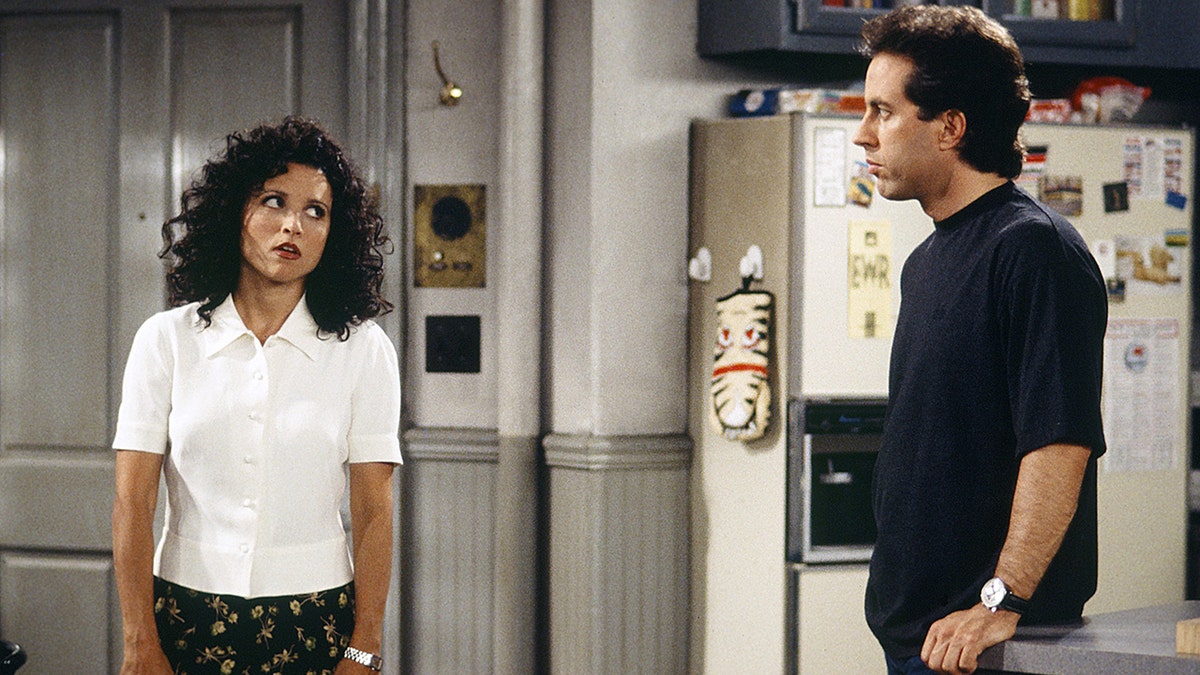
Julia Louis-Dreyfus, known for her role as Elaine Benes, recently discussed the challenges involved in making ‘Seinfeld’ a television hit. Speaking on the ‘Friends Keep Secrets’ podcast, she shared that there was significant friction behind the scenes as the cast and creators worked towards perfecting the groundbreaking comedy.
Collaboration and Tension
According to Louis-Dreyfus, creators Larry David and Jerry Seinfeld were open to collaboration with the cast on directing the show. However, this collaborative environment sometimes led to disagreements. ‘It’s hard to do anything really well, and it takes a lot of work,’ she explained, highlighting the natural tensions that arose during production.
‘Sometimes there was an argument,’ Louis-Dreyfus noted, reflecting on the dynamic atmosphere behind the scenes.
Belief in the Show’s Potential
Despite the occasional clashes, Louis-Dreyfus believed in the show’s potential from the start. Her primary concern was whether NBC would recognize the same potential. ‘I thought it was really good,’ she remarked about the initial episodes, describing them as unusual and innovative. However, she also worried that the network might not appreciate the show’s uniqueness, fearing, ‘The network is too stupid. They’ll never pick it up.’
The show, centered in New York City, follows a version of comedian Jerry Seinfeld and his friends: George Costanza, Elaine Benes, and Cosmo Kramer. Known for its depiction of everyday life and humor based on social norms and awkward encounters, ‘Seinfeld’ successfully aired from 1989 to 1998.
Achieving Success
Described as a ‘show about nothing,’ ‘Seinfeld’ focused on the minor annoyances of everyday life. The series ran for nine seasons with a total of 180 episodes. It won the 1993 Emmy Award for Outstanding Comedy Series and its 1998 finale drew 76 million U.S. viewers, making it a landmark television moment.
Decades later, ‘Seinfeld’ remains influential for its unique storytelling, interconnected storylines, memorable catchphrases, and its approach of making characters humorous without being necessarily likable.