
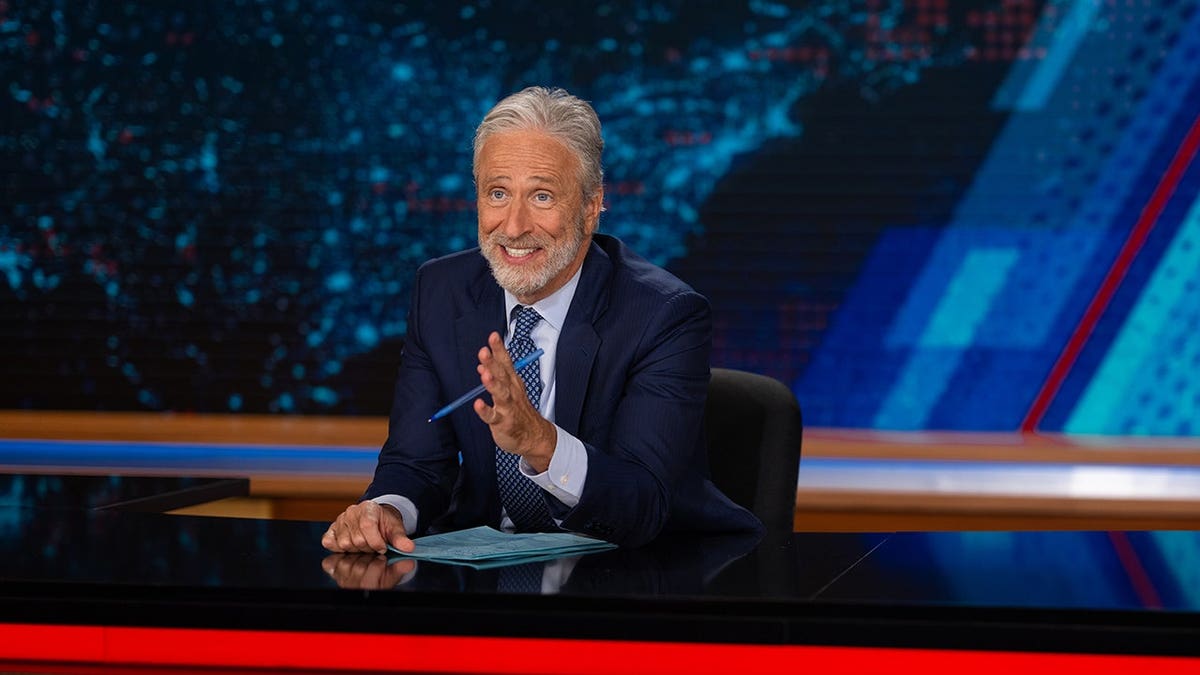
Talk show host Jon Stewart recently discussed the influence of comedic platforms like The Daily Show during a conversation with former First Lady Michelle Obama. This dialogue took place on Obama’s podcast, where she asked Stewart about the potential effects of comedy as a source of news for young audiences.
Obama inquired, “Do you think comedy helps or hurts the political climate? Is it beneficial that many young people are getting their news from The Daily Show or have expectations for figures like you to run for office?”
Stewart expressed doubts about the current relevance of his show, likening it to a “relic” in the age of social media. He stated that late-night shows resemble old formats like video stores in an evolving digital landscape, noting how both his show and others have adapted to online platforms to maintain engagement.
Stewart further acknowledged that, while such shows might provide cathartic relief, they also have limitations. He shared his understanding of the distinction between cultural influence and real power—a realization gained from experiences working on Capitol Hill.
He posed a thought-provoking question: “Is it creating a sort of opiate? I’ve learned the difference between the hard work of activists on the ground aiming for justice and the counter efforts that seek to bend progress back.”
During the conversation, Stewart expressed skepticism about whether his work in political comedy positively impacts society. He mused about the effects of his work, likening it to ultra-processed food and pondering if it leads to societal issues he termed “political diabetes.”
He stated, “I strive to conduct my work honorably, even if it might not be the most honorable endeavor. Any good faith contribution in art, material, speech, or discourse is something I consider positive.” Despite these considerations, he acknowledged his concerns about societal impact over his tenure.
Tim Graham, executive editor at Media Research Center’s NewsBusters division, supported Stewart’s introspection regarding the consequences of political comedy shows. He described the idea of Americans receiving news from such programs as “a terrifying prospect.”
Graham said Stewart’s comparison to ultra-processed food was apt, likening political comedy to “a Twinkie rather than a bran muffin.” This analogy points to the risk of distorted political views from a comedy-focused “diet,” highlighting misconceptions like the notion that Sarah Palin said, “I can see Russia from my house.”
Graham noted these shows function like an opiate for audiences displeased with Trump’s presidency. In 2024, 82% of political jokes on late-night shows targeted Trump and Republicans.
He commented on the irony of discussing partisanship on Michelle Obama’s podcast, emphasizing media’s favorable portrayal of the Obamas in recent history. “Late-night comedians rarely adhere to Michelle’s principle, ‘When they go low, we go high,'” Graham remarked.