
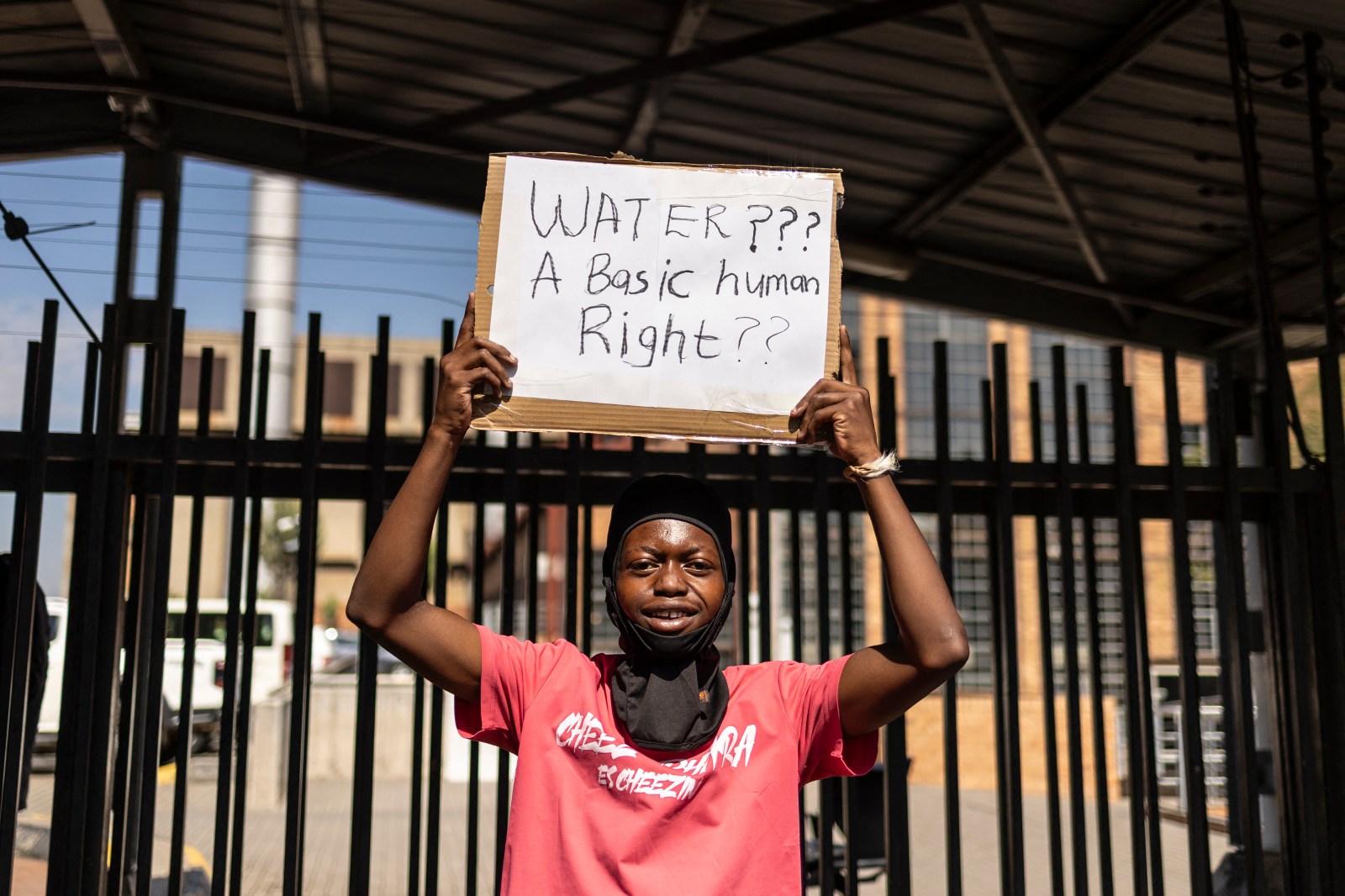
Johannesburg is grappling with a severe water crisis, leaving residents without running water for extended periods. Roughly 6.2 million people live in Johannesburg, which faces increasingly constrained systems. Authorities have suggested new restrictions, including supply cuts in specific areas, to address the issue. The crisis has gained attention on social media, with a post by Polymarket about the situation reaching 8 million views.
Residents like Sharlene Smith, a 59-year-old woman, described crossing dangerous territories to collect water from churches or mosques for her elderly mother. Businesses are equally affected, with a coffee shop owner spending a whole day’s earnings on refilling a backup tank. The issue coincides with local elections, spotlighting service delivery in South Africa.
Challenges in Water Distribution
Professor Craig Sheridan from the University of the Witwatersrand emphasized the challenge in transporting water from full dams to households. Neglected maintenance of pipes, reservoirs, and water towers, coupled with increased demand, has strained the system. The city nearing its water capacity adds to the dilemma. Mike Muller, former director-general of South Africa’s water affairs, highlighted that Johannesburg’s network loses more than 30% of supplied water due to leaks.
Mayor Dada Morero noted that fast consumption outpaces the refilling of reservoirs and towers, exacerbated by labor actions delaying system interventions. Johannesburg Water plans to deploy its tanker fleet to supply water to informal settlements, marking 41% water storage levels, up from 37%. Newsweek reached the mayor’s office, directed to Morero’s address for further comment.
Structural Failures
Johannesburg stands unique among major industrial cities, not situated by a river. Its water supply flows from dams through treatment facilities before reaching municipal storage and homes. Sheridan criticized the maintenance of the water network, consisting of thousands of under-maintained pipe kilometers. He noted upcoming supply constraints, as new dam availability is projected for 2028 or 2029. Limited dam-building space heightens the complexity of the water crisis.
Associate Professor Anja du Plessis pinpointed systemic failure and poor governance as core issues, emphasizing abundant water, but significant losses via leaks. She advocated for tracing water flow, revealing distribution problems rather than scarcity. Johannesburg Water acknowledged infrastructure renewal needs, stressing demand’s influence on reservoir depletion.
Potential Solutions
Since September, Johannesburg has observed Level 1 water restrictions. These regulations prohibit activities like garden watering and pool filling during specified hours. Stricter controls proposed last week include mandatory hose spray nozzles and treated wastewater for road construction. Level 2 restrictions may follow if demand increases, focusing on leak detection.
Sheridan prioritized leak reduction to supply up to 40% more water. He urged collective citizen efforts and billing system revisions to encourage mindful consumption. Political instability, reflected in coalition governance since 2016, contributes to the maintenance challenges. Election campaigns across parties emphasize resolving pipe leaks for Johannesburg’s next administration.
Johannesburg Water remains committed to leak detection, burst pipe repair, and infrastructure refurbishment to curb water losses, urging residents to minimize consumption for system recovery.