
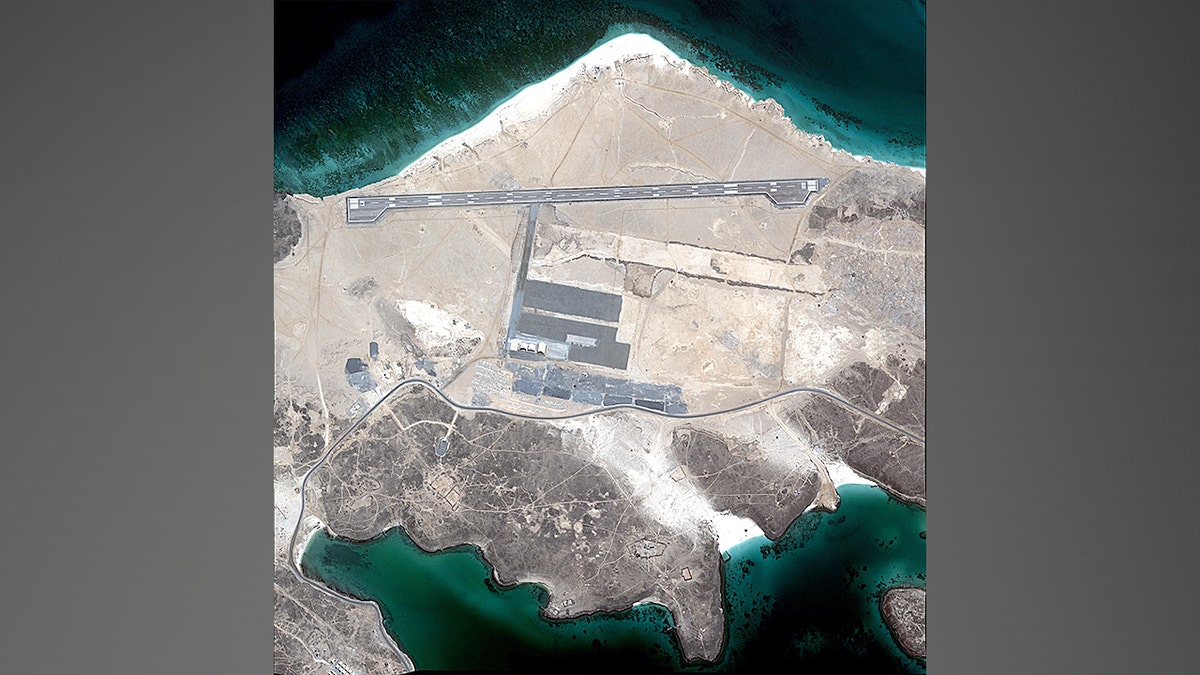
The Iran-backed Houthi rebels have captured Perim Island in the Bab el-Mandeb Strait. This strategic move on September 11 opened a new front at a vital global shipping chokepoint. A former Pentagon official highlighted the risks for the militants, stating they entered a “kill box.” The taking of the island followed a month-long offensive on Yemen’s western coast. More than 1,500 soldiers were killed, leading to Yemen’s government conceding a “painful” defeat.
Morgan Murphy, a former Pentagon press secretary and retired Navy captain, explained the significance. He described Perim as the “cork in the Red Sea bottle.” He warned that despite the Houthis’ gains, they are vulnerable due to their positioning. Murphy believes the U.S., if directed by the president, could remove the Houthis from the island highly effectively. He emphasized the Houthis’ lack of capability compared to the U.S.
Despite the island’s control, Murphy detailed how the Houthis are now in an area susceptible to intense fire. Perim divides the narrow maritime passage, which measures only 18 miles in width. Historically, the island served as a pivotal maritime vantage point. French forces and the British Empire sought control of it over the years.
Perim, also known as Mayun, is a desolate volcanic island. It sits approximately 20 miles off the Horn of Africa, near Camp Lemonnier in Djibouti. This is one of the largest U.S. military installations on the continent. Murphy noted the significant firepower in the region, commenting on the island’s inhospitable conditions. He said the Houthis amassed troops on “that rock,” creating what the Navy calls a “kill box.” Satellite imagery and intelligence reports show a 1.85-kilometer runway and military hangars built by the UAE.
“Having an airstrip is nice, but we don’t understand the runway’s condition. The Houthis lack the sophisticated air power that the U.S. and its allies possess,” Murphy said.
Murphy added that the U.S. military holds overwhelming force options if commanders decide to target the island. He pointed out that, despite their fortifications, the Houthis’ position doesn’t stand against U.S. power.
Diplomatic interactions between Washington, Riyadh, and the Houthis have occurred recently. Saudi Crown Prince Mohammed bin Salman urged President Trump twice on September 10 for military action against Houthis. Trump declined direct intervention. However, U.S. officials confirm ongoing intelligence support.
During a talk in Dublin on September 12, Trump remarked on the Houthis’ desire to avoid direct confrontation with American forces.
“The Houthis expressed they don’t want confrontation with us,” Trump commented.
Murphy cautioned that Washington’s restraint shouldn’t be misinterpreted as inaction.
Reports indicate the Houthi advance was aided by Iranian military support and direction from the Islamic Revolutionary Guard Corps (IRGC). Estimates suggest hundreds of IRGC officers are active in Yemen. Murphy noted Tehran’s strategy appears to increase global fuel prices through controlling critical shipping lanes.
Murphy compared the situation to historic naval struggles, underscoring a strategic mismatch. He cited the importance of naval strength in combating regional attempts to block shipping routes.
“The Houthis adopted a 19th-century strategy. Major powers need robust navies to keep shipping lanes open, whether the Strait of Malacca, Hormuz, or in this case, the Red Sea,” Murphy concluded.
Current efforts by the Trump administration aim to ensure allied support for maintaining freedom of navigation in critical waterways.
Emma Bussey, Fox News Digital’s breaking news writer, covers such developments continuously.