
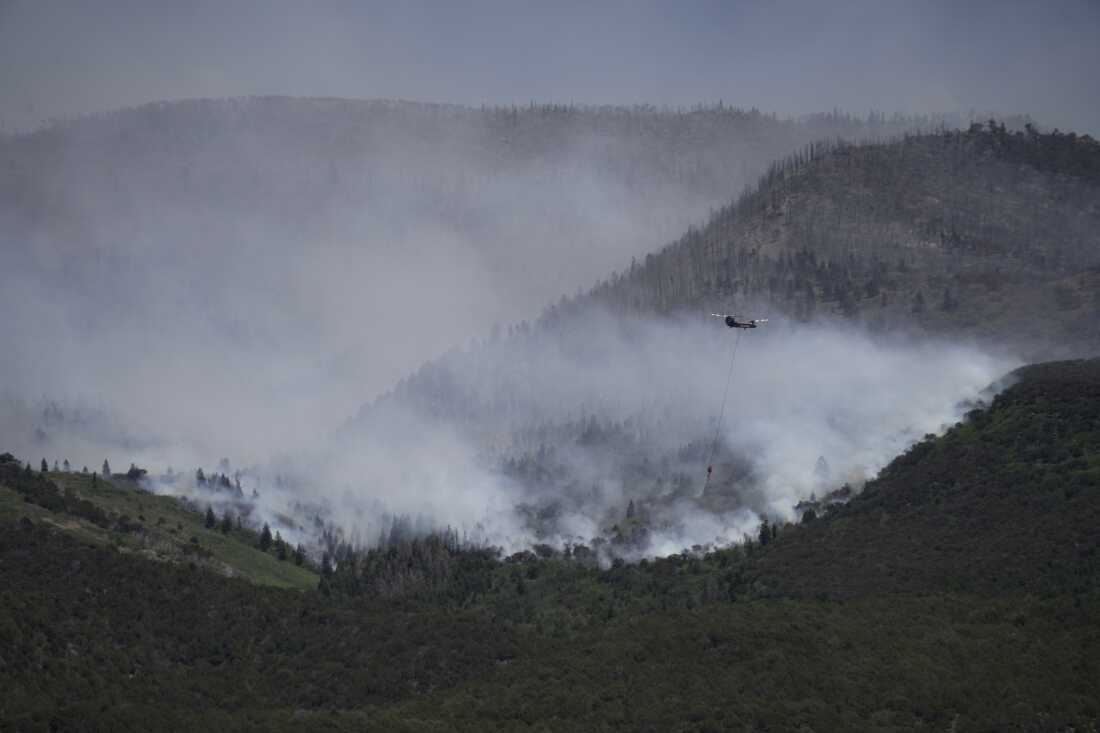
A helicopter was deployed to combat the Cottonwood Fire in Beaver, Utah, on June 27, 2026, with Ty ONeil/AP capturing the scene. While dealing with fires on the Colorado-Utah border, three firefighters tragically lost their lives, and two others suffered injuries, as reported by the U.S. Wildland Fire Service. This team was part of an interagency effort addressing the Knowles and Gore fires.
The agency expressed its condolences, saying, “The U.S. Wildland Fire Service stands united with the USDA Forest Service in grief and in our unwavering support for the loved ones left behind. Their bravery, dedication, and sacrifice will never be forgotten.” According to the Department of the Interior, the five firefighters faced a “burnover incident.” This term refers to situations where officials are unable to find an escape route and must find shelter while fire passes over them. The surviving firefighters are currently receiving treatment for burn injuries.
Fires have grown more severe in Utah, Colorado, and Arizona due to recent low humidity, high temperatures, and strong winds. These conditions have increased the intensity of fire behavior, stretching resources and prompting the governors of Utah and Colorado to declare emergencies.
Cottonwood Fire Remains Uncontained
The Cottonwood Fire, the largest blaze in the United States currently, continues to burn in southern Utah’s Beaver County. It has spread over 144 square miles and remains uncontained. This fire has significantly damaged the Eagle Point ski resort and destroyed summer cabins. Damage assessments are ongoing, with no final estimates available yet.
Hundreds of residents in Marysvale, Junction, and Circleville were warned to evacuate as conditions worsened over the weekend. Additionally, the Snyder Fire in east Utah’s Grand County has expanded to over 28,000 acres, merging with Colorado’s smaller Jones and Knowles Fires.
Alyssa Mason, speaking for the Cottonwood Fire, informed NPR that crews contended with humidity in single digits, wind gusts of around 45 mph, and fuel moisture readings between 2 and 8 percent. These factors grounded helicopters and other aircraft temporarily.
Steep terrain has further complicated firefighting efforts, with cliffs and canyons slowing the movement of heavy equipment. Utah Gov. Spencer Cox described the challenging situation as grimmer than previously seen, acknowledging heroic rescues achieved under difficult conditions. He requested prayers for rain.
The National Weather Service in Salt Lake City issued a “particularly dangerous situation” red flag warning on Friday for the first time. The warning called attention to the volatile mix of wind, heat, and low humidity expected through Sunday.
Drought Conditions Fuel Extreme Fire Behavior
Experts have linked the extreme fire behavior to months of preparation due to drought conditions. Utah recorded its lowest snowpack and warmest winter on record, with snowpack peaking three weeks earlier than expected, leading to dry soils and vegetation in the spring.
A broad region including Nevada and Colorado remains in drought after a dry winter. Utah’s state forester, Jamie Barnes, noted that fires have strained firefighting resources, starting closer to populated areas than in past years.
Governor Cox declared a state of emergency, limiting fireworks displays before Fourth of July. Colorado’s Governor Jared Polis issued an emergency declaration, allowing National Guard involvement in fighting fires.
The National Interagency Fire Center documented nearly 3 million acres burned nationwide this year, surpassing the 10-year average pace. Crews across the country handled several high-profile blazes, including dozens classified as large and uncontained, from Alaska to Florida. The National Weather Service predicted ongoing fire risks, issuing red flag warnings for a wide area from California to New Mexico.