
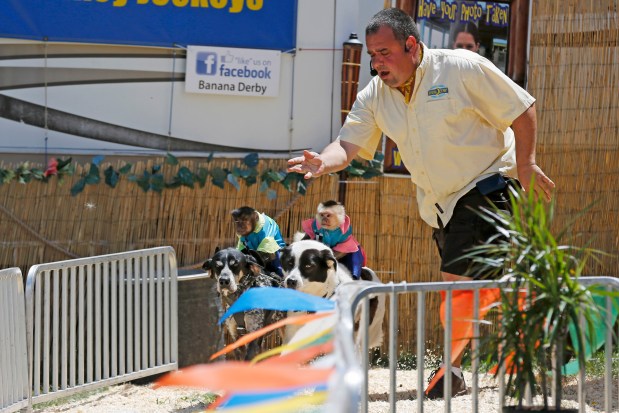
Marc Ayers attended the Sangamon County Fair in New Berlin last year with a mission. As the Illinois state director for Humane World for Animals, he aimed to stop an attraction called the Banana Derby from returning to Illinois. Ayers, part of a group tracking the show for years, watched in dismay as capuchin monkeys, Gilligan and Bert, raced while tethered to dogs.
Ayers witnessed the monkeys’ distress, noting their unnatural behavior. “They were desperately trying to escape,” he explained. Following this experience, Ayers resolved that it would be the last occurrence in Illinois.
“These are magnificent creatures, exploited for entertainment,” he said. The Banana Derby, a South Carolina-based traveling show, has appeared across Illinois for nearly two decades. However, this run is ending.
On June 26, Governor JB Pritzker expanded the state’s Traveling Animals Act. Previously, the act banned elephants from traveling shows. Now it includes big cats, bears, and primates.
Pritzker’s spokesperson stated, “The governor advanced the dignified and compassionate care of wild animals.”
The law went into effect immediately. Not everyone is pleased, though. Phil Dolci, the show owner, said the ban targets responsible operators like himself. He maintained that Gilligan and Bert have been well cared for over two decades.
“They enjoy the interactions,” Dolci remarked, referencing the joy he sees in audience faces during performances. Yet, concerns over animal welfare outweigh these interactions.
Alyssa Berman-Cutler from Lincoln Park Zoo noted a societal shift in understanding animal welfare, stating, “It’s time to celebrate in ways that don’t harm animals.” Illinois’ push for this law reflects a changing public consciousness.
State Rep. Kelly Cassidy, who sponsored the bill, emphasized prioritizing animal welfare over exhibitor profits. Illinois was the first state to ban elephants in 2017. Further restrictions followed as the humane community identified continued amusement shows exploiting animals.
Maureen Leahy from Lincoln Park Zoo highlighted the damage done to animals in shows. Transport and lack of proper environments harm their health and well-being.
Reports have documented welfare violations by shows like the Banana Derby. Culpepper & Merriweather, another traveling show, faced a license suspension for lack of proper care.
Ayers pointed out enforcement difficulties due to the mobility of these acts. The ban, therefore, addresses multiple species to close the gaps in previous legislation. Cooperation from bipartisan lawmakers helped push the bill through with minimal opposition. More states are adopting similar restrictions.
Berman-Cutler believes state bans reshape public views on exotic pet ownership. Misrepresenting animals as suitable pets distorts public perception. “Animals in artificial environments mislead people,” she remarked.
Phil Dolci anticipated legislative changes, excluding the Banana Derby from Illinois fairs this season. He voiced frustration, believing that legislating based on a few bad actors is not justified.
Animal welfare experts disagree with Dolci’s view of monkey behavior. Lincoln Park Zoo has firsthand experience with animals showing stress due to performance-driven lifestyles.
The broader efforts continue amidst county fair season. Ayers remains hopeful this legislation sets an example for neighboring states to follow.
Banning certain animals in shows aligns with stopping exotic pet domestication. Groups advocate for federal laws to restrict primate ownership, aiming for national change.
As Cassidy remarked, “Putting a monkey on a dog’s back isn’t necessary.” Actions should reflect respect for animal welfare rather than profit motives.