
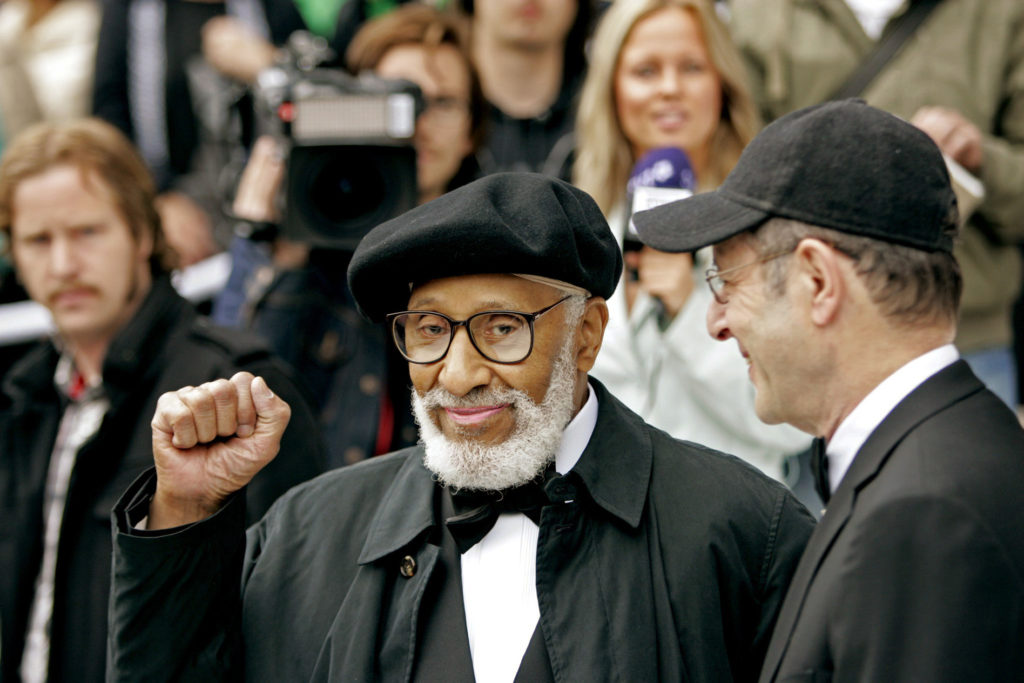
Renowned tenor saxophonist Sonny Rollins, famed for his revolutionary contributions to jazz for over five decades, passed away at 95. According to spokesperson Terri Hinte, Rollins died at his residence in Woodstock, New York. No specific cause of death was disclosed, but he had been largely confined to his home due to various health issues.
Rollins’ impact on jazz was unparalleled. From his start as a teenage phenomenon to his innovative solo career, his improvisational expertise was celebrated. He stood among jazz legends like John Coltrane and Charlie Parker. Notable was his sax solo on the Rolling Stones’ 1981 album “Tattoo You.” Throughout his life, Rollins sought artistic growth, taking breaks to explore new musical directions. He referred to himself as “a work in progress,” often feeling critical of his past recordings.
Contributions and Legacy
In the later years of his career, Rollins continued to release influential albums in the 1990s and 2000s. Despite living with pulmonary fibrosis, he toured well into his 80s, retiring after his last concert in 2012. His Grammy-winning album “This is What I Do” in 2001, and the 2006 Grammy for “Why Was I Born?” highlighted his enduring musical brilliance.
Rollins was deeply connected to events around him. After the 9/11 attacks, a live performance in Boston became part of the album “Without a Song: The 9/11 Concert.” He had been evacuated from his nearby apartment, and the concert proceeded with the encouragement of his wife, Lucille. She passed away in 2004.
Early Career and Personal Struggles
Rollins gained prominence after joining Thelonious Monk’s band as a teenager, later performing with Miles Davis and Bud Powell. However, like many musicians of the time, he battled heroin addiction. His struggle led to jail time and homelessness until he sought treatment in 1954, experiencing a transformative awakening. In 1956, his solo album “Saxophone Colossus” marked him as a leading figure in jazz.
Exploring new musical horizons, Rollins favored a pianoless trio approach on subsequent landmark albums. Between 1959 and 1961, he took a step back, practicing in solitude on the Williamsburg Bridge. His return to jazz embraced new vibrations, mirroring shifts in the genre.
Bigger Stage, Deeper Roots
In the 1970s, Rollins returned to recording, gaining mainstream recognition and honors such as a Guggenheim fellowship. His television appearances brought jazz to wider audiences. Born in 1930 in Harlem, Rollins grew up in a musical family. Despite his start on the piano, his real passion was the saxophone, which he began to play at age 11.
Rollins, primarily self-taught, became a nightclub fixture early on, eventually switching to tenor sax. His legacy continues through numerous unreleased recordings, about which he expressed little concern, saying he would no longer have to critique them after departing from this world. He once remarked, “I agonize over my music; I won’t have to agonize about it anymore. Thank God.”