
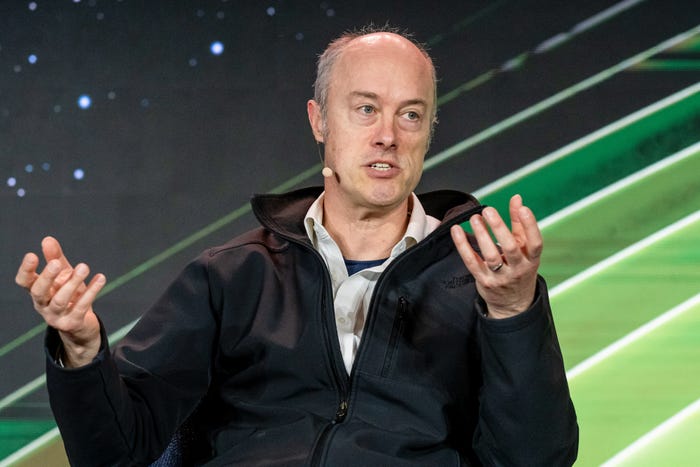
Ian Buck has dedicated his career to developing CUDA, a pivotal software for Nvidia. His work positions him as a key figure in Nvidia’s future following CEO Jensen Huang’s resignation. Kalshi and Polymarket users predict Buck has the highest likelihood of succeeding Huang.
Joining Nvidia over two decades ago, Buck co-created CUDA, turning it from an unknown platform into a crucial element of the AI industry. Initially a small venture with two libraries, CUDA now includes over 900 libraries used across various industries.
The Impact of CUDA
CUDA was instrumental in Nvidia capturing a significant share of the AI computing market. Even prior to needing a successor for Huang, industry observers frequently mentioned Buck due to his substantial contributions. From a modest start with two libraries, CUDA has expanded to over 500, showcasing its growth.
“There was a stigma to working in computer graphics — you were maybe some kind of man-child if this was your focus,” said author Stephen Witt.
Buck began at Princeton University in the late ’90s, focusing on computer graphics. This field initially had limited ties to AI. His innovative thinking led to using GPUs for broader applications. During his Ph.D. at Stanford, he explored pushing GPUs to extend their applications. Supported by Nvidia and DARPA, he developed tools that transformed GPUs into general-purpose supercomputing devices. His early efforts culminated in the inception of CUDA.
Building CUDA’s Foundation
Buck, alongside John Nickolls, former director of architecture for GPU computing, set the groundwork for CUDA. They devised a system leveraging C programming language to access GPU computing power, allowing massive computations in parallel.
Nvidia committed to making CUDA run on every chip, incurring financial losses initially. This decision proved strategic as the demand for AI computing escalated. Nvidia soon became a key player, as shown during the ChatGPT launch period.
Inside Nvidia’s Culture
Buck excels within Nvidia’s disciplined culture established by Huang. The company fosters an environment where public mistakes are part of growth, ideal for driven individuals. Those close to Buck describe him as sociable but fiercely focused on achieving goals.
He shares complex technical insights in understandable terms, balancing detailed knowledge with straightforward communication. This skill is crucial at Nvidia, enabling the company to narrate its technological journey effectively.
Challenges and Future Prospects
Despite a robust foundation, competition for CUDA persists. Events like TensorWave’s “Beyond CUDA” highlight the ongoing efforts to surpass Nvidia’s dominance. Nonetheless, human expertise in CUDA remains sought after, with more job openings in 2026 than the previous year.
Adapting to the dynamic landscape, Buck and his team actively engage with AI researchers to remain at the forefront. Although rivals like AMD aim to narrow the gap, Nvidia continues to attract top talent, integral to its success.
As Nvidia navigates leadership changes, Buck’s role in shaping its future becomes critical. While he stays away from conventional business strategies, his technical prowess and leadership draw top developers to Nvidia, helping maintain the company’s competitive edge.
Given Nvidia’s low turnover historically, maintaining this advantage is vital, especially post-Huang’s exit.
Possible Successors
In discussions of potential successors, Buck’s name frequently surfaces. He has long collaborated closely with Huang. Other internal candidates include Vice President Jonah Alben and CFO Colette Kress. Externally, Rene Haas, former Nvidia VP and CEO of Arm, is also considered a potential candidate by prediction markets.