
Stains on clothes can be a common problem, but many can be removed with the right approach. The average American disposes of about 80 pounds of clothes annually due to stains or fading, according to Procter & Gamble scientists. This waste impacts both the environment and personal finances. However, most clothes are not irreparable.
Quick Action
Address stains immediately. Don’t wait for laundry day. The longer a stain stays on fabric, the harder it is to remove. Synthetic fabrics like polyester and nylon tend to hold onto stains more, so act fast by rinsing with cold water.
Understanding Stains
Stains consist of different components. Recognizing the type helps in choosing the right method:
- Oil-Based Stains: Use liquid dish soap for items like soup or salad dressing.
- Pigment Stains: Use rubbing alcohol and blot with paper towels for ink stains. White vinegar can work on grass or mustard stains.
- Blood Stains: Start with cold water, and if needed, use hydrogen peroxide.
- Berry Stains: Use boiling hot water for stains from strawberries, blueberries, and red wine.
Creating a Cheat Sheet
Keep an index card of common remedies by your laundry area. This makes stain removal easier without needing to remember every technique.
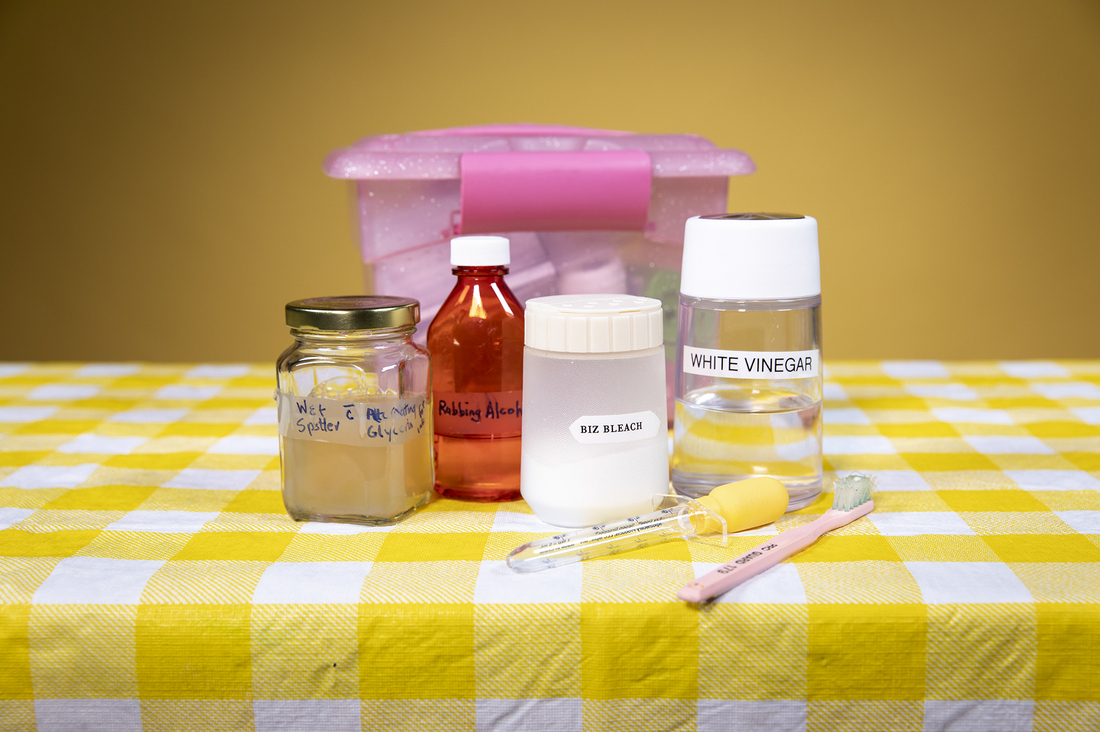
Making a Stain Kit
Put together a stain kit. Include essentials like:
- Rubbing alcohol
- White vinegar
- Hydrogen peroxide
- Dish detergent
- Wet spotter
- Glycerine
Include cotton balls, Q-tips, an eyedropper, and safety pins to mark stains.
Persistence and Patience
Some stains require multiple treatments. For instance, use dish soap for guacamole stains, followed by white vinegar if needed.
Avoid the Dryer
Do not use the dryer until the stain is completely gone. Heat sets stains, making them permanent.